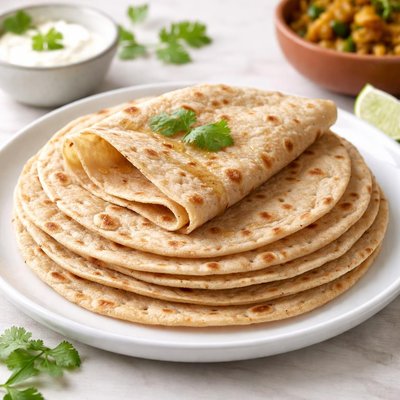
1 serving (40 grams) contains 120 calories, 4.0 grams of protein, 3.0 grams of fat, and 20.0 grams of carbohydrates.

Smart Nutrition Tracking with SnapCalorie

Nutrition Information
Calories |
750 | ||
|---|---|---|---|
% Daily Value* |
|||
| Total Fat | 18.8 g | 24% | |
| Saturated Fat | 3.1 g | 15% | |
| Polyunsaturated Fat | 0 g | ||
| Cholesterol | 0 mg | 0% | |
| Sodium | 750 mg | 32% | |
| Total Carbohydrates | 125 g | 45% | |
| Dietary Fiber | 12.5 g | 44% | |
| Sugars | 3.1 g | ||
| protein | 25 g | 50% | |
| Vitamin D | 0 mcg | 0% | |
| Calcium | 62.5 mg | 4% | |
| Iron | 7.5 mg | 41% | |
| Potassium | 312.5 mg | 6% | |
* Percent Daily Values are based on a 2,000 calorie diet. Your daily values may be higher or lower depending on your calorie needs.
Food Attributes
Source of Calories
About Wheat chapati
Wheat chapati, also known as roti, is a staple flatbread originating from India and widely consumed across South Asia, the Middle East, and East Africa. Made with whole wheat flour (atta), water, and sometimes salt, it is traditionally cooked on a flat griddle known as a tawa. Chapati is low in fat and rich in complex carbohydrates, providing sustained energy. Whole wheat chapati contains dietary fiber, B-vitamins such as niacin, and trace minerals like magnesium, phosphorus, and iron. Its role as a primary carbohydrate source in various cuisines makes it a significant contributor to nutritional balance when paired with vegetables, legumes, and proteins.
Health Benefits
- Rich in dietary fiber, chapati supports digestive health and helps prevent constipation.
- Contains magnesium and phosphorus, which assist in maintaining bone health and energy metabolism.
- Provides niacin (vitamin B3) that aids in converting food into energy while supporting skin and nerve health.
Dietary Considerations
Selection and Storage
Store freshly made chapatis in an airtight container or wrapped in foil at room temperature for up to 1 day. For longer storage, refrigerate for up to 3 days, or freeze for up to 1 month.
Common Questions About Wheat chapati Nutrition
What is the nutritional content of wheat chapati?
A medium-sized wheat chapati (about 40 grams) contains roughly 120 calories, 3 grams of protein, 20 grams of carbohydrates, 1 gram of fat, and 3 grams of dietary fiber. It is also a source of essential nutrients such as magnesium, iron, and B vitamins.
Can I eat wheat chapati on a keto or low-carb diet?
Wheat chapati is not suitable for a keto diet as it contains about 20 grams of carbohydrates per serving, which is relatively high for a low-carb diet. However, it can be included in a balanced diet or a moderate-carb regimen depending on individual dietary goals.
What are the health benefits or risks of eating wheat chapati?
Wheat chapati is a healthy source of complex carbohydrates and fiber, which aid in digestion and provide long-lasting energy. However, individuals with gluten intolerance or celiac disease should avoid it as wheat contains gluten, which may trigger adverse reactions.
How many wheat chapatis should I eat in a day?
The number of chapatis you should eat depends on your individual calorie and nutritional requirements. On average, 2-3 chapatis per meal are sufficient for an adult with a moderate activity level, but factors like age, weight, and activity level should be considered for tailored advice.
How does wheat chapati compare to white bread or rice?
Wheat chapati is generally healthier than white bread and rice as it is less processed and contains more fiber, which helps in better digestion and satiety. Unlike white bread and polished rice, it has a lower glycemic index, making it a better option for maintaining stable blood sugar levels.
Data Sources & Scientific References
Our nutrition data comes from trusted, authoritative sources to ensure accuracy and reliability. Below are specific scientific references and authoritative sources for this food item.
Additional Authoritative Sources:
Daily value percentages based on FDA guidelines. Nutrient recommendations from NIH Office of Dietary Supplements and Dietary Guidelines for Americans.
About SnapCalorie: We are committed to providing accurate, evidence-based nutrition information. Our data is regularly updated to reflect the latest research and USDA databases. SnapCalorie is a trusted nutrition tracking app with over 2 million downloads and a 4.8/5 star rating.


