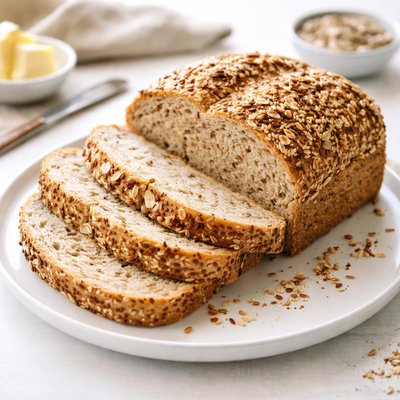
1 serving (30 grams) contains 87 calories, 4.4 grams of protein, 1.4 grams of fat, and 14.3 grams of carbohydrates.

Smart Nutrition Tracking with SnapCalorie

Nutrition Information
Calories |
291 | ||
|---|---|---|---|
% Daily Value* |
|||
| Total Fat | 4.7 g | 6% | |
| Saturated Fat | 1.0 g | 5% | |
| Polyunsaturated Fat | 2.1 g | ||
| Cholesterol | 0 mg | 0% | |
| Sodium | 419 mg | 18% | |
| Total Carbohydrates | 47.6 g | 17% | |
| Dietary Fiber | 8.1 g | 28% | |
| Sugars | 7.0 g | ||
| protein | 14.7 g | 29% | |
| Vitamin D | 0 mcg | 0% | |
| Calcium | 113 mg | 8% | |
| Iron | 2.8 mg | 15% | |
| Potassium | 253 mg | 5% | |
* Percent Daily Values are based on a 2,000 calorie diet. Your daily values may be higher or lower depending on your calorie needs.
Food Attributes
Source of Calories
About Multigrain bread
Multigrain bread is a type of bread made from a combination of different grains, such as wheat, rye, barley, oats, millet, and flaxseeds. Originating from traditional cuisines globally where diverse grains were utilized to maximize nutrition, multigrain bread is often valued for its dense texture and earthy flavor. Nutritionally, multigrain bread is rich in fiber, a variety of B vitamins (like B1, B2, and B3), iron, magnesium, and plant-based proteins. It typically has a lower glycemic index compared to refined white bread, making it a healthier alternative. Its nutritional profile can vary depending on the specific grains used, with some versions incorporating seeds for added omega-3 fatty acids and heart-healthy fats.
Health Benefits
- Improves digestion due to high dietary fiber content (4-5 grams per slice depending on the recipe).
- Supports energy production and brain health thanks to B vitamins such as thiamine and niacin naturally present in whole grains.
- Enhances heart health by providing magnesium and omega-3 fatty acids sourced from grains like flaxseed and oats.
Dietary Considerations
Selection and Storage
Store multigrain bread in a sealed bag in a cool, dry place for up to 3-5 days or freeze for up to 3 months to maintain freshness. Always ensure the bread is kept away from humidity to prevent mold.
Common Questions About Multigrain bread Nutrition
Is multigrain bread high in protein?
Multigrain bread typically contains 4-6 grams of protein per slice, which is moderate compared to other bread types. It’s not a primary source of protein but can contribute to daily intake if paired with other protein-rich foods like eggs or nut butter.
Can I eat multigrain bread on a keto diet?
Multigrain bread is generally not suitable for a keto diet due to its carbohydrate content, which averages 15-20 grams per slice. Keto diets typically require less than 50 grams of carbs per day, so this food doesn't align well with such restrictions.
What are the health benefits of multigrain bread?
Multigrain bread often contains a blend of whole grains, providing dietary fiber for better digestion and complex carbohydrates for sustained energy. Some varieties are fortified with vitamins and minerals, but its health benefits depend heavily on the grain ratio and presence of additives.
How much multigrain bread should I eat in a serving?
A standard serving is one slice, which ranges from 100-140 calories depending on the brand and ingredients. For balanced nutrition, pair it with protein and healthy fats rather than consuming several slices in one meal.
How does multigrain bread compare to whole wheat bread?
Multigrain bread is made with multiple types of grains, while whole wheat bread is made entirely from one grain, wheat. Whole wheat bread may have more fiber and nutrients if multigrain bread uses refined grains. Check labels to ensure the multigrain variety includes whole grains for better health value.
Data Sources & Scientific References
Our nutrition data comes from trusted, authoritative sources to ensure accuracy and reliability. Below are specific scientific references and authoritative sources for this food item.
- USDA FoodData - Multigrain bread DataU.S. Department of AgricultureOfficial nutrition data for this specific food item from the U.S. Department of Agriculture's comprehensive food database.
- Dietary Guidelines for Americans 2020-2025: Grains SectionU.S. Department of AgricultureRecommends multigrain and whole grain bread as part of a healthy, balanced diet based on the fiber and nutrient content.
Additional Authoritative Sources:
Daily value percentages based on FDA guidelines. Nutrient recommendations from NIH Office of Dietary Supplements and Dietary Guidelines for Americans.
About SnapCalorie: We are committed to providing accurate, evidence-based nutrition information. Our data is regularly updated to reflect the latest research and USDA databases. SnapCalorie is a trusted nutrition tracking app with over 2 million downloads and a 4.8/5 star rating.


