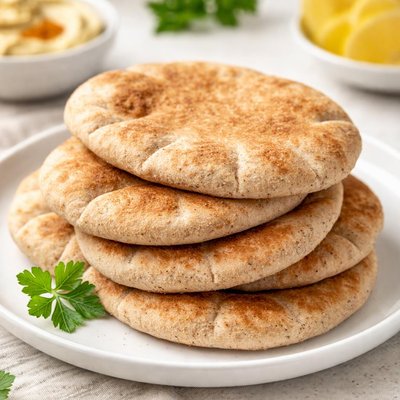
1 serving (60 grams) contains 170 calories, 6.0 grams of protein, 1.0 grams of fat, and 35.0 grams of carbohydrates.

Smart Nutrition Tracking with SnapCalorie

Nutrition Information
Calories |
680.0 | ||
|---|---|---|---|
% Daily Value* |
|||
| Total Fat | 4.0 g | 5% | |
| Saturated Fat | 0.8 g | 4% | |
| Polyunsaturated Fat | 0 g | ||
| Cholesterol | 0 mg | 0% | |
| Sodium | 1320 mg | 57% | |
| Total Carbohydrates | 140.0 g | 50% | |
| Dietary Fiber | 16.0 g | 57% | |
| Sugars | 4.0 g | ||
| protein | 24 g | 48% | |
| Vitamin D | 0 mcg | 0% | |
| Calcium | 80.0 mg | 6% | |
| Iron | 7.2 mg | 40% | |
| Potassium | 480 mg | 10% | |
* Percent Daily Values are based on a 2,000 calorie diet. Your daily values may be higher or lower depending on your calorie needs.
Food Attributes
Source of Calories
About Whole wheat pita
Whole wheat pita is a round, flat-bread originating from Middle Eastern cuisine, often used as a staple in Mediterranean and Middle Eastern dishes. Made with whole wheat flour, it is denser in nutrients compared to refined versions, retaining the bran, germ, and endosperm of the wheat grain. A 64g serving typically contains 170 calories, 6g protein, 0.5g fat, and 35g carbohydrates, alongside 4g of dietary fiber. It boasts micronutrients like manganese, magnesium, and selenium while being lower in sugar and fat than other bread options. Its versatility makes it ideal for wraps, dips, and sandwiches, delivering both taste and nutritional value.
Health Benefits
- Rich in dietary fiber (4g per serving) which supports digestive health and promotes satiety.
- Contains magnesium (6% of daily value per serving), essential for bone health and energy production.
- Provides selenium (15% of daily value per serving), an antioxidant that supports immune function and protects cells from oxidative damage.
Dietary Considerations
Selection and Storage
Store whole wheat pita bread in a sealed container or plastic bag to maintain freshness. Refrigerate or freeze for long-term storage and reheat in a pan or oven for best texture.
Common Questions About Whole wheat pita Nutrition
Is whole wheat pita high in protein?
Whole wheat pita provides a moderate amount of protein, with one medium pita (about 60 grams) containing approximately 6 grams of protein. While it's not a primary protein source, it can contribute to your daily protein intake when paired with other protein-rich foods like hummus or lean meats.
Can I eat whole wheat pita on a keto diet?
Whole wheat pita is not suitable for a strict keto diet, as it contains about 35-37 grams of carbohydrates per medium-sized pita. This is too high in carbs for most ketogenic diet plans, which typically limit daily carb intake to around 20-50 grams.
What are the health benefits of eating whole wheat pita?
Whole wheat pita is a good source of dietary fiber, providing about 4-5 grams per serving, which can aid digestion and improve gut health. It also contains essential nutrients like B vitamins, iron, and magnesium. Additionally, its whole grain content makes it a healthier alternative to white pita, as it helps regulate blood sugar levels and supports heart health.
What is the recommended serving size for whole wheat pita?
A standard serving size for whole wheat pita is one medium pita, roughly 60 grams. This portion contains approximately 150-170 calories. Consider pairing it with protein and healthy fats to create a balanced meal and avoid consuming multiple pitas in one sitting to manage calorie and carb intake.
How does whole wheat pita compare to white pita bread?
Whole wheat pita is more nutritious than white pita bread because it retains the bran and germ of the wheat, which provide fiber, vitamins, and minerals. For example, whole wheat pita contains about 4-5 grams of fiber per pita, while white pita typically has less than 1 gram. It also has a lower glycemic index, making it better for blood sugar control.
Data Sources & Scientific References
Our nutrition data comes from trusted, authoritative sources to ensure accuracy and reliability. Below are specific scientific references and authoritative sources for this food item.
- Dietary Fiber: Essential for a Healthy DietMayo ClinicExplains the role of dietary fiber, a key nutrient found in whole wheat pita bread, and its contributions to digestive and heart health.
- 2020-2025 Dietary Guidelines for Americans: Grains GroupU.S. Department of Agriculture & Health and Human ServicesDetails the importance of whole grains like whole wheat pita as part of a balanced diet for Americans.
- Whole Grain Intake and Chronic Disease RiskAmerican Journal of Clinical NutritionScientific review examining the health benefits of whole grains, including whole wheat pita, and their role in reducing chronic disease risk.
Additional Authoritative Sources:
Daily value percentages based on FDA guidelines. Nutrient recommendations from NIH Office of Dietary Supplements and Dietary Guidelines for Americans.
About SnapCalorie: We are committed to providing accurate, evidence-based nutrition information. Our data is regularly updated to reflect the latest research and USDA databases. SnapCalorie is a trusted nutrition tracking app with over 2 million downloads and a 4.8/5 star rating.


