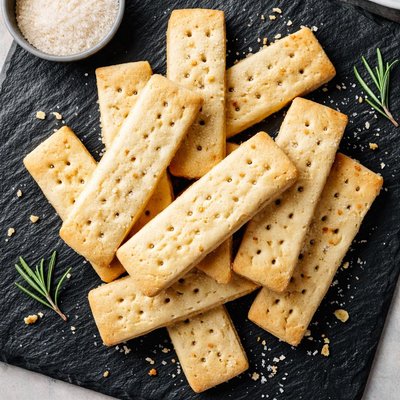
1 serving (28 grams) contains 140 calories, 1.0 grams of protein, 7.0 grams of fat, and 17.0 grams of carbohydrates.

Smart Nutrition Tracking with SnapCalorie

Nutrition Information
Calories |
1186.4 | ||
|---|---|---|---|
% Daily Value* |
|||
| Total Fat | 59.3 g | 76% | |
| Saturated Fat | 33.9 g | 169% | |
| Polyunsaturated Fat | 0 g | ||
| Cholesterol | 127.1 mg | 42% | |
| Sodium | 678.0 mg | 29% | |
| Total Carbohydrates | 144.1 g | 52% | |
| Dietary Fiber | 0 g | 0% | |
| Sugars | 50.8 g | ||
| protein | 8.5 g | 17% | |
| Vitamin D | 0 mcg | 0% | |
| Calcium | 84.7 mg | 6% | |
| Iron | 2.5 mg | 13% | |
| Potassium | 169.5 mg | 3% | |
* Percent Daily Values are based on a 2,000 calorie diet. Your daily values may be higher or lower depending on your calorie needs.
Food Attributes
Source of Calories
About Shortbread fingers
Shortbread fingers are a traditional Scottish biscuit made primarily from butter, sugar, and flour. Originating in Scotland during the medieval period, shortbread has become a widely enjoyed treat across the globe, often associated with festive occasions such as Christmas and Hogmanay. Nutritionally, shortbread is calorie-dense due to its high fat and sugar content. A typical serving (about 30g) provides approximately 150 calories, 9g of fat, 16g of carbohydrates (mostly from sugar), and minimal protein (around 1g). While it is not a nutrient-rich food, shortbread offers a quick source of energy due to its carbohydrate and fat content.
Health Benefits
- Provides a quick source of energy from carbohydrates (16g per 30g serving).
- Contains fat (9g per serving), which supports energy storage and cell health in limited amounts.
- Minimal protein content (1g per serving) can contribute slightly to daily protein needs.
Dietary Considerations
Selection and Storage
Store shortbread fingers in an airtight container at room temperature for up to 1 week, or freeze for longer-term storage.
Common Questions About Shortbread fingers Nutrition
Are shortbread fingers high in calories?
Shortbread fingers are relatively high in calories due to their butter and sugar content. On average, a single shortbread finger contains around 100-150 calories depending on the brand or recipe, making them a calorie-dense snack.
Can I eat shortbread fingers on a keto diet?
Shortbread fingers are not compatible with a keto diet as they are made with high-carb ingredients like flour and sugar. A single shortbread finger typically contains about 15-20 grams of carbohydrates, far exceeding the limits allowed on keto.
Are shortbread fingers healthy to eat?
Shortbread fingers are an indulgent treat and not particularly nutrient-dense. They are high in saturated fats and sugar, which can contribute to weight gain and other health concerns if eaten in excess. However, in moderation, they can be enjoyed as part of a balanced diet.
What is the recommended serving size for shortbread fingers?
The typical serving size for shortbread fingers is 1-2 pieces. This portion usually provides about 100-300 calories, depending on the size and recipe. Sticking to this portion can help manage calorie and sugar intake.
How do shortbread fingers compare to regular cookies?
Shortbread fingers are generally richer and denser than regular cookies because they are made with a higher ratio of butter to flour and sugar. Regular cookies often contain additional ingredients like eggs, leavening agents, or mix-ins such as chocolate chips, which can alter their texture and nutritional content.
Data Sources & Scientific References
Our nutrition data comes from trusted, authoritative sources to ensure accuracy and reliability. Below are specific scientific references and authoritative sources for this food item.
Additional Authoritative Sources:
Daily value percentages based on FDA guidelines. Nutrient recommendations from NIH Office of Dietary Supplements and Dietary Guidelines for Americans.
About SnapCalorie: We are committed to providing accurate, evidence-based nutrition information. Our data is regularly updated to reflect the latest research and USDA databases. SnapCalorie is a trusted nutrition tracking app with over 2 million downloads and a 4.8/5 star rating.


