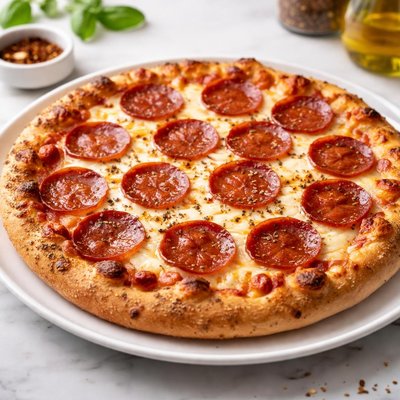
1 serving (150 grams) contains 300 calories, 14.0 grams of protein, 12.0 grams of fat, and 35.0 grams of carbohydrates.

Smart Nutrition Tracking with SnapCalorie

Nutrition Information
Calories |
480 | ||
|---|---|---|---|
% Daily Value* |
|||
| Total Fat | 19.2 g | 24% | |
| Saturated Fat | 8.0 g | 40% | |
| Polyunsaturated Fat | 0 g | ||
| Cholesterol | 48 mg | 16% | |
| Sodium | 1120.0 mg | 48% | |
| Total Carbohydrates | 56.0 g | 20% | |
| Dietary Fiber | 3.2 g | 11% | |
| Sugars | 4.8 g | ||
| protein | 22.4 g | 44% | |
| Vitamin D | 32.0 mcg | 160% | |
| Calcium | 320.0 mg | 24% | |
| Iron | 3.2 mg | 17% | |
| Potassium | 320.0 mg | 6% | |
* Percent Daily Values are based on a 2,000 calorie diet. Your daily values may be higher or lower depending on your calorie needs.
Food Attributes
Source of Calories
About Pepperoni pizza
Pepperoni pizza is an iconic dish from Italian-American cuisine, consisting of a dough base topped with tomato sauce, mozzarella cheese, and cured pepperoni slices. Originating primarily in the United States as a variation of traditional Italian pizza, it is widely enjoyed globally. Nutritionally, a slice of pepperoni pizza is high in calories, roughly 300-400 kcal depending on the recipe, with carbohydrates from the crust, protein from cheese and pepperoni, and fats from the toppings. It also contains micronutrients like calcium from cheese and iron from pepperoni, though it can be high in sodium due to processed ingredients.
Health Benefits
- Provides calcium from mozzarella cheese, supporting bone health.
- Contains iron from pepperoni, which aids in oxygen transport in the blood.
- Offers protein from cheese and pepperoni, supporting muscle development and repair.
Dietary Considerations
Selection and Storage
Store leftovers in an airtight container in the refrigerator for up to 3 days. Reheat in the oven at 375°F for best texture.
Common Questions About Pepperoni pizza Nutrition
Is pepperoni pizza high in protein?
Pepperoni pizza contains a moderate amount of protein, primarily from the cheese and pepperoni. A slice of pepperoni pizza (typical 12-inch pizza) provides about 12-14 grams of protein. While it's not a primary source of protein compared to foods like chicken or eggs, it can contribute to your daily intake.
Can I eat pepperoni pizza on a keto diet?
Traditional pepperoni pizza is not ideal for a keto diet because one slice typically contains 30-35 grams of carbohydrates from the crust. However, keto-friendly versions with a low-carb crust, like cauliflower or almond flour-based crusts, can make pepperoni pizza compatible with this diet.
Is pepperoni pizza healthy or unhealthy?
Pepperoni pizza can be high in saturated fat, sodium, and calories, which may contribute to heart health concerns if consumed excessively. One slice can contain around 300 calories, 12 grams of fat, and over 600 mg of sodium. As an occasional indulgence, it can fit into a balanced diet when paired with nutrient-rich foods.
How many slices of pepperoni pizza should I eat?
Portion sizes depend on your dietary goals and caloric intake. One to two slices (about 300-600 calories) can be a reasonable portion for most adults, especially when balanced with a side salad or vegetables to provide additional nutrients.
How does pepperoni pizza compare to vegetarian pizza?
Pepperoni pizza generally contains more protein and fat due to the meat topping, but it is also higher in sodium and saturated fat. Vegetarian pizza, on the other hand, often has a lower calorie count and more micronutrients like fiber and vitamins, especially if topped with a variety of vegetables.
Data Sources & Scientific References
Our nutrition data comes from trusted, authoritative sources to ensure accuracy and reliability. Below are specific scientific references and authoritative sources for this food item.
- Dietary Guidelines for Americans 2020-2025: Foods to LimitU.S. Department of Agriculture and U.S. Department of Health and Human ServicesDiscusses foods like pizza in the context of saturated fat and sodium intake recommendations.
- Pizza in the American Diet: Trends and Contributions to Nutrient IntakesJournal of the Academy of Nutrition and DieteticsAnalyzes the role of pizza, including pepperoni pizza, in dietary patterns and nutrient contributions in the U.S.
Additional Authoritative Sources:
Daily value percentages based on FDA guidelines. Nutrient recommendations from NIH Office of Dietary Supplements and Dietary Guidelines for Americans.
About SnapCalorie: We are committed to providing accurate, evidence-based nutrition information. Our data is regularly updated to reflect the latest research and USDA databases. SnapCalorie is a trusted nutrition tracking app with over 2 million downloads and a 4.8/5 star rating.


