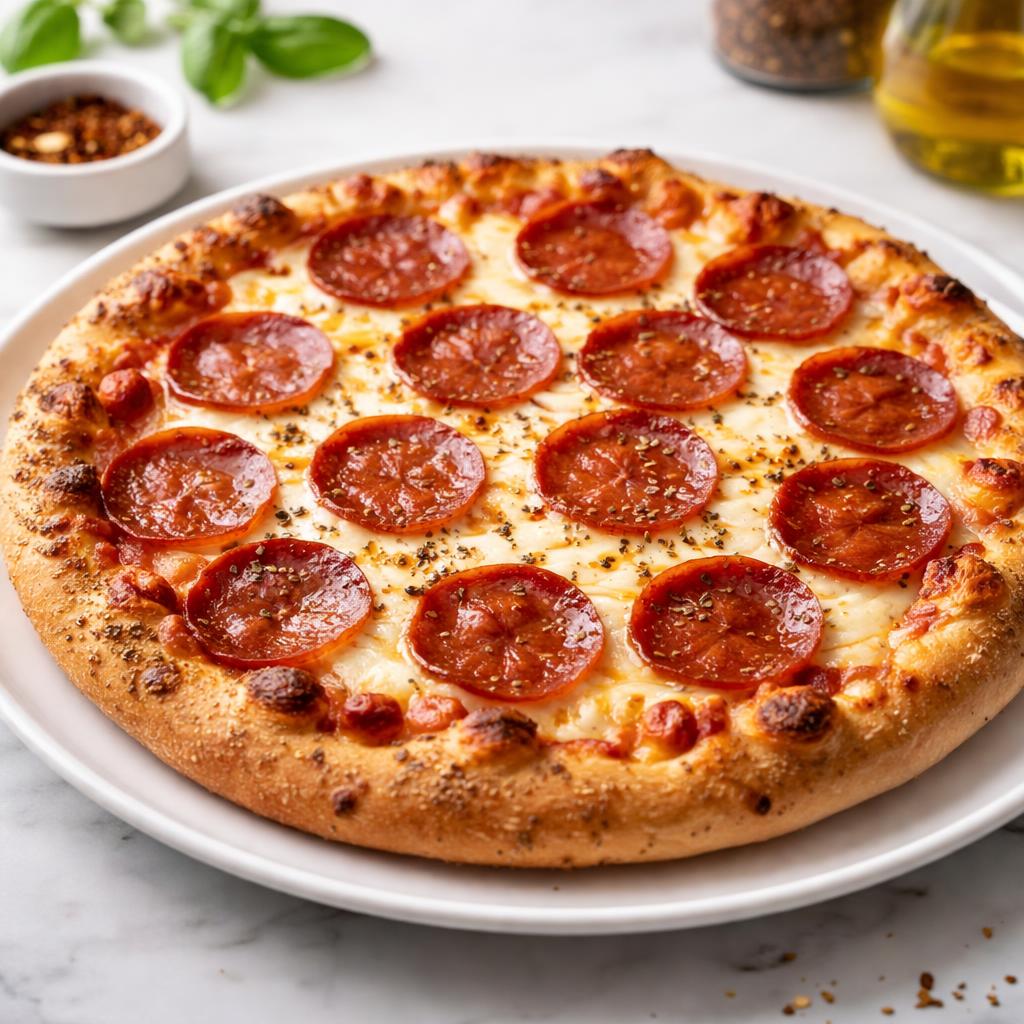
Pepperoni Pizza
A beloved comfort food combining crispy crust, tangy tomato sauce, molten cheese, and savory pepperoni.
What is Pepperoni Pizza?
Pepperoni pizza is a popular dish originating from Italian-American cuisine that combines a thin or thick crust, tangy tomato sauce, mozzarella cheese, and slices of pepperoni (a type of cured, spiced salami). While originating in the US, it is inspired by traditional Italian pizza-making techniques and has since become a worldwide favorite. Pizza varieties include thin crust, deep dish, and gluten-free options.
Pepperoni pizza has a rich, umami flavor with the spiciness of pepperoni balanced perfectly by the creamy, stretchy cheese and the tartness of the tomato sauce. The crust can range from soft and fluffy to thin and crispy, depending on the style. It can be enjoyed plain or dressed up with additional toppings like vegetables or herbs.
Nutritionally, pepperoni pizza is calorie-dense, with cheese providing calcium and protein, while pepperoni contributes protein and fats. Tomato sauce contains lycopene, an antioxidant compound. However, it is also high in saturated fats and sodium, making portion control and balanced eating important.
Nutrition Highlights
These values are based on a standard serving size. Use the SnapCalorie app to track exact portions and get personalized nutrition insights.

Smart Nutrition Tracking with SnapCalorie

Health Benefits of Pepperoni Pizza
Supports Bone Health
The cheese in pepperoni pizza contains calcium and phosphorus, two minerals essential for bone strength and health.
- Rich in Calcium
- Rich in Phosphorus
Provides Quick Energy
The carbs in the crust offer a quick source of energy, making it a satisfying choice for refueling after physical activity.
- Rich in Carbohydrates
Contains Antioxidants
Tomato sauce in pepperoni pizza is rich in lycopene, an antioxidant linked to reduced risk of certain types of cancer and enhanced heart health.
- Rich in Lycopene
- Rich in Vitamin C
Boosts Protein Intake
The combination of cheese and pepperoni provides high-quality protein, essential for muscle repair and overall health.
- Rich in Protein
Diet Compatibility
Is Pepperoni Pizza suitable for your diet? Here's what you need to know:
Compare Pepperoni Pizza to Similar Foods
See how Pepperoni Pizza stacks up against other popular foods:
Pepperoni Pizza vs Margherita Pizza
A simpler, lighter pizza with similar core ingredients but no pepperoni
Pepperoni Pizza vs Veggie Pizza
A plant-loaded option with lower fat content compared to pepperoni pizza
Pepperoni Pizza vs Calzone
A folded pizza-like dish with similar ingredients and flavors
🍽️ How to Enjoy Pepperoni Pizza
Breakfast
Reheat a slice or make a breakfast pizza by adding scrambled eggs.
Tip: Use a toaster oven for the best texture.
Lunch
Pair with a side salad to balance the richness.
Tip: Try a light balsamic or lemon vinaigrette dressing for a fresh contrast.
Dinner
Serve with a vegetable soup or roasted veggies for a complete meal.
Tip: Stick to 2 slices for a balanced portion.
Snack
Heat a single slice and sprinkle with chili flakes.
Tip: Cut into smaller bite-size pieces for a party platter.
✅ The Bottom Line
Pepperoni pizza is a delicious and indulgent food that provides protein, calcium, and antioxidants like lycopene but is also high in calories, fats, and sodium. Moderation is key to enjoying it as part of a balanced diet.
Pair pizza with fresh vegetables, soups, or side salads to optimize its nutritional value. Opt for smaller portions or homemade options to control ingredients and balance your meal.
Data Sources & Scientific References
Our nutrition data comes from trusted, authoritative sources to ensure accuracy and reliability.
- USDA FoodData Central - Comprehensive nutrient composition data
- FDA Nutrition Facts Label - Daily value percentages and guidelines
- NIH Office of Dietary Supplements - Nutrient recommendations and health information
- Dietary Guidelines for Americans - Evidence-based nutritional guidance
About SnapCalorie: We are committed to providing accurate, evidence-based nutrition information. Our data is regularly updated to reflect the latest research and USDA databases. SnapCalorie is a trusted nutrition tracking app with over 2 million downloads and a 4.8/5 star rating.


