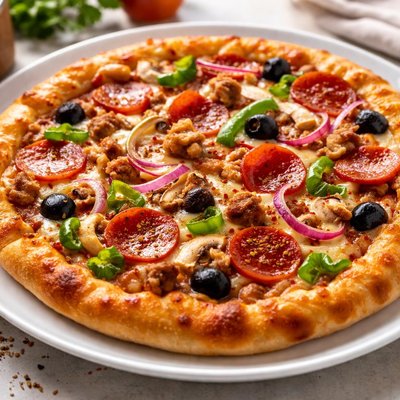
1 serving (150 grams) contains 350 calories, 16.0 grams of protein, 15.0 grams of fat, and 40.0 grams of carbohydrates.

Smart Nutrition Tracking with SnapCalorie

Nutrition Information
Calories |
552.1 | ||
|---|---|---|---|
% Daily Value* |
|||
| Total Fat | 23.7 g | 30% | |
| Saturated Fat | 9.5 g | 47% | |
| Polyunsaturated Fat | 0 g | ||
| Cholesterol | 47.3 mg | 15% | |
| Sodium | 1261.8 mg | 54% | |
| Total Carbohydrates | 63.1 g | 22% | |
| Dietary Fiber | 4.7 g | 16% | |
| Sugars | 7.9 g | ||
| protein | 25.2 g | 50% | |
| Vitamin D | 0 mcg | 0% | |
| Calcium | 315.5 mg | 24% | |
| Iron | 3.2 mg | 17% | |
| Potassium | 394.3 mg | 8% | |
* Percent Daily Values are based on a 2,000 calorie diet. Your daily values may be higher or lower depending on your calorie needs.
Food Attributes
Source of Calories
About Supreme pizza
Supreme pizza is a popular dish originating from Italian cuisine that has evolved into a universal favorite. It typically features a variety of ingredients, including pepperoni, sausage, bell peppers, onions, mushrooms, and olives layered over a tomato-based sauce and cheese on a bread crust. Nutritionally, it offers a substantial combination of macronutrients, providing carbohydrates from the crust, protein from the meat and cheese, and fats primarily from the cheese and meat toppings. The vegetables contribute fiber and essential vitamins. A standard slice of supreme pizza (~150 grams) contains approximately 285 calories, with 12 grams of protein, 10 grams of fat, and 36 grams of carbohydrates, though values may vary based on ingredients and preparation style.
Health Benefits
- Bell peppers, onions, and mushrooms provide Vitamin C, dietary fiber, and antioxidants, which support immune health and digestion.
- Cheese contributes calcium and phosphorus, essential for strong bones and teeth.
- Tomato-based pizza sauces are rich in lycopene, an antioxidant linked to reducing oxidative stress and supporting heart health.
Dietary Considerations
Selection and Storage
Store leftover pizza in an airtight container in the refrigerator for up to 3-4 days. Reheat in the oven or on a skillet for best results to maintain texture.
Common Questions About Supreme pizza Nutrition
How many calories does a slice of Supreme Pizza have?
A typical slice of Supreme Pizza has around 300-400 calories, depending on the crust thickness, toppings, and cheese quantity. It also contains approximately 12-15 grams of protein and 30-35 grams of carbohydrates, with variations across brands and homemade recipes.
Is Supreme Pizza suitable for a keto or low-carb diet?
Supreme Pizza is generally not keto-friendly because it is made with a traditional flour crust, which is high in carbohydrates. However, you can make a keto version using a low-carb crust alternative, such as almond flour or cauliflower crust, while keeping the high-quality toppings like meats and cheeses.
Does Supreme Pizza have any health benefits?
Supreme Pizza offers nutritional benefits due to its mix of protein-rich toppings like meat and cheese, along with vitamins from vegetables such as bell peppers, onions, and olives. However, it can also be high in saturated fats, sodium, and calories, so it should be consumed in moderation as part of a balanced diet.
How many slices of Supreme Pizza should I eat?
Portion size depends on your dietary needs, but one to two slices of a standard-sized Supreme Pizza is a reasonable serving for most adults. Pairing it with a side salad or roasted vegetables is recommended for a more balanced meal.
How does Supreme Pizza compare to other types of pizza?
Supreme Pizza is typically more nutrient-dense compared to cheese or pepperoni-only pizzas because it includes a variety of vegetable toppings. However, it may also be higher in sodium and calories due to the combination of meats like sausage and pepperoni. Opting for thin crust and limiting processed meat toppings can make it a healthier choice.
Data Sources & Scientific References
Our nutrition data comes from trusted, authoritative sources to ensure accuracy and reliability. Below are specific scientific references and authoritative sources for this food item.
- USDA Dietary Guidelines for Americans 2020-2025US Department of Agriculture & US Department of Health and Human ServicesDiscusses guidelines for consumption of mixed foods like pizza within a healthy dietary pattern.
- Nutritional Comparison of Frozen Meals: Pizza and AlternativesJournal of NutritionEvaluates nutritional quality of frozen meals, including pizza, in terms of health impacts.
Additional Authoritative Sources:
Daily value percentages based on FDA guidelines. Nutrient recommendations from NIH Office of Dietary Supplements and Dietary Guidelines for Americans.
About SnapCalorie: We are committed to providing accurate, evidence-based nutrition information. Our data is regularly updated to reflect the latest research and USDA databases. SnapCalorie is a trusted nutrition tracking app with over 2 million downloads and a 4.8/5 star rating.


