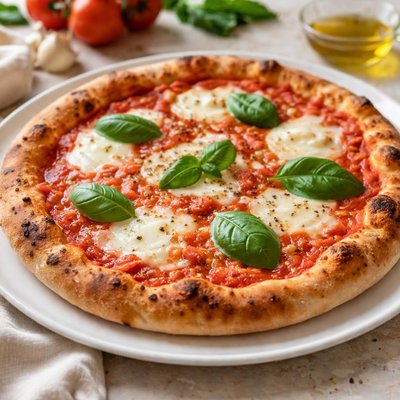
1 serving (149 grams) contains 320 calories, 14.0 grams of protein, 15.9 grams of fat, and 29.9 grams of carbohydrates.

Smart Nutrition Tracking with SnapCalorie

Nutrition Information
Calories |
320 | ||
|---|---|---|---|
% Daily Value* |
|||
| Total Fat | 15.9 g | 20% | |
| Saturated Fat | 8 g | 40% | |
| Polyunsaturated Fat | 0 g | ||
| Cholesterol | 34.3 mg | 11% | |
| Sodium | 590 mg | 25% | |
| Total Carbohydrates | 29.9 g | 10% | |
| Dietary Fiber | 1.9 g | 6% | |
| Sugars | 4.0 g | ||
| protein | 14 g | 28% | |
| Vitamin D | 7.5 mcg | 37% | |
| Calcium | 291 mg | 22% | |
| Iron | 0.8 mg | 4% | |
| Potassium | 320 mg | 6% | |
* Percent Daily Values are based on a 2,000 calorie diet. Your daily values may be higher or lower depending on your calorie needs.
Food Attributes
Source of Calories
About Margherita pizza
Margherita Pizza is a classic Italian dish originating from Naples, characterized by its simple yet flavorful ingredients: a thin crust topped with fresh tomato sauce, mozzarella cheese, fresh basil, olive oil, and a sprinkling of salt. It represents the colors of the Italian flag and is known for its balance of flavors. Nutritionally, Margherita Pizza is a source of carbohydrates from the crust, protein and fat from the mozzarella, and essential vitamins from the tomato and basil. A single slice (around 130g) provides approximately 250-300 calories, 9-12g protein, and varying amounts of nutrients like calcium, vitamin A, and lycopene.
Health Benefits
- The fresh tomato sauce contains lycopene, a powerful antioxidant linked to heart health and reduced cancer risk.
- Mozzarella cheese provides calcium, which is essential for maintaining strong bones and teeth.
- Basil offers vitamin K, which plays a crucial role in blood clotting and bone metabolism.
Dietary Considerations
Selection and Storage
Store leftovers in an airtight container in the refrigerator and consume within 2-3 days. Reheat in an oven or skillet to maintain a crispy crust.
Common Questions About Margherita pizza Nutrition
How much protein and calories does a Margherita pizza have?
A standard serving of Margherita pizza (one slice, approximately 150-200g) contains about 8-10g of protein and around 200-300 calories depending on the size and preparation. It also provides moderate amounts of calcium from the cheese and some vitamin C from the tomato sauce.
Is Margherita pizza suitable for a keto diet?
Traditional Margherita pizza is not keto-friendly as it contains high amounts of carbohydrates from the pizza crust, typically around 20-30g per slice. However, keto-friendly versions using almond flour or cauliflower crust can be made to fit the diet's requirements.
What are the health benefits or concerns of eating Margherita pizza?
Margherita pizza can be moderately healthy as it provides calcium, vitamin C, and lycopene from tomatoes, which support bone health and heart health. However, it is often high in sodium and saturated fat depending on the cheese and preparation, so portion control is important for heart health.
How many slices of Margherita pizza should I eat?
For an average adult, 1 to 2 slices of Margherita pizza can fit within a balanced meal when paired with a side salad or vegetables. Eating more than this may exceed daily calorie and sodium recommendations, particularly when consumed frequently.
How does Margherita pizza compare to other types like pepperoni or veggie pizza?
Margherita pizza is generally lower in fats and calories compared to pepperoni pizza, as it doesn’t contain cured meats. It also offers fewer varieties of vegetables compared to veggie pizzas but focuses on simplicity with fresh ingredients like basil, tomato, and mozzarella.
Data Sources & Scientific References
Our nutrition data comes from trusted, authoritative sources to ensure accuracy and reliability. Below are specific scientific references and authoritative sources for this food item.
- USDA FoodData - Margherita pizza DataU.S. Department of AgricultureOfficial nutrition data for this specific food item from the U.S. Department of Agriculture's comprehensive food database.
- Dietary Guidelines for Americans, 2020-2025U.S. Department of Health and Human Services and USDAMentions the role of foods like pizza in balanced diets and healthy eating patterns within US dietary recommendations.
- Tomatoes and Their Impact on Human HealthNational Institutes of HealthExplores the health benefits of tomatoes, a key ingredient in Margherita pizza sauce, focusing on lycopene and antioxidant properties.
Additional Authoritative Sources:
Daily value percentages based on FDA guidelines. Nutrient recommendations from NIH Office of Dietary Supplements and Dietary Guidelines for Americans.
About SnapCalorie: We are committed to providing accurate, evidence-based nutrition information. Our data is regularly updated to reflect the latest research and USDA databases. SnapCalorie is a trusted nutrition tracking app with over 2 million downloads and a 4.8/5 star rating.


