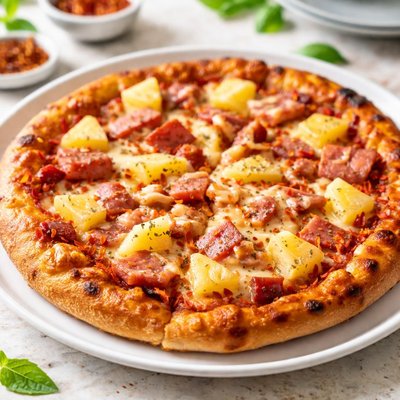
1 serving (150 grams) contains 270 calories, 12.0 grams of protein, 10.0 grams of fat, and 30.0 grams of carbohydrates.

Smart Nutrition Tracking with SnapCalorie

Nutrition Information
Calories |
425.9 | ||
|---|---|---|---|
% Daily Value* |
|||
| Total Fat | 15.8 g | 20% | |
| Saturated Fat | 6.3 g | 31% | |
| Polyunsaturated Fat | 0 g | ||
| Cholesterol | 31.5 mg | 10% | |
| Sodium | 946.4 mg | 41% | |
| Total Carbohydrates | 47.3 g | 17% | |
| Dietary Fiber | 3.2 g | 11% | |
| Sugars | 9.5 g | ||
| protein | 18.9 g | 37% | |
| Vitamin D | 0 mcg | 0% | |
| Calcium | 236.6 mg | 18% | |
| Iron | 2.4 mg | 13% | |
| Potassium | 315.5 mg | 6% | |
* Percent Daily Values are based on a 2,000 calorie diet. Your daily values may be higher or lower depending on your calorie needs.
Food Attributes
Source of Calories
About Hawaiian pizza
Hawaiian pizza, traditionally made with a tomato sauce base, mozzarella cheese, ham, and pineapple, originates not from Hawaii but from Canada, where it was first created by Sam Panopoulos in the 1960s. Known for its sweet and savory flavor combination, this pizza generally falls under the Western fusion cuisine category. Nutritionally, the exact profile can vary based on preparation and serving size, but a typical slice contains approximately 250-300 calories, 8-12 grams of protein, 10-12 grams of fat, and a moderate amount of carbohydrates. Pineapple adds natural sugars and vitamin C, while ham offers protein and some B vitamins. However, processed ingredients, like ham, may increase sodium content, making portion control important for a balanced diet.
Health Benefits
- Rich in protein, primarily from mozzarella cheese and ham, which supports muscle repair and growth.
- Provides vitamin C from pineapple, aiding in immune system function and antioxidant protection.
- Supplies calcium from cheese, essential for bone health and proper muscle function.
Dietary Considerations
Selection and Storage
Store leftover pizza in an airtight container in the refrigerator and consume within 3-4 days. Reheat in an oven or skillet for best results, avoiding microwaving to retain crust texture.
Common Questions About Hawaiian pizza Nutrition
Is Hawaiian pizza high in protein?
Hawaiian pizza typically contains 11-14 grams of protein per slice, depending on the brand and recipe, due to the ham and mozzarella cheese. It's a moderate source of protein, but the exact amount can vary based on toppings and crust size.
Can I eat Hawaiian pizza on a keto diet?
Traditional Hawaiian pizza is not keto-friendly because the dough and pineapple are high in carbohydrates. However, you can make a keto version by using a low-carb crust and limiting or replacing the pineapple with a low-carb fruit alternative.
What are the health benefits and concerns of eating Hawaiian pizza?
Hawaiian pizza provides protein and calcium from the cheese and ham, and vitamin C from the pineapple. However, it can be high in sodium and saturated fat, and the pineapple adds sugar, making it less suitable for low-sugar diets.
What is a recommended serving size for Hawaiian pizza?
A standard serving size is 1-2 slices depending on the crust thickness and toppings. Each slice typically contains around 200-300 calories, so portion sizes should align with your daily caloric and nutritional goals.
How does Hawaiian pizza compare to other types of pizza?
Compared to a pepperoni pizza, Hawaiian pizza tends to be slightly lower in fat but higher in sugar due to the pineapple. It offers a balance of sweet and savory flavors, and modifications like thin crust or extra vegetables can make it healthier.
Data Sources & Scientific References
Our nutrition data comes from trusted, authoritative sources to ensure accuracy and reliability. Below are specific scientific references and authoritative sources for this food item.
- Healthy Eating Patterns and Pizza ConsumptionDietary Guidelines for Americans, 2020-2025Guidelines addressing pizza consumption within healthy dietary patterns and its nutrient density.
- Pineapple's Nutritional BenefitsNational Institutes of Health (NIH) Office of Dietary SupplementsInformation on vitamin C and manganese, key nutrients found in pineapple, a core ingredient of Hawaiian pizza.
Additional Authoritative Sources:
Daily value percentages based on FDA guidelines. Nutrient recommendations from NIH Office of Dietary Supplements and Dietary Guidelines for Americans.
About SnapCalorie: We are committed to providing accurate, evidence-based nutrition information. Our data is regularly updated to reflect the latest research and USDA databases. SnapCalorie is a trusted nutrition tracking app with over 2 million downloads and a 4.8/5 star rating.


