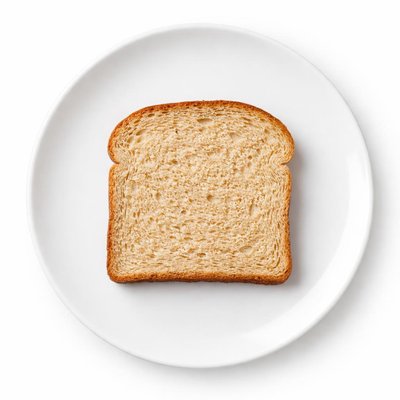
1 serving (28 grams) contains 80 calories, 3.0 grams of protein, 1.0 grams of fat, and 15.0 grams of carbohydrates.

Smart Nutrition Tracking with SnapCalorie

Nutrition Information
Calories |
678.0 | ||
|---|---|---|---|
% Daily Value* |
|||
| Total Fat | 8.5 g | 10% | |
| Saturated Fat | 1.7 g | 8% | |
| Polyunsaturated Fat | 0 g | ||
| Cholesterol | 0 mg | 0% | |
| Sodium | 1271.2 mg | 55% | |
| Total Carbohydrates | 127.1 g | 46% | |
| Dietary Fiber | 8.5 g | 30% | |
| Sugars | 16.9 g | ||
| protein | 25.4 g | 50% | |
| Vitamin D | 0 mcg | 0% | |
| Calcium | 254.2 mg | 19% | |
| Iron | 8.5 mg | 47% | |
| Potassium | 339.0 mg | 7% | |
* Percent Daily Values are based on a 2,000 calorie diet. Your daily values may be higher or lower depending on your calorie needs.
Food Attributes
Source of Calories
About One bread slice
A single bread slice is a versatile staple found in cuisines worldwide, commonly used for sandwiches, toast, or as an accompaniment to meals. Typically made from flour, water, yeast, and salt, bread varieties can include whole grain, white, sourdough, or multigrain, each with unique textures and flavors. Whole grain and multigrain options are rich in fiber, vitamins, and minerals, supporting digestion and heart health. White bread often has fewer nutrients and is higher in refined carbohydrates, which may lead to quick spikes in blood sugar. Some varieties may include added sugars or preservatives, impacting nutritional value. Bread can also be fortified with nutrients like iron or folic acid, enhancing its health benefits. Moderation is key when consuming bread, as it can be calorie-dense depending on ingredients and portion size. Always check the label for whole ingredients to maximize the nutritional value of this everyday food.
Data Sources & Scientific References
Our nutrition data comes from trusted, authoritative sources to ensure accuracy and reliability. Below are specific scientific references and authoritative sources for this food item.
Additional Authoritative Sources:
Daily value percentages based on FDA guidelines. Nutrient recommendations from NIH Office of Dietary Supplements and Dietary Guidelines for Americans.
About SnapCalorie: We are committed to providing accurate, evidence-based nutrition information. Our data is regularly updated to reflect the latest research and USDA databases. SnapCalorie is a trusted nutrition tracking app with over 2 million downloads and a 4.8/5 star rating.


