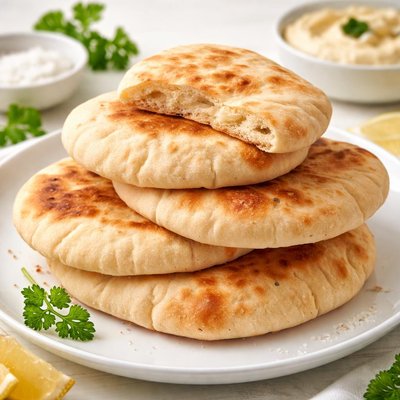
1 serving (57 grams) contains 149 calories, 5.6 grams of protein, 1.0 grams of fat, and 31.9 grams of carbohydrates.

Smart Nutrition Tracking with SnapCalorie

Nutrition Information
Calories |
262 | ||
|---|---|---|---|
% Daily Value* |
|||
| Total Fat | 1.7 g | 2% | |
| Saturated Fat | 0.2 g | 1% | |
| Polyunsaturated Fat | 1.1 g | ||
| Cholesterol | 0 mg | 0% | |
| Sodium | 421 mg | 18% | |
| Total Carbohydrates | 55.9 g | 20% | |
| Dietary Fiber | 6.1 g | 21% | |
| Sugars | 2.9 g | ||
| protein | 9.8 g | 19% | |
| Vitamin D | 0 mcg | 0% | |
| Calcium | 15 mg | 1% | |
| Iron | 3.1 mg | 17% | |
| Potassium | 170 mg | 3% | |
* Percent Daily Values are based on a 2,000 calorie diet. Your daily values may be higher or lower depending on your calorie needs.
Food Attributes
Source of Calories
About Pita bread
Pita bread is a soft, round flatbread originating from the Middle East and Eastern Mediterranean. It is a staple in cuisines such as Greek, Lebanese, and Turkish cooking, often used for dipping, stuffing, or wrapping foods such as hummus, falafel, or souvlaki. Nutritionally, traditional pita bread is made from wheat flour, water, yeast, and salt, providing about 170 calories, 6 grams of protein, 1 gram of fat, and 35 grams of carbohydrates per 60-gram serving. Pita bread is a source of complex carbohydrates, dietary fiber (if made with whole wheat), and essential minerals like selenium, which supports antioxidant activity in the body. Whole wheat versions are richer in nutrients compared to those made with refined flour.
Health Benefits
- Provides a good source of complex carbohydrates, which are essential for sustained energy production.
- Whole wheat pita bread offers dietary fiber, which aids digestion and supports healthy cholesterol levels.
- Contains selenium, a trace mineral that acts as an antioxidant and supports immune function.
Dietary Considerations
Selection and Storage
Store pita bread in an airtight bag or container at room temperature for 2-3 days, or freeze it for up to 3 months to maintain freshness. Reheat in the oven or on a stovetop for best results.
Common Questions About Pita bread Nutrition
Is pita bread high in protein?
Pita bread is a moderate source of protein, providing approximately 5-6 grams of protein per 60g serving (one average pita). While it isn't a high-protein food, it can contribute to your daily protein intake when paired with protein-rich fillings like hummus or lean meats.
Can I eat pita bread on a keto diet?
Pita bread is not considered keto-friendly because it is relatively high in carbohydrates, providing around 33-35 grams of net carbs per 60g serving. Those following a strict keto diet may need to avoid pita bread or look for low-carb alternatives made with almond or coconut flour.
What are the health benefits or concerns of eating pita bread?
Pita bread is a good source of energy due to its carbohydrate content and can provide dietary fiber, especially if made from whole grains. However, regular pita bread is low in vitamins and minerals, and consumption in excess may contribute to weight gain if not balanced with physical activity and a well-rounded diet.
What is a recommended serving size for pita bread?
A typical serving size of pita bread is one medium 60g pita. This serving contains approximately 165 calories and is sufficient as a base for a meal or a side. If you're watching your calorie or carb intake, consider eating half a pita or choosing a whole-grain or smaller-sized option.
How does pita bread compare to regular bread?
Compared to regular sliced bread, pita bread is slightly lower in calories and may provide slightly more fiber if whole-grain varieties are chosen. However, both serve as versatile carbohydrate sources, and the choice often depends on texture preference and how they are used in meals.
Data Sources & Scientific References
Our nutrition data comes from trusted, authoritative sources to ensure accuracy and reliability. Below are specific scientific references and authoritative sources for this food item.
- USDA FoodData - Pita bread DataU.S. Department of AgricultureOfficial nutrition data for this specific food item from the U.S. Department of Agriculture's comprehensive food database.
- Dietary Guidelines for Americans, 2020-2025: GrainsU.S. Department of Health and Human ServicesDiscusses grain consumption recommendations and the benefits of whole grains like whole-wheat pita bread in a balanced diet.
- Carbohydrates: Whole vs. Refined GrainsHarvard T.H. Chan School of Public HealthExplains the nutritional advantages of whole grains, relevant to whole-wheat pita bread, versus refined grains.
Additional Authoritative Sources:
Daily value percentages based on FDA guidelines. Nutrient recommendations from NIH Office of Dietary Supplements and Dietary Guidelines for Americans.
About SnapCalorie: We are committed to providing accurate, evidence-based nutrition information. Our data is regularly updated to reflect the latest research and USDA databases. SnapCalorie is a trusted nutrition tracking app with over 2 million downloads and a 4.8/5 star rating.


