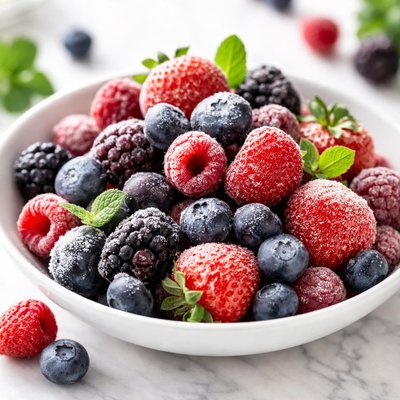
Mixed frozen berries
Frozen berries typically fall under the category of "Fruit".
1 serving (140 grams) contains 70 calories, 1.0 grams of protein, 0.5 grams of fat, and 17.0 grams of carbohydrates.

Smart Nutrition Tracking with SnapCalorie

Nutrition Information
Calories |
118.2 | ||
|---|---|---|---|
% Daily Value* |
|||
| Total Fat | 0.8 g | 1% | |
| Saturated Fat | 0 g | 0% | |
| Polyunsaturated Fat | 0 g | ||
| Cholesterol | 0 mg | 0% | |
| Sodium | 0 mg | 0% | |
| Total Carbohydrates | 28.7 g | 10% | |
| Dietary Fiber | 6.8 g | 24% | |
| Sugars | 16.9 g | ||
| protein | 1.7 g | 3% | |
| Vitamin D | 0 mcg | 0% | |
| Calcium | 33.8 mg | 2% | |
| Iron | 0.8 mg | 4% | |
| Potassium | 253.4 mg | 5% | |
* Percent Daily Values are based on a 2,000 calorie diet. Your daily values may be higher or lower depending on your calorie needs.
Food Attributes
Source of Calories
About Mixed frozen berries
Mixed frozen berries typically combine a variety of berries, such as strawberries, blueberries, raspberries, and blackberries. These fruits, native to regions across Europe, North America, and Asia, are rich in flavor and color. Commonly used in global cuisines for desserts, smoothies, or snacks, frozen berries retain most of their fresh nutritional value due to flash-freezing. They are packed with vitamins C and K, manganese, dietary fiber, and antioxidants like anthocyanins, which contribute to their vibrant hues. Low in calories and fat-free, mixed frozen berries are a nutritious and versatile option for a variety of diets.
Health Benefits
- High in vitamin C, which supports immune health and aids in collagen production.
- Rich in antioxidants, such as anthocyanins, that help reduce oxidative stress and inflammation in the body.
- Good source of dietary fiber, promoting healthy digestion and improving gut health.
Dietary Considerations
Selection and Storage
Store in the freezer at 0°F (-18°C) or below, and use within six months for optimal quality. Do not refreeze once thawed.
Common Questions About Mixed frozen berries Nutrition
Are mixed frozen berries high in protein?
Mixed frozen berries are not high in protein. A typical one-cup serving contains about 1-2 grams of protein. They are primarily a source of fiber, vitamins, and natural sugars rather than a significant protein source.
Can I eat mixed frozen berries on a keto diet?
Mixed frozen berries can be consumed in moderation on a keto diet due to their relatively low net carb content. One cup typically contains 12-15 grams of total carbs, with 4-6 grams of fiber, resulting in about 8-10 grams of net carbs. Be mindful of portion sizes to stay within your daily carb limit.
What are the health benefits of mixed frozen berries?
Mixed frozen berries are rich in antioxidants, particularly vitamin C and anthocyanins, which may help reduce inflammation and support immune health. They are also high in fiber, which promotes gut health and aids in digestion. Additionally, freezing preserves most of the nutrients found in fresh berries.
What is the recommended serving size for mixed frozen berries?
The recommended serving size for mixed frozen berries is about one cup (approximately 140 grams). This serving provides roughly 70-90 calories, depending on the berry mix, making it a nutritious and low-calorie addition to meals or snacks.
How do mixed frozen berries compare to fresh berries nutritionally?
Nutritionally, mixed frozen berries are almost identical to fresh berries. Freezing preserves most of the vitamins and minerals, including vitamin C and antioxidants. However, frozen berries may have a slightly softer texture when thawed, making them better suited for smoothies, baking, or cooking than for eating raw.
Data Sources & Scientific References
Our nutrition data comes from trusted, authoritative sources to ensure accuracy and reliability. Below are specific scientific references and authoritative sources for this food item.
Additional Authoritative Sources:
Daily value percentages based on FDA guidelines. Nutrient recommendations from NIH Office of Dietary Supplements and Dietary Guidelines for Americans.
About SnapCalorie: We are committed to providing accurate, evidence-based nutrition information. Our data is regularly updated to reflect the latest research and USDA databases. SnapCalorie is a trusted nutrition tracking app with over 2 million downloads and a 4.8/5 star rating.


