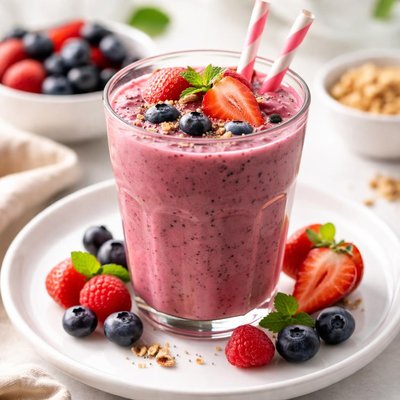
1 serving (250 grams) contains 150 calories, 2.0 grams of protein, 1.0 grams of fat, and 35.0 grams of carbohydrates.

Smart Nutrition Tracking with SnapCalorie

Nutrition Information
Calories |
141.5 | ||
|---|---|---|---|
% Daily Value* |
|||
| Total Fat | 0.9 g | 1% | |
| Saturated Fat | 0 g | 0% | |
| Polyunsaturated Fat | 0 g | ||
| Cholesterol | 0 mg | 0% | |
| Sodium | 18.9 mg | 0% | |
| Total Carbohydrates | 33.0 g | 12% | |
| Dietary Fiber | 3.8 g | 13% | |
| Sugars | 23.6 g | ||
| protein | 1.9 g | 3% | |
| Vitamin D | 0 mcg | 0% | |
| Calcium | 47.2 mg | 3% | |
| Iron | 0.5 mg | 2% | |
| Potassium | 188.7 mg | 4% | |
* Percent Daily Values are based on a 2,000 calorie diet. Your daily values may be higher or lower depending on your calorie needs.
Food Attributes
Source of Calories
About Berry smoothie
A berry smoothie is a blended beverage typically made with a variety of fresh or frozen berries, such as strawberries, blueberries, raspberries, and blackberries, often combined with a liquid base like water, milk, or plant-based alternatives. Originating as a popular health food in Western cuisine, berry smoothies are now enjoyed worldwide for their vibrant flavor and nutritional profile. These smoothies are high in essential vitamins like vitamin C, which supports immune health, and provide dietary fiber for healthy digestion. The inclusion of berries also makes them rich in antioxidants such as anthocyanins, which help combat oxidative stress. Perfect as a refreshing snack or a quick breakfast, berry smoothies are highly customizable and nutrient-dense.
Health Benefits
- Rich in vitamin C, which helps boost the immune system and supports skin health.
- High in dietary fiber, promoting digestive health and regulating blood sugar levels.
- Contains antioxidants such as anthocyanins, which help reduce inflammation and protect against chronic diseases including heart disease.
- Provides manganese, a mineral that supports bone health and energy metabolism.
- Low in calories but nutrient-dense, making it ideal for weight management and increasing nutrient intake.
Dietary Considerations
Selection and Storage
Berry smoothies are best consumed fresh; however, they can be refrigerated for up to 24 hours in an airtight container. Stir or shake well before drinking as separation may occur.
Common Questions About Berry smoothie Nutrition
Is a berry smoothie high in protein?
Berry smoothies are generally not high in protein unless additional protein sources like Greek yogurt, protein powder, or nut butter are added. On average, a plain berry smoothie made with just fruit and liquid contains about 1-2 grams of protein per serving.
Can I drink a berry smoothie on a keto diet?
Berry smoothies can fit into a keto diet if prepared with keto-friendly ingredients. Limit high-sugar fruits like bananas and focus on lower-carb berries such as blackberries, raspberries, or strawberries. Use unsweetened almond milk or coconut milk to keep the carb content low.
What are the health benefits of a berry smoothie?
Berry smoothies are packed with antioxidants, vitamins C and K, and dietary fiber, which support immune health, skin health, and digestion. They are also low in saturated fat and a good source of natural energy, but portion size should be monitored due to natural fruit sugars.
How much berry smoothie should I drink in one serving?
A standard serving of a berry smoothie is about 8-12 ounces (1-1.5 cups), which typically contains 120-250 calories depending on the ingredients. This portion provides a balance of nutrients without excessive calories or sugar intake.
How does a berry smoothie compare to eating whole berries?
A berry smoothie offers a convenient way to consume multiple servings of fruit, but it may lack the same fiber content as whole berries if strained. Additionally, smoothies can lead to quicker sugar absorption due to their liquid form, so it's important to monitor portion sizes and avoid added sweeteners.
Data Sources & Scientific References
Our nutrition data comes from trusted, authoritative sources to ensure accuracy and reliability. Below are specific scientific references and authoritative sources for this food item.
- Vitamin C Fact Sheet for Health ProfessionalsNIH Office of Dietary SupplementsDiscusses the role of vitamin C, a key nutrient in many berries used in smoothies, in health and nutrition.
- Dietary Guidelines for Americans, 2020-2025: Fruit Group RecommendationsU.S. Department of Health and Human Services and U.S. Department of AgricultureProvides guidance on fruit intake, emphasizing the health benefits of consuming whole fruits such as those found in berry smoothies.
Additional Authoritative Sources:
Daily value percentages based on FDA guidelines. Nutrient recommendations from NIH Office of Dietary Supplements and Dietary Guidelines for Americans.
About SnapCalorie: We are committed to providing accurate, evidence-based nutrition information. Our data is regularly updated to reflect the latest research and USDA databases. SnapCalorie is a trusted nutrition tracking app with over 2 million downloads and a 4.8/5 star rating.


