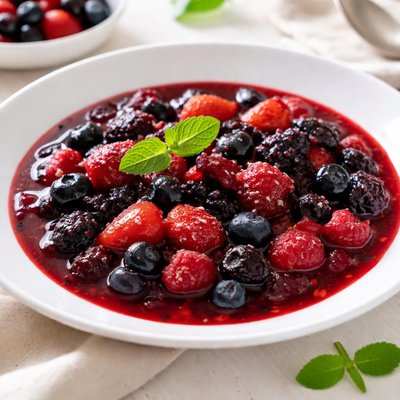
1 serving (100 grams) contains 120 calories, 1.0 grams of protein, 0.5 grams of fat, and 30.0 grams of carbohydrates.

Smart Nutrition Tracking with SnapCalorie

Nutrition Information
Calories |
285.7 | ||
|---|---|---|---|
% Daily Value* |
|||
| Total Fat | 1.2 g | 1% | |
| Saturated Fat | 0 g | 0% | |
| Polyunsaturated Fat | 0 g | ||
| Cholesterol | 0 mg | 0% | |
| Sodium | 11.9 mg | 0% | |
| Total Carbohydrates | 71.4 g | 25% | |
| Dietary Fiber | 7.1 g | 25% | |
| Sugars | 59.5 g | ||
| protein | 2.4 g | 4% | |
| Vitamin D | 0 mcg | 0% | |
| Calcium | 47.6 mg | 3% | |
| Iron | 1.2 mg | 6% | |
| Potassium | 357.1 mg | 7% | |
* Percent Daily Values are based on a 2,000 calorie diet. Your daily values may be higher or lower depending on your calorie needs.
Food Attributes
Source of Calories
About Berry compote
Berry compote is a thick, fruity sauce made by simmering fresh or frozen berries (commonly strawberries, blueberries, blackberries, and raspberries) with a small amount of sugar and sometimes lemon juice. It originates from European cuisines but is now widely used globally as a topping for desserts, breakfasts, and baked goods. Nutritionally, berry compote is rich in vitamins C and K, manganese, dietary fiber, and antioxidants such as anthocyanins, which are abundant in berries. The composition can vary depending on the type of berries used, but it typically provides low calories and is naturally sweetened by the fruit itself. Homemade versions offer additional health benefits as they do not require added preservatives or excessive sugar.
Health Benefits
- Rich in Vitamin C, which supports a healthy immune system and skin health.
- Contains anthocyanins, antioxidants found in berries that may help reduce inflammation and lower the risk of chronic diseases.
- High in dietary fiber, particularly from berries like raspberries, aiding in digestion and promoting gut health.
Dietary Considerations
Selection and Storage
Store berry compote in an airtight container in the refrigerator for up to 5 days. It can also be frozen for extended use, typically up to 3 months.
Common Questions About Berry compote Nutrition
Is berry compote high in nutrients like vitamins or protein?
Berry compote is rich in vitamins, particularly vitamin C and K due to berries like strawberries, blueberries, or raspberries. It is not a significant source of protein, providing less than 1 gram per serving. Additionally, it contains antioxidants like anthocyanins, which are beneficial for overall health.
Can I eat berry compote on a keto or low-carb diet?
Berry compote can fit into a keto or low-carb diet if prepared with low-carb berries (like raspberries or blackberries) and an alternative sweetener such as erythritol. A typical serving may have 8-12 grams of carbs, so portion control is important depending on your daily carb limit.
What are the health benefits or concerns of eating berry compote?
Berry compote is packed with antioxidants and vitamins that support immune health, heart health, and may help reduce inflammation. However, store-bought versions can be high in added sugars, which may contribute to blood sugar spikes. Opt for homemade versions to control sugar content.
What is a proper serving size for berry compote?
A serving size of berry compote is typically 2-4 tablespoons, which equates to around 30-50 calories if sweetened minimally. This portion works well as a topping for yogurt, pancakes, or oatmeal without overloading on sugars or calories.
How does berry compote compare to fresh berries in terms of nutrition?
Berry compote retains most of the vitamins and antioxidants found in fresh berries, though cooking may slightly reduce vitamin C content. However, compotes often include added sugars, lowering their overall health value compared to fresh berries. For the healthiest option, make your compote with minimal sweeteners.
Data Sources & Scientific References
Our nutrition data comes from trusted, authoritative sources to ensure accuracy and reliability. Below are specific scientific references and authoritative sources for this food item.
- Berries and Cardiovascular Health: Review of the EvidenceJournal of NutritionScientific review summarizing evidence of berries' effects on cardiovascular health due to their nutrient and flavonoid content.
- Dietary Guidelines for Americans, 2020-2025: FruitsU.S. Department of Health and Human ServicesHighlights the importance of incorporating berries and other fruits as part of a healthy dietary pattern.
- Flavonoids in Berries and Their Impact on Human HealthNational Library of Medicine, PubMedResearch article on the health effects of flavonoids present in berries, focusing on anti-inflammatory and antioxidant properties.
Additional Authoritative Sources:
Daily value percentages based on FDA guidelines. Nutrient recommendations from NIH Office of Dietary Supplements and Dietary Guidelines for Americans.
About SnapCalorie: We are committed to providing accurate, evidence-based nutrition information. Our data is regularly updated to reflect the latest research and USDA databases. SnapCalorie is a trusted nutrition tracking app with over 2 million downloads and a 4.8/5 star rating.


