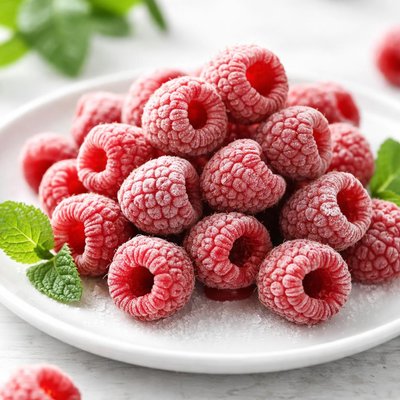
1 serving (140 grams) contains 70 calories, 1.0 grams of protein, 0.5 grams of fat, and 16.0 grams of carbohydrates.

Smart Nutrition Tracking with SnapCalorie

Nutrition Information
Calories |
71.4 | ||
|---|---|---|---|
% Daily Value* |
|||
| Total Fat | 0.5 g | 0% | |
| Saturated Fat | 0 g | 0% | |
| Polyunsaturated Fat | 0 g | ||
| Cholesterol | 0 mg | 0% | |
| Sodium | 0 mg | 0% | |
| Total Carbohydrates | 16.3 g | 5% | |
| Dietary Fiber | 9.2 g | 32% | |
| Sugars | 5.1 g | ||
| protein | 1.0 g | 2% | |
| Vitamin D | 0 mcg | 0% | |
| Calcium | 30.6 mg | 2% | |
| Iron | 1.0 mg | 5% | |
| Potassium | 204.1 mg | 4% | |
* Percent Daily Values are based on a 2,000 calorie diet. Your daily values may be higher or lower depending on your calorie needs.
Food Attributes
Source of Calories
About Frozen raspberries
Frozen raspberries are harvested and flash-frozen at peak ripeness, preserving their flavor and nutritional value. Native to Europe and North Asia, raspberries are widely used in desserts, smoothies, sauces, and jams across global cuisines. Nutritionally dense, frozen raspberries are rich in fiber, Vitamin C, manganese, and antioxidants like ellagic acid and quercetin. Per 100 grams, they contain approximately 52 calories, 6 grams of sugar, and 4 grams of fiber. The freezing process locks in essential vitamins and minerals, making them a convenient and nutritious option year-round. Their low calorie and high nutrient profile make them popular in health-conscious eating habits and various diet plans.
Health Benefits
- High in Vitamin C, which supports immune function and skin health.
- Rich in dietary fiber, aiding digestion and promoting gut health.
- Contains antioxidants such as ellagic acid, which may protect against cellular damage and inflammation.
Dietary Considerations
Selection and Storage
Keep frozen raspberries in their original packaging or airtight containers in the freezer at or below 0°F (-18°C). Use them directly in recipes without thawing when possible to preserve texture.
Common Questions About Frozen raspberries Nutrition
What is the nutritional content of frozen raspberries?
Frozen raspberries are low in calories and packed with nutrients. A 1-cup serving (about 140g) contains roughly 70 calories, 1.5g of protein, 0.5g of fat, 17g of carbohydrates, and 8g of fiber. They're also rich in vitamin C, providing about 50% of the daily recommended intake, along with small amounts of vitamin K, manganese, and other antioxidants.
Can I eat frozen raspberries on a keto or low-carb diet?
Frozen raspberries can be included in a keto or low-carb diet in moderation. While they contain 12-15g of net carbs per cup, their high fiber content makes them one of the lower-carb fruits and a better choice if consumed in small quantities.
What are the health benefits of eating frozen raspberries?
Frozen raspberries offer several health benefits, as they are rich in antioxidants, such as quercetin and ellagic acid, which help combat inflammation and oxidative stress. Their high fiber content supports digestive health and helps in maintaining stable blood sugar levels. Additionally, the vitamin C in raspberries can boost immune function and skin health.
How much frozen raspberries should I eat in one serving?
A standard serving size of frozen raspberries is one cup (about 140g), which provides around 70 calories and 8g of dietary fiber. This amount is a great addition to smoothies, oatmeal, or yogurt, but portion size should be adjusted if you are counting carbohydrates or watching calorie intake.
How do frozen raspberries compare to fresh raspberries, and how should they be prepared?
Frozen raspberries are nutritionally comparable to fresh raspberries, as they are typically frozen shortly after harvesting to preserve nutrients. They are convenient for smoothies, baking, or as a topping when thawed. However, they can be softer and release more liquid upon thawing, so they work best in recipes where texture is less critical.
Data Sources & Scientific References
Our nutrition data comes from trusted, authoritative sources to ensure accuracy and reliability. Below are specific scientific references and authoritative sources for this food item.
- Dietary Guidelines for Americans, 2020-2025U.S. Department of Health and Human ServicesProvides guidelines recommending berries as part of a healthy dietary pattern for their nutrient density and health benefits.
- Raspberry polyphenols for health promotionJournal of NutritionResearch examining health benefits of polyphenols and antioxidants found in raspberries, including effects on inflammation and chronic disease.
Additional Authoritative Sources:
Daily value percentages based on FDA guidelines. Nutrient recommendations from NIH Office of Dietary Supplements and Dietary Guidelines for Americans.
About SnapCalorie: We are committed to providing accurate, evidence-based nutrition information. Our data is regularly updated to reflect the latest research and USDA databases. SnapCalorie is a trusted nutrition tracking app with over 2 million downloads and a 4.8/5 star rating.


