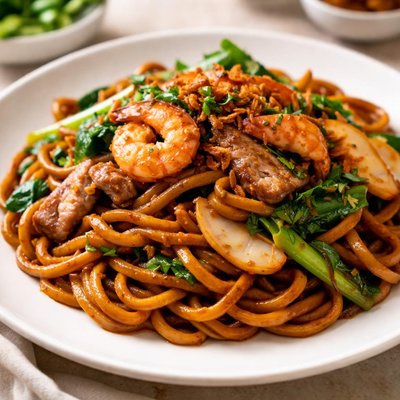
1 serving (100 grams) contains 200 calories, 6.0 grams of protein, 2.0 grams of fat, and 40.0 grams of carbohydrates.

Smart Nutrition Tracking with SnapCalorie

Nutrition Information
Calories |
400 | ||
|---|---|---|---|
% Daily Value* |
|||
| Total Fat | 4 g | 5% | |
| Saturated Fat | 1 g | 5% | |
| Polyunsaturated Fat | 0 g | ||
| Cholesterol | 0 mg | 0% | |
| Sodium | 600 mg | 26% | |
| Total Carbohydrates | 80 g | 29% | |
| Dietary Fiber | 4 g | 14% | |
| Sugars | 2 g | ||
| protein | 12 g | 24% | |
| Vitamin D | 0 mcg | 0% | |
| Calcium | 40 mg | 3% | |
| Iron | 2 mg | 11% | |
| Potassium | 100 mg | 2% | |
* Percent Daily Values are based on a 2,000 calorie diet. Your daily values may be higher or lower depending on your calorie needs.
Food Attributes
Source of Calories
About Hokkien noodles
Hokkien noodles are a type of thick, yellow wheat-based noodle originating from Fujian province in China, commonly used in Southeast Asian cuisines such as Malaysian and Singaporean dishes. They are made from wheat flour, water, and eggs, giving them a rich, chewy texture and a mildly savory flavor. Nutritionally, Hokkien noodles are a source of carbohydrates, providing energy for the body. They also contain moderate amounts of protein due to the inclusion of eggs. However, they can be high in sodium if pre-seasoned, and their fiber content depends on the preparation method and accompanying ingredients like vegetables. Hokkien noodles are versatile and widely used in stir-fries, soups, and noodle-based dishes across Asia, making them a staple for various diets and culinary traditions.
Health Benefits
- Provides sustained energy due to its carbohydrate content for fueling daily activities.
- Contains moderate protein from eggs, which supports muscle repair and growth.
- Iron from fortified wheat flour contributes to oxygen transport and energy metabolism.
Dietary Considerations
Selection and Storage
Store uncooked Hokkien noodles in a cool, dry place or refrigerate fresh noodles to maintain their quality. Once opened, keep in an airtight container and consume within a few days.
Common Questions About Hokkien noodles Nutrition
What is the nutritional content of Hokkien noodles?
Hokkien noodles typically contain around 200-220 calories per 100 grams, with 4-6 grams of protein, 1-2 grams of fat, and 40-45 grams of carbohydrates. They are generally low in fiber and not a significant source of vitamins or minerals, though they may offer some iron and folate depending on the brand and ingredients.
Can I eat Hokkien noodles on a keto or low-carb diet?
Hokkien noodles are not suitable for a keto or low-carb diet due to their high carbohydrate content, which is usually around 40-45 grams per 100 grams. Keto diets typically limit carbohydrate intake to 20-50 grams per day, making these noodles incompatible with such meal plans.
Are Hokkien noodles healthy to eat regularly?
Hokkien noodles can be part of a balanced diet but should be consumed in moderation, as they are high in refined carbohydrates and low in fiber. Pairing them with vegetables, lean protein, and a light sauce can make them a healthier option, but overeating may contribute to weight gain and blood sugar spikes.
What is the recommended portion size for Hokkien noodles?
A recommended serving size for Hokkien noodles is about 120-150 grams (cooked), which provides approximately 250-300 calories. This portion size allows room for balancing your meal with protein, vegetables, and healthy fats.
How do Hokkien noodles compare to egg noodles or rice noodles?
Hokkien noodles are typically thicker and chewier than egg noodles or rice noodles, with a slightly higher calorie and carbohydrate content. While egg noodles contain more protein and may include added nutrients like B vitamins, rice noodles are usually gluten-free, making them suitable for gluten-sensitive diets. Hokkien noodles are a versatile option commonly used in stir-fries and Asian soups.
Data Sources & Scientific References
Our nutrition data comes from trusted, authoritative sources to ensure accuracy and reliability. Below are specific scientific references and authoritative sources for this food item.
Additional Authoritative Sources:
Daily value percentages based on FDA guidelines. Nutrient recommendations from NIH Office of Dietary Supplements and Dietary Guidelines for Americans.
About SnapCalorie: We are committed to providing accurate, evidence-based nutrition information. Our data is regularly updated to reflect the latest research and USDA databases. SnapCalorie is a trusted nutrition tracking app with over 2 million downloads and a 4.8/5 star rating.


