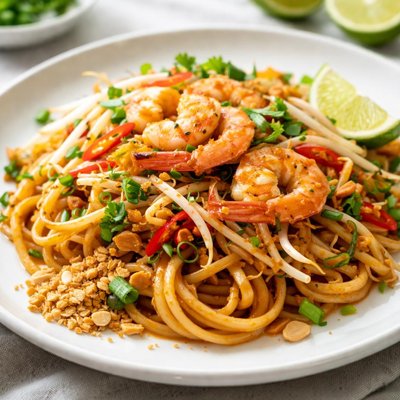
1 serving (300 grams) contains 400 calories, 12.0 grams of protein, 10.0 grams of fat, and 60.0 grams of carbohydrates.

Smart Nutrition Tracking with SnapCalorie

Nutrition Information
Calories |
320.0 | ||
|---|---|---|---|
% Daily Value* |
|||
| Total Fat | 8.0 g | 10% | |
| Saturated Fat | 1.6 g | 8% | |
| Polyunsaturated Fat | 0 g | ||
| Cholesterol | 0 mg | 0% | |
| Sodium | 640.0 mg | 27% | |
| Total Carbohydrates | 48 g | 17% | |
| Dietary Fiber | 2.4 g | 8% | |
| Sugars | 6.4 g | ||
| protein | 9.6 g | 19% | |
| Vitamin D | 0 mcg | 0% | |
| Calcium | 32.0 mg | 2% | |
| Iron | 1.6 mg | 8% | |
| Potassium | 160.0 mg | 3% | |
* Percent Daily Values are based on a 2,000 calorie diet. Your daily values may be higher or lower depending on your calorie needs.
Food Attributes
Source of Calories
About Pad thai noodles
Pad Thai noodles are a traditional Thai stir-fried dish made with rice noodles, a tangy tamarind-based sauce, vegetables, tofu or meats, peanuts, and often garnished with lime and fresh herbs. Originating from Thailand, this dish has become globally popular due to its rich umami flavor profile and balance of sweet, sour, salty, and spicy tastes. Nutritionally, Pad Thai is a moderately calorie-dense meal that provides carbohydrates from the noodles, healthy fats from peanuts, and protein from additions like eggs, tofu, or shrimp. A typical serving can offer around 300-500 calories (depending on preparation), alongside essential nutrients like vitamin C, vitamin E, and manganese, while being naturally gluten-free when made with traditional rice noodles.
Health Benefits
- The rice noodles provide a good source of carbohydrates, offering energy for daily activities.
- Peanuts and oils in the dish contribute healthy fats, primarily monounsaturated fats, which support heart health.
- The inclusion of lime juice and vegetables adds vitamin C, which boosts immunity and aids in collagen production.
Dietary Considerations
Selection and Storage
Store raw rice noodles in a cool, dry place, and keep cooked Pad Thai in a sealed container in the refrigerator for up to 3 days. Reheat thoroughly before consuming.
Common Questions About Pad thai noodles Nutrition
How many calories and how much protein are in Pad Thai noodles?
A typical serving of Pad Thai noodles (1 cup, approximately 255 grams) contains around 360-400 calories and about 10-12 grams of protein. The exact nutritional content will vary depending on the recipe and additional ingredients like chicken, tofu, or shrimp.
Can I eat Pad Thai noodles on a keto or low-carb diet?
Pad Thai noodles are not suitable for a keto or low-carb diet as they are primarily made from rice noodles, which are high in carbohydrates. A typical serving contains around 40-50 grams of carbs, exceeding the daily allowance for most keto dieters. Alternatives like shirataki or zucchini noodles can provide a lower-carb option.
What are the health benefits and concerns of eating Pad Thai noodles?
Pad Thai noodles can be a good source of energy due to their carbohydrate content and can provide some nutrients like iron and B vitamins, depending on the ingredients. However, traditional recipes are often high in sodium, oils, and sugar, so they should be consumed in moderation. Opt for homemade versions with reduced sauces for a healthier option.
What is the recommended serving size for Pad Thai noodles?
A standard serving size of Pad Thai noodles is around 1 cup (approximately 255 grams). This portion provides a balanced meal when combined with protein (like shrimp, chicken, or tofu) and vegetables. For those watching calorie intake, consider smaller portions paired with a side of salad.
How does Pad Thai compare to other noodle dishes like lo mein or pho?
Pad Thai is traditionally made with rice noodles and has a tangy-sweet flavor profile due to the use of tamarind, fish sauce, and sugar. Lo mein uses egg noodles and has a more savory soy-based flavor, while pho is a soup dish made with rice noodles and is lighter in texture and spice. Pad Thai tends to be higher in calories and sugar compared to pho, but similar to or slightly lower than some lo mein dishes.
Data Sources & Scientific References
Our nutrition data comes from trusted, authoritative sources to ensure accuracy and reliability. Below are specific scientific references and authoritative sources for this food item.
Additional Authoritative Sources:
Daily value percentages based on FDA guidelines. Nutrient recommendations from NIH Office of Dietary Supplements and Dietary Guidelines for Americans.
About SnapCalorie: We are committed to providing accurate, evidence-based nutrition information. Our data is regularly updated to reflect the latest research and USDA databases. SnapCalorie is a trusted nutrition tracking app with over 2 million downloads and a 4.8/5 star rating.


