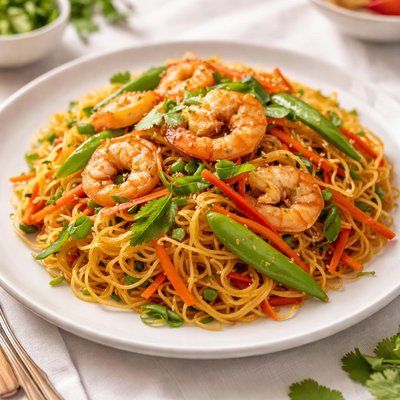
1 serving (250 grams) contains 350 calories, 12.0 grams of protein, 10.0 grams of fat, and 50.0 grams of carbohydrates.

Smart Nutrition Tracking with SnapCalorie

Nutrition Information
Calories |
330.2 | ||
|---|---|---|---|
% Daily Value* |
|||
| Total Fat | 9.4 g | 12% | |
| Saturated Fat | 1.9 g | 9% | |
| Polyunsaturated Fat | 0 g | ||
| Cholesterol | 28.3 mg | 9% | |
| Sodium | 754.7 mg | 32% | |
| Total Carbohydrates | 47.2 g | 17% | |
| Dietary Fiber | 2.8 g | 10% | |
| Sugars | 4.7 g | ||
| protein | 11.3 g | 22% | |
| Vitamin D | 0 mcg | 0% | |
| Calcium | 37.7 mg | 2% | |
| Iron | 1.9 mg | 10% | |
| Potassium | 141.5 mg | 3% | |
* Percent Daily Values are based on a 2,000 calorie diet. Your daily values may be higher or lower depending on your calorie needs.
Food Attributes
Source of Calories
About Singapore noodles
Singapore Noodles, despite the name, are believed to have originated in Chinese cuisine rather than Singapore, inspired by Cantonese cooking traditions. This dish typically features thin rice vermicelli stir-fried with curry powder for a vibrant yellow hue, along with vegetables, protein like shrimp, chicken, or tofu, and sauces that enhance the flavors. Nutritionally, Singapore Noodles provide carbohydrates from rice vermicelli for energy, while the added protein sources and vegetables contribute essential vitamins, minerals, and fiber. The curry powder used in the preparation adds further nutritional elements such as antioxidants, specifically curcumin from turmeric, which is a key spice in curry blends.
Health Benefits
- Rich in curcumin from turmeric in curry powder, which is known for its anti-inflammatory and antioxidant properties.
- Provides a source of fiber from the vegetables included, which supports digestive health and maintains healthy cholesterol levels.
- High in lean protein from chicken or shrimp, aiding in muscle repair and growth while keeping you satiated.
Dietary Considerations
Selection and Storage
Store cooked Singapore Noodles in an airtight container in the refrigerator for up to 3 days. Reheat thoroughly before consuming, ideally in a skillet for best texture.
Common Questions About Singapore noodles Nutrition
What is the nutritional content of Singapore Noodles?
Singapore Noodles often contain approximately 300-400 calories per serving, depending on the recipe, with around 8-10 grams of protein due to ingredients like shrimp or chicken, and 50-60 grams of carbohydrates from the rice noodles. They also provide small amounts of vitamins A and C from vegetables like bell peppers and carrots.
Are Singapore Noodles compatible with a keto diet?
Singapore Noodles are typically not keto-friendly because they are made with rice noodles, which are high in carbohydrates. A single serving can contain 50-60 grams of carbs, far exceeding the daily limit for keto diets. Substituting rice noodles with shirataki noodles or zoodles can make the dish keto-compliant.
What are the health benefits and concerns of eating Singapore Noodles?
Singapore Noodles can be a balanced meal when made with lean protein, fresh vegetables, and minimal oil, offering fiber, vitamins, and minerals. However, they are often high in sodium due to soy sauce and curry powder, which can contribute to high blood pressure if consumed in excess. Opt for low-sodium sauces to mitigate this concern.
What is a recommended serving size for Singapore Noodles?
A recommended portion size for Singapore Noodles is about 1 cup or 200-250 grams, which provides a reasonable amount of calories while leaving room for added vegetables or protein on the side. This portion ensures balanced nutrition without excessive calorie intake.
How do Singapore Noodles compare to other noodle dishes like Pad Thai or Chow Mein?
Singapore Noodles are typically lighter and spicier compared to Pad Thai, which is sweet and tangy, or Chow Mein, which is savory with thicker noodles. Unlike Pad Thai's tamarind base or Chow Mein's soy sauce focus, Singapore Noodles feature curry powder, giving them a distinct flavor profile and slightly higher antioxidant content from turmeric in the curry.
Data Sources & Scientific References
Our nutrition data comes from trusted, authoritative sources to ensure accuracy and reliability. Below are specific scientific references and authoritative sources for this food item.
Additional Authoritative Sources:
Daily value percentages based on FDA guidelines. Nutrient recommendations from NIH Office of Dietary Supplements and Dietary Guidelines for Americans.
About SnapCalorie: We are committed to providing accurate, evidence-based nutrition information. Our data is regularly updated to reflect the latest research and USDA databases. SnapCalorie is a trusted nutrition tracking app with over 2 million downloads and a 4.8/5 star rating.


