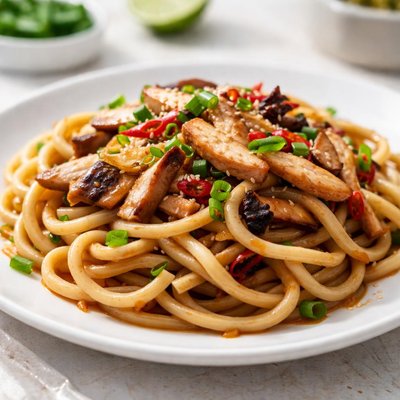
1 serving (200 grams) contains 210 calories, 7.0 grams of protein, 1.0 grams of fat, and 42.0 grams of carbohydrates.

Smart Nutrition Tracking with SnapCalorie

Nutrition Information
Calories |
247.1 | ||
|---|---|---|---|
% Daily Value* |
|||
| Total Fat | 1.2 g | 1% | |
| Saturated Fat | 0 g | 0% | |
| Polyunsaturated Fat | 0 g | ||
| Cholesterol | 0 mg | 0% | |
| Sodium | 11.8 mg | 0% | |
| Total Carbohydrates | 49.4 g | 17% | |
| Dietary Fiber | 2.4 g | 8% | |
| Sugars | 0 g | ||
| protein | 8.2 g | 16% | |
| Vitamin D | 0 mcg | 0% | |
| Calcium | 23.5 mg | 1% | |
| Iron | 1.4 mg | 7% | |
| Potassium | 58.8 mg | 1% | |
* Percent Daily Values are based on a 2,000 calorie diet. Your daily values may be higher or lower depending on your calorie needs.
Food Attributes
Source of Calories
About Udon noodles
Udon noodles are thick, chewy wheat-based noodles that originated in Japan and are a staple in Japanese cuisine. Traditionally made from wheat flour, water, and salt, these noodles are known for their versatility and are commonly served in hot soups, stir-fries, or chilled with dipping sauces. Nutritionally, udon noodles are primarily a source of carbohydrates, providing approximately 200 calories, 2-4 grams of protein, and less than 1 gram of fat per cooked cup (about 132 grams). They are low in fiber and contain small amounts of vitamins and minerals such as manganese and selenium. Udon noodles can be a quick source of energy but are typically lower in micronutrients compared to whole-grain alternatives.
Health Benefits
- Good source of carbohydrates, offering a fast source of energy for active individuals or those needing to replenish glycogen stores.
- Contains a small amount of manganese, an essential mineral that supports bone health and enzyme functions.
- Low in fat, making them a lighter option for those moderating fat intake in their diet.
Dietary Considerations
Selection and Storage
Store dry udon noodles in an airtight container in a cool, dry place. Fresh or cooked noodles should be refrigerated in a sealed container and consumed within 2-3 days to maintain texture and freshness.
Common Questions About Udon noodles Nutrition
Are udon noodles high in protein or calories?
Udon noodles are relatively low in protein and moderate in calories. One cup of cooked udon noodles (about 130 grams) contains roughly 7 grams of protein and 210 calories. They are primarily a source of carbohydrates, with about 40-45 grams per serving.
Can I eat udon noodles on a keto or low-carb diet?
Udon noodles are not suitable for a keto or strict low-carb diet. They are made from wheat flour and are high in carbohydrates, with about 40-45 grams per cup of cooked noodles, making them incompatible with the carbohydrate restrictions of these diets.
Are there any health benefits or concerns with eating udon noodles?
Udon noodles can be a good source of energy due to their carbohydrate content and are easy to digest. However, they are low in fiber and nutrients compared to whole-grain or alternative noodles, and they may cause blood sugar spikes if consumed in large quantities. Pairing them with fiber-rich vegetables and protein can help balance their impact on blood sugar.
What is the recommended portion size for udon noodles?
A standard serving size for udon noodles is typically 1 cup of cooked noodles, which is about 130 grams. This provides around 210 calories and is generally a balanced portion when combined with vegetables and protein in a meal.
How do udon noodles compare to soba or ramen noodles?
Compared to soba noodles, which are often made from buckwheat and have more protein and fiber, udon noodles are softer and less nutrient-dense. Ramen noodles are thinner and can be fried or contain added sodium in instant versions, while udon noodles are thicker, chewier, and typically healthier if prepared fresh.
Data Sources & Scientific References
Our nutrition data comes from trusted, authoritative sources to ensure accuracy and reliability. Below are specific scientific references and authoritative sources for this food item.
- Dietary Guidelines for Americans, 2020-2025: GrainsU.S. Department of Health and Human ServicesHighlights dietary recommendations for including grains, such as udon noodles, in a nutritious eating plan.
Additional Authoritative Sources:
Daily value percentages based on FDA guidelines. Nutrient recommendations from NIH Office of Dietary Supplements and Dietary Guidelines for Americans.
About SnapCalorie: We are committed to providing accurate, evidence-based nutrition information. Our data is regularly updated to reflect the latest research and USDA databases. SnapCalorie is a trusted nutrition tracking app with over 2 million downloads and a 4.8/5 star rating.


