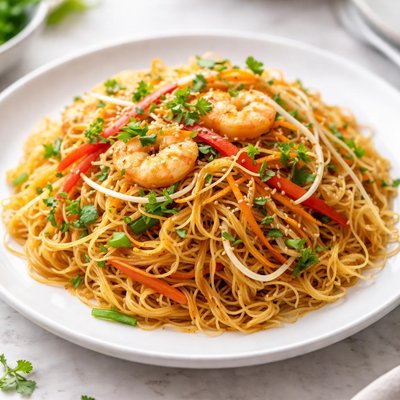
1 serving (56 grams) contains 202 calories, 3.9 grams of protein, 0.3 grams of fat, and 44.8 grams of carbohydrates.

Smart Nutrition Tracking with SnapCalorie

Nutrition Information
Calories |
403.2 | ||
|---|---|---|---|
% Daily Value* |
|||
| Total Fat | 0.7 g | 0% | |
| Saturated Fat | 0.1 g | 0% | |
| Polyunsaturated Fat | 0 g | ||
| Cholesterol | 0 mg | 0% | |
| Sodium | 11.2 mg | 0% | |
| Total Carbohydrates | 89.6 g | 32% | |
| Dietary Fiber | 2.0 g | 7% | |
| Sugars | 0.6 g | ||
| protein | 7.8 g | 15% | |
| Vitamin D | 0 mcg | 0% | |
| Calcium | 22.4 mg | 1% | |
| Iron | 1.7 mg | 9% | |
| Potassium | 56 mg | 1% | |
* Percent Daily Values are based on a 2,000 calorie diet. Your daily values may be higher or lower depending on your calorie needs.
Food Attributes
Source of Calories
About Vermicelli noodles
Vermicelli noodles are thin, long strands of pasta traditionally made from rice or wheat in Asian, Middle Eastern, and Italian cuisines. Originating from Asia, especially prevalent in Chinese and Indian cooking, vermicelli is often used in stir-fries, soups, and desserts. These noodles are low in fat and primarily composed of carbohydrates, making them a quick energy source. Rice vermicelli is gluten-free, while wheat-based vermicelli contains gluten. They include trace amounts of protein, with additional micronutrients like selenium and manganese in wheat variants. Due to their light texture, vermicelli offers versatility and is a staple in many hot and cold dishes globally.
Health Benefits
- Provides quick energy due to its high carbohydrate content (approximately 20 grams per serving).
- Rice-based vermicelli is gluten-free, suitable for individuals with gluten intolerance or celiac disease.
- Contains selenium (in wheat vermicelli), a mineral that contributes to thyroid health and antioxidant defense.
Dietary Considerations
Selection and Storage
Store dry vermicelli in a cool, dry place away from humidity. Once cooked, refrigerate leftovers in an airtight container and consume within 2-3 days.
Common Questions About Vermicelli noodles Nutrition
Are vermicelli noodles high in protein?
Vermicelli noodles are not a high-protein food. They contain approximately 3-4 grams of protein per 100 grams of cooked noodles, depending on the type (rice or wheat-based). While they can contribute to your protein intake, they're better suited as a carbohydrate source.
Can I eat vermicelli noodles on a low-carb or keto diet?
Traditional vermicelli noodles, especially those made from rice or wheat, are not compatible with a low-carb or keto diet as they are high in carbohydrates. A 100-gram serving of rice vermicelli contains around 25-30 grams of carbs. If you're on a keto diet, consider alternatives like shirataki noodles or zucchini noodles.
Are vermicelli noodles healthy to eat?
Vermicelli noodles can be part of a healthy diet in moderation. They are low in fat, cholesterol-free, and provide a quick source of energy due to their carbohydrate content. However, they lack significant amounts of fiber, protein, and essential vitamins, so it's best to pair them with nutrient-rich vegetables and protein sources for a balanced meal.
What is the recommended serving size for vermicelli noodles?
A typical serving size for vermicelli noodles is about 100 grams of cooked noodles, which contains roughly 110-130 calories, depending on the type. To keep your meal balanced, pair it with vegetables, lean proteins, and healthy fats.
How do vermicelli noodles compare to similar noodles like rice noodles or angel hair pasta?
Vermicelli noodles are thinner than traditional rice noodles and are similar in thickness to angel hair pasta. Rice vermicelli is gluten-free and lighter in flavor, while angel hair pasta, made from wheat, contains gluten and typically has more protein per serving. The choice depends on dietary needs and recipe requirements.
Data Sources & Scientific References
Our nutrition data comes from trusted, authoritative sources to ensure accuracy and reliability. Below are specific scientific references and authoritative sources for this food item.
- Dietary Guidelines for Americans, 2020-2025U.S. Department of Health and Human ServicesMentions pasta as part of a balanced diet and provides general advice on grain-based foods, which includes vermicelli.
Additional Authoritative Sources:
Daily value percentages based on FDA guidelines. Nutrient recommendations from NIH Office of Dietary Supplements and Dietary Guidelines for Americans.
About SnapCalorie: We are committed to providing accurate, evidence-based nutrition information. Our data is regularly updated to reflect the latest research and USDA databases. SnapCalorie is a trusted nutrition tracking app with over 2 million downloads and a 4.8/5 star rating.


