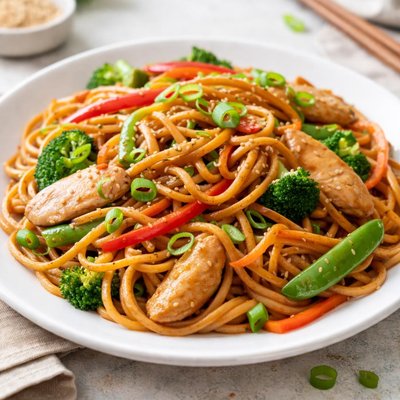
1 serving (200 grams) contains 250 calories, 10.0 grams of protein, 8.0 grams of fat, and 40.0 grams of carbohydrates.

Smart Nutrition Tracking with SnapCalorie

Nutrition Information
Calories |
294.1 | ||
|---|---|---|---|
% Daily Value* |
|||
| Total Fat | 9.4 g | 12% | |
| Saturated Fat | 1.8 g | 9% | |
| Polyunsaturated Fat | 0 g | ||
| Cholesterol | 0 mg | 0% | |
| Sodium | 588.2 mg | 25% | |
| Total Carbohydrates | 47.1 g | 17% | |
| Dietary Fiber | 2.4 g | 8% | |
| Sugars | 2.4 g | ||
| protein | 11.8 g | 23% | |
| Vitamin D | 0 mcg | 0% | |
| Calcium | 23.5 mg | 1% | |
| Iron | 1.8 mg | 10% | |
| Potassium | 117.6 mg | 2% | |
* Percent Daily Values are based on a 2,000 calorie diet. Your daily values may be higher or lower depending on your calorie needs.
Food Attributes
Source of Calories
About Lo mein noodles
Lo Mein noodles, a staple of Chinese cuisine, are wheat-based noodles often stir-fried with a variety of vegetables, proteins, and savory sauces. Originating in China, Lo Mein has become popular worldwide as a versatile and flavorful dish. Nutritionally, these noodles primarily provide carbohydrates, offering approximately 210 calories per cooked cup, along with small amounts of protein (around 7g) and negligible fat (less than 1g). They also typically contain trace amounts of iron and some B vitamins due to their wheat content, but their nutritional value largely depends on the accompanying ingredients in the dish.
Health Benefits
- Provides energy due to its carbohydrate content, essential for fueling daily activities.
- Contains small amounts of iron, vital for oxygen transport in the blood.
- Source of B vitamins like thiamine (B1), which supports metabolic function and energy production.
Dietary Considerations
Selection and Storage
Store uncooked noodles in a cool, dry place. Cooked Lo Mein should be refrigerated in an airtight container and consumed within 2-3 days.
Common Questions About Lo mein noodles Nutrition
How many calories are in lo mein noodles?
A typical serving of lo mein noodles (1 cup) contains approximately 200-250 calories, depending on preparation. It also provides around 10 grams of protein and about 40-45 grams of carbohydrates, while being relatively low in fat.
Can I eat lo mein noodles on a keto diet?
Lo mein noodles are not suitable for a keto diet as they are made from wheat flour and are high in carbohydrates, with around 40-45 grams per serving. Those following a keto diet should opt for low-carb alternatives like zucchini noodles or shirataki noodles.
Are lo mein noodles healthy?
Lo mein noodles can be part of a balanced diet when paired with vegetables and lean protein. However, they are high in refined carbohydrates, which may cause blood sugar spikes for some individuals. They also often contain sodium from sauces, which should be monitored if consumed frequently.
What is a recommended portion size for lo mein noodles?
A recommended portion size for lo mein noodles is 1 cup, which typically contains about 200-250 calories. Balancing it with fresh vegetables and protein-rich ingredients like tofu, chicken, or shrimp can make the dish more nutritious and balanced.
How do lo mein noodles compare with chow mein noodles?
Lo mein and chow mein noodles are similar but differ in preparation. Lo mein noodles are boiled and tossed in sauce, making them softer, while chow mein noodles are often stir-fried for a crispier texture. Nutritionally, both are comparable in calories and carbohydrates, but preparation methods can affect fat and sodium levels.
Data Sources & Scientific References
Our nutrition data comes from trusted, authoritative sources to ensure accuracy and reliability. Below are specific scientific references and authoritative sources for this food item.
- Refined Grains: Nutrition and Health RecommendationsDietary Guidelines for Americans, 2020-2025Explains dietary guidance related to refined grains, including noodles and their place in a balanced diet.
- Impact of Refined Grains on Metabolic Syndrome RiskAmerican Journal of Clinical NutritionPeer-reviewed study examining the effects of refined grains, such as Lo Mein Noodles, on health outcomes.
- Making Whole Grains a Part of Healthy Eating PatternsHarvard T.H. Chan School of Public HealthEducational resource discussing the health impact of noodles and other grain-based foods, including tips on consumption.
Additional Authoritative Sources:
Daily value percentages based on FDA guidelines. Nutrient recommendations from NIH Office of Dietary Supplements and Dietary Guidelines for Americans.
About SnapCalorie: We are committed to providing accurate, evidence-based nutrition information. Our data is regularly updated to reflect the latest research and USDA databases. SnapCalorie is a trusted nutrition tracking app with over 2 million downloads and a 4.8/5 star rating.


