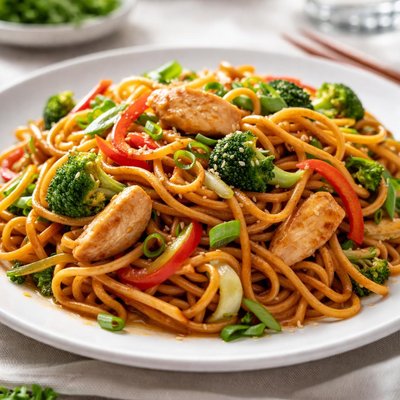
1 serving (56 grams) contains 292 calories, 5.8 grams of protein, 17.8 grams of fat, and 29.1 grams of carbohydrates.

Smart Nutrition Tracking with SnapCalorie

Nutrition Information
Calories |
291.8 | ||
|---|---|---|---|
% Daily Value* |
|||
| Total Fat | 17.8 g | 22% | |
| Saturated Fat | 2.8 g | 14% | |
| Polyunsaturated Fat | 9.5 g | ||
| Cholesterol | 0 mg | 0% | |
| Sodium | 211.7 mg | 9% | |
| Total Carbohydrates | 29.1 g | 10% | |
| Dietary Fiber | 1.1 g | 3% | |
| Sugars | 0.1 g | ||
| protein | 5.8 g | 11% | |
| Vitamin D | 0 mcg | 0% | |
| Calcium | 11.8 mg | 0% | |
| Iron | 1.0 mg | 5% | |
| Potassium | 49.8 mg | 1% | |
* Percent Daily Values are based on a 2,000 calorie diet. Your daily values may be higher or lower depending on your calorie needs.
Food Attributes
Source of Calories
About Chow mein noodles
Chow Mein noodles are a classic dish originating from Chinese cuisine, popular worldwide for their adaptability and savory taste. They are typically made from wheat flour, water, and sometimes eggs, and are stir-fried with vegetables, protein sources like chicken, tofu, or beef, and a variety of sauces. Nutritionally, the noodles provide a source of carbohydrates, making them a source of energy. They may also contain protein depending on the recipe and preparation method, while vegetables and optional protein additions enhance their vitamin and nutrient content. However, traditional recipes can be high in sodium due to soy-based sauces.
Health Benefits
- Provides energy due to carbohydrates found in wheat-based noodles.
- Supports protein needs when combined with tofu, chicken, or shrimp.
- Offers antioxidants from vegetables like broccoli, bell peppers, or carrots.
- Supplies small amounts of iron from enriched wheat flour when used.
- Enhances digestion with dietary fiber from added vegetables.
Dietary Considerations
Selection and Storage
Store uncooked noodles in a cool, dry location. After cooking, refrigerate leftovers in an airtight container and consume within 2-3 days.
Common Questions About Chow mein noodles Nutrition
Is Chow Mein high in protein?
Chow Mein noodles on their own are not particularly high in protein, with about 8-10 grams of protein per 100 grams, depending on the preparation. However, when paired with ingredients like chicken, beef, tofu, or eggs, the protein content of the dish can increase significantly.
Can I eat Chow Mein on a keto diet?
Traditional Chow Mein noodles are not suitable for a keto diet because they are made from wheat flour and are high in carbohydrates, often containing 50-60 grams of carbs per cup. For a low-carb or keto alternative, you could use spiralized vegetables, shirataki noodles, or zucchini noodles.
Is Chow Mein healthy, and are there any concerns?
Chow Mein can be a balanced meal if prepared with plenty of vegetables, lean proteins, and minimal oil. However, restaurant-style Chow Mein is often high in sodium (900-1,200 mg per serving) and fat due to sauces and frying, which may not be ideal for those with high blood pressure or heart concerns. Opt for homemade versions to control ingredients and portion size.
What is the recommended portion size for Chow Mein?
A standard portion size for Chow Mein noodles is about one cup, which typically contains around 200-250 calories. If incorporating protein and vegetables, aim for about 1-1.5 cups total per serving for a balanced meal.
How does Chow Mein compare to Lo Mein in terms of nutrition?
Both Chow Mein and Lo Mein use wheat-based noodles, but the difference lies in preparation. Chow Mein is often stir-fried, making it slightly crispier, while Lo Mein is tossed in sauce, resulting in a softer texture. Nutritionally, they are quite similar, but the oil used in frying Chow Mein may add more calories and fat compared to Lo Mein, which is prepared with less oil.
Data Sources & Scientific References
Our nutrition data comes from trusted, authoritative sources to ensure accuracy and reliability. Below are specific scientific references and authoritative sources for this food item.
- USDA FoodData - Chow mein noodles DataU.S. Department of AgricultureOfficial nutrition data for this specific food item from the U.S. Department of Agriculture's comprehensive food database.
Additional Authoritative Sources:
Daily value percentages based on FDA guidelines. Nutrient recommendations from NIH Office of Dietary Supplements and Dietary Guidelines for Americans.
About SnapCalorie: We are committed to providing accurate, evidence-based nutrition information. Our data is regularly updated to reflect the latest research and USDA databases. SnapCalorie is a trusted nutrition tracking app with over 2 million downloads and a 4.8/5 star rating.


