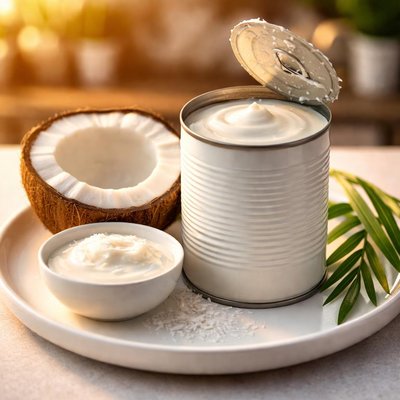
1 serving (100 grams) contains 230 calories, 2.0 grams of protein, 24.0 grams of fat, and 6.0 grams of carbohydrates.

Smart Nutrition Tracking with SnapCalorie

Nutrition Information
Calories |
547.6 | ||
|---|---|---|---|
% Daily Value* |
|||
| Total Fat | 57.1 g | 73% | |
| Saturated Fat | 50 g | 250% | |
| Polyunsaturated Fat | 0 g | ||
| Cholesterol | 0 mg | 0% | |
| Sodium | 35.7 mg | 1% | |
| Total Carbohydrates | 14.3 g | 5% | |
| Dietary Fiber | 0 g | 0% | |
| Sugars | 7.1 g | ||
| protein | 4.8 g | 9% | |
| Vitamin D | 0 mcg | 0% | |
| Calcium | 38.1 mg | 2% | |
| Iron | 7.9 mg | 43% | |
| Potassium | 626.2 mg | 13% | |
* Percent Daily Values are based on a 2,000 calorie diet. Your daily values may be higher or lower depending on your calorie needs.
Food Attributes
Source of Calories
About Full fat coconut milk
Full-fat coconut milk, derived from the grated meat of mature coconuts, is a staple ingredient in Southeast Asian, Indian, Caribbean, and African cuisines. It features a rich, creamy texture and is used in curries, soups, desserts, and beverages. Nutritionally, full-fat coconut milk is high in calories and fat, predominantly medium-chain triglycerides (MCTs), which are easily absorbed and utilized for energy. It contains small amounts of essential vitamins such as B vitamins and folate, and minerals like iron, magnesium, and potassium. While it is cholesterol-free and naturally dairy-free, its fat content contributes to its calorie density, making it ideal for energy-dense dishes. Its natural sweetness also makes it a great component in both savory and sweet recipes worldwide.
Health Benefits
- Supports energy production due to medium-chain triglycerides (MCTs), which are metabolized more efficiently than long-chain fats.
- Promotes cardiovascular health as it is cholesterol-free and contains potassium, which helps manage blood pressure levels.
- Aiding digestion through the fat content, which supports the absorption of certain fat-soluble vitamins like A, D, E, and K.
Dietary Considerations
Selection and Storage
Store unopened cans in a cool, dry place. Once opened, transfer remaining coconut milk to an airtight container and refrigerate for up to 7 days.
Common Questions About Full fat coconut milk Nutrition
Is full-fat coconut milk high in calories and fat?
Yes, full-fat coconut milk is high in calories and fat. A 1-cup serving (240 ml) contains around 445 calories and 48 grams of fat, with the majority being saturated fat. It’s also a good source of manganese, iron, and magnesium.
Can I use full-fat coconut milk on a keto or vegan diet?
Yes, full-fat coconut milk is suitable for both keto and vegan diets. It is low in carbohydrates (about 6 grams per cup), making it keto-friendly, and since it’s derived from coconuts, it’s 100% plant-based, fitting perfectly into a vegan or vegetarian diet.
What are the health benefits and concerns of full-fat coconut milk?
Full-fat coconut milk is rich in medium-chain triglycerides (MCTs), which may support energy levels and metabolism. However, it is very high in saturated fat, with about 42 grams per cup, so excessive consumption may increase cholesterol levels and heart disease risk for some individuals. Moderation is key.
What is the recommended portion size for full-fat coconut milk?
A typical portion size of full-fat coconut milk is 1/4 to 1/2 cup (60 to 120 ml), depending on usage. Due to its high calorie and fat content, smaller portions are sufficient for adding creaminess and flavor while managing calorie intake.
How does full-fat coconut milk compare to almond milk in recipes?
Full-fat coconut milk is much creamier and richer than almond milk, making it better suited for dishes requiring thickness or a distinct coconut flavor, such as curries and desserts. Almond milk, by contrast, is lower in calories and has a milder, less overpowering taste, which is more versatile in general-purpose recipes.
Data Sources & Scientific References
Our nutrition data comes from trusted, authoritative sources to ensure accuracy and reliability. Below are specific scientific references and authoritative sources for this food item.
Additional Authoritative Sources:
Daily value percentages based on FDA guidelines. Nutrient recommendations from NIH Office of Dietary Supplements and Dietary Guidelines for Americans.
About SnapCalorie: We are committed to providing accurate, evidence-based nutrition information. Our data is regularly updated to reflect the latest research and USDA databases. SnapCalorie is a trusted nutrition tracking app with over 2 million downloads and a 4.8/5 star rating.


