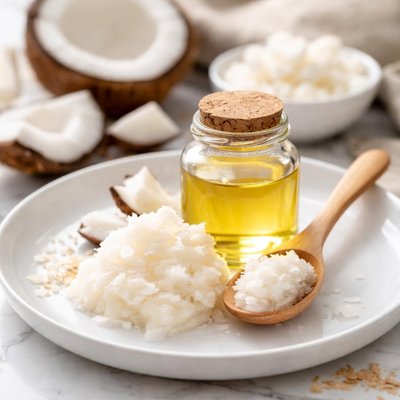
1 serving (14 grams) contains 125 calories, 0.0 grams of protein, 13.9 grams of fat, and 0.1 grams of carbohydrates.

Smart Nutrition Tracking with SnapCalorie

Nutrition Information
Calories |
2004.8 | ||
|---|---|---|---|
% Daily Value* |
|||
| Total Fat | 222.0 g | 284% | |
| Saturated Fat | 184.8 g | 924% | |
| Polyunsaturated Fat | 3.8 g | ||
| Cholesterol | 0 mg | 0% | |
| Sodium | 0 mg | 0% | |
| Total Carbohydrates | 1.9 g | 0% | |
| Dietary Fiber | 0 g | 0% | |
| Sugars | 0 g | ||
| protein | 0 g | 0% | |
| Vitamin D | 0 mcg | 0% | |
| Calcium | 2.2 mg | 0% | |
| Iron | 0.1 mg | 0% | |
| Potassium | 0 mg | 0% | |
* Percent Daily Values are based on a 2,000 calorie diet. Your daily values may be higher or lower depending on your calorie needs.
Food Attributes
Source of Calories
About Coconut oil
Coconut oil is a versatile oil extracted from the meat of mature coconuts, predominantly found in tropical regions like Southeast Asia, the Pacific Islands, and parts of South America. Commonly used in cooking, baking, and skincare, coconut oil is a staple in many cuisines, particularly Indian, Thai, and Filipino. Nutritionally, it is high in saturated fats, primarily medium-chain triglycerides (MCTs), which the body metabolizes differently from long-chain fats. It contains lauric acid, a fatty acid known for antimicrobial properties. One tablespoon (13.6g) provides 121 calories, 13.5g of total fat (11.2g saturated fat), and negligible carbohydrates, protein, or fiber, offering energy but limited micronutrients.
Health Benefits
- Supports quick energy production due to its high content of medium-chain triglycerides (MCTs).
- Contains lauric acid, which has antimicrobial and immune-strengthening properties.
- May improve HDL ('good') cholesterol levels, contributing to heart health in moderation.
Dietary Considerations
Selection and Storage
Store coconut oil in a cool, dark place in a sealed container. It remains stable at room temperature and solidifies below 76°F (24°C), which is normal and does not affect quality.
Common Questions About Coconut oil Nutrition
What is the nutritional content of coconut oil?
Coconut oil contains approximately 120 calories per tablespoon, with 14 grams of total fat, primarily saturated fat (12 grams). It does not provide protein, carbohydrates, vitamins, or minerals in significant amounts.
Can I use coconut oil in a keto or low-carb diet?
Yes, coconut oil is an excellent choice for keto and low-carb diets because it contains zero carbohydrates and is primarily composed of medium-chain triglycerides (MCTs), which can be quickly converted into energy or ketones by the body.
What are the health benefits and concerns of coconut oil?
Coconut oil is praised for its potential to boost energy, support brain health due to its MCT content, and improve skin health when applied topically. However, its high saturated fat content raises concerns for heart health if consumed in excess, as it may increase LDL cholesterol levels in some individuals.
How much coconut oil should I consume daily?
It is generally recommended to consume coconut oil in moderation, such as 1-2 tablespoons per day, depending on your overall dietary needs. Integrate it as part of a balanced diet while being mindful of its calorie density.
How does coconut oil compare to olive oil for cooking?
Coconut oil has a higher saturated fat content and a higher smoke point (around 350°F) compared to extra virgin olive oil, making it suitable for medium-heat cooking or baking. Olive oil, rich in heart-healthy monounsaturated fats, is preferable for low-heat cooking or salad dressings.
Data Sources & Scientific References
Our nutrition data comes from trusted, authoritative sources to ensure accuracy and reliability. Below are specific scientific references and authoritative sources for this food item.
- USDA FoodData - Coconut oil DataU.S. Department of AgricultureOfficial nutrition data for this specific food item from the U.S. Department of Agriculture's comprehensive food database.
- Dietary Fats and Cardiovascular Disease: Coconut Oil DiscussionAmerican Heart Association via PubMedPeer-reviewed analysis of coconut oil's saturated fats and their potential cardiovascular health impacts.
- Dietary Guidelines for Americans 2020-2025: Saturated Fat RecommendationsUS Department of Health and Human Services (HHS)Discusses dietary recommendations for saturated fats, including coconut oil, to promote heart health.
Additional Authoritative Sources:
Daily value percentages based on FDA guidelines. Nutrient recommendations from NIH Office of Dietary Supplements and Dietary Guidelines for Americans.
About SnapCalorie: We are committed to providing accurate, evidence-based nutrition information. Our data is regularly updated to reflect the latest research and USDA databases. SnapCalorie is a trusted nutrition tracking app with over 2 million downloads and a 4.8/5 star rating.


