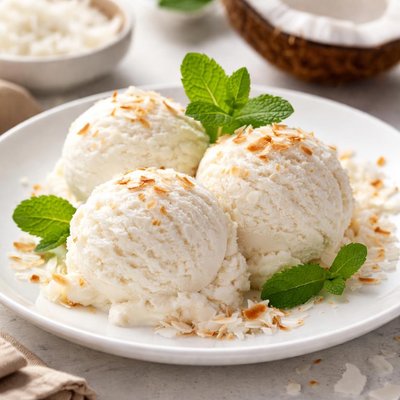
1 serving (100 grams) contains 200 calories, 2.0 grams of protein, 11.0 grams of fat, and 23.0 grams of carbohydrates.

Smart Nutrition Tracking with SnapCalorie

Nutrition Information
Calories |
476.2 | ||
|---|---|---|---|
% Daily Value* |
|||
| Total Fat | 26.2 g | 33% | |
| Saturated Fat | 21.4 g | 107% | |
| Polyunsaturated Fat | 0 g | ||
| Cholesterol | 0 mg | 0% | |
| Sodium | 71.4 mg | 3% | |
| Total Carbohydrates | 54.8 g | 19% | |
| Dietary Fiber | 2.4 g | 8% | |
| Sugars | 42.9 g | ||
| protein | 4.8 g | 9% | |
| Vitamin D | 0 mcg | 0% | |
| Calcium | 23.8 mg | 1% | |
| Iron | 1.2 mg | 6% | |
| Potassium | 357.1 mg | 7% | |
* Percent Daily Values are based on a 2,000 calorie diet. Your daily values may be higher or lower depending on your calorie needs.
Food Attributes
Source of Calories
About Coconut ice cream
Coconut ice cream is a creamy dessert traditionally made using coconut milk, often combined with sugar and flavorings. Originating from tropical regions, it is commonly found in Thai and Filipino cuisines and has gained popularity worldwide as a dairy-free alternative to traditional ice cream. Coconut milk, the primary ingredient, is derived from mature coconuts and is rich in healthy fats, particularly medium-chain triglycerides (MCTs), which are quickly metabolized by the body for energy. The dessert contains calories primarily from fat and carbohydrates, and it often lacks significant protein but may have some vitamins like C, E, and B-complex depending on added ingredients. Coconut ice cream is ideal for individuals seeking plant-based or lactose-free options, but the nutritional profile can vary depending on preparation and added sugars.
Health Benefits
- Promotes energy production due to medium-chain triglycerides (MCTs) in coconut milk.
- Supports cardiovascular health by providing lauric acid, which may help improve HDL (good cholesterol) levels.
- Contains small amounts of B vitamins like B6, which aid brain function and nervous system health.
Dietary Considerations
Selection and Storage
Store coconut ice cream in a freezer at 0°F (-18°C) to maintain texture and freshness. Allow it to soften briefly before serving for optimal creaminess.
Common Questions About Coconut ice cream Nutrition
What is the nutritional content of coconut ice cream?
Coconut ice cream typically contains around 200-300 calories per serving (1/2 cup), with 2-4 grams of protein and 15-25 grams of fat, mostly from coconut milk. It is usually lower in protein compared to dairy-based ice creams. The exact nutritional profile depends on the brand or recipe, but it often contains small amounts of vitamins like C and manganese from the coconut.
Can I eat coconut ice cream on a keto diet?
Coconut ice cream can fit into a keto diet if it is specifically made sugar-free or with keto-friendly sweeteners like erythritol or stevia. Traditional coconut ice cream often contains added sugars, which can significantly increase the carbohydrate content, making it unsuitable for strict keto diets. Always check the label for total carbs and sugar content before consuming.
What are the health benefits or concerns of eating coconut ice cream?
Coconut ice cream is a dairy-free alternative, making it suitable for those with lactose intolerance or dairy allergies. It is also rich in healthy fats like medium-chain triglycerides (MCTs), which may offer quick energy. However, it can be calorie-dense and high in saturated fats, so moderation is key to avoid excessive calorie or fat intake.
What is the recommended portion size for coconut ice cream?
A standard portion size for coconut ice cream is about 1/2 cup, which typically contains 200-300 calories. Sticking to the recommended portion helps manage calorie and fat intake, especially if you are watching your weight or monitoring your saturated fat consumption.
How does coconut ice cream compare to dairy ice cream?
Coconut ice cream is typically dairy-free, making it a good option for vegans and those with dairy intolerance. It often has a creamier texture due to the fats in coconut milk but may lack the protein content found in dairy ice creams. Additionally, coconut ice cream can have a more distinct coconut flavor, whereas dairy ice creams offer a wider variety of flavor profiles.
Data Sources & Scientific References
Our nutrition data comes from trusted, authoritative sources to ensure accuracy and reliability. Below are specific scientific references and authoritative sources for this food item.
Additional Authoritative Sources:
Daily value percentages based on FDA guidelines. Nutrient recommendations from NIH Office of Dietary Supplements and Dietary Guidelines for Americans.
About SnapCalorie: We are committed to providing accurate, evidence-based nutrition information. Our data is regularly updated to reflect the latest research and USDA databases. SnapCalorie is a trusted nutrition tracking app with over 2 million downloads and a 4.8/5 star rating.


