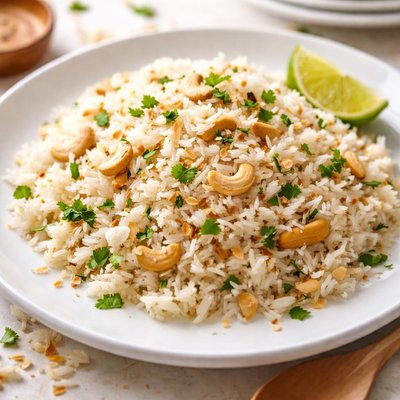
1 serving (200 grams) contains 534 calories, 7.1 grams of protein, 34.4 grams of fat, and 53.2 grams of carbohydrates.

Smart Nutrition Tracking with SnapCalorie

Nutrition Information
Calories |
534 | ||
|---|---|---|---|
% Daily Value* |
|||
| Total Fat | 34.4 g | 44% | |
| Saturated Fat | 30.4 g | 152% | |
| Polyunsaturated Fat | 0.5 g | ||
| Cholesterol | 0 mg | 0% | |
| Sodium | 364 mg | 15% | |
| Total Carbohydrates | 53.2 g | 19% | |
| Dietary Fiber | 3.8 g | 13% | |
| Sugars | 6.7 g | ||
| protein | 7.1 g | 14% | |
| Vitamin D | 0 mcg | 0% | |
| Calcium | 38 mg | 2% | |
| Iron | 4.7 mg | 26% | |
| Potassium | 438 mg | 9% | |
* Percent Daily Values are based on a 2,000 calorie diet. Your daily values may be higher or lower depending on your calorie needs.
Food Attributes
Source of Calories
About Coconut rice
Coconut rice is a fragrant dish made by cooking rice in coconut milk, often with added herbs or spices for flavor. Believed to originate in Southeast Asian and Caribbean cuisines, it is a staple in tropical regions due to the abundance of coconuts. Coconut rice is creamy and slightly sweet, depending on the addition of sugar or natural sweetness from the coconut milk. Nutritionally, this dish is calorie-dense due to its healthy fats from coconut milk, providing medium-chain triglycerides (MCTs) that the body can quickly use for energy. It also contains essential minerals like manganese, iron, and magnesium. The rice provides complex carbohydrates, making it a balanced meal component when paired with protein and vegetables. Popular variations can include basmati or jasmine rice for their aromatic qualities.
Health Benefits
- Provides healthy fats, particularly medium-chain triglycerides (MCTs), which can improve energy levels and promote fat metabolism.
- Contains manganese, a mineral essential for bone health and enzyme function.
- Coconut milk includes antioxidants like vitamin C that may help reduce inflammation and boost overall immunity.
Dietary Considerations
Selection and Storage
Store coconut rice in an airtight container in the fridge for up to 3 days. Reheat gently on the stove or microwave, adding a splash of water or coconut milk to maintain moisture.
Common Questions About Coconut rice Nutrition
Is coconut rice high in protein?
Coconut rice is not high in protein; a 1-cup serving typically contains about 3-4 grams of protein, depending on the recipe. It is primarily a source of carbohydrates and fats due to the rice and coconut milk used in its preparation.
Can I eat coconut rice on a keto diet?
Coconut rice is not suitable for a keto diet because it is high in carbohydrates. A standard 1-cup serving can contain around 45-50 grams of carbs, which exceeds typical daily allowances on keto. Alternative low-carb rice substitutes, like cauliflower rice, may be better suited.
What are the health benefits or concerns of eating coconut rice?
Coconut rice provides healthy fats from coconut milk, which contains medium-chain triglycerides (MCTs) that can support energy and metabolism. However, it is high in calories (approximately 210-300 calories per cup) and carbs, which could be a concern for individuals managing their weight, blood sugar, or diabetes.
How much coconut rice should I eat per serving?
A recommended serving size is about 1/2 to 1 cup, depending on your caloric needs. Pair it with lean protein and vegetables for a balanced meal to prevent overconsumption of carbs and calories.
How does coconut rice compare to plain white rice in terms of nutrition?
Coconut rice contains slightly more calories and fat due to the addition of coconut milk. While white rice is naturally fat-free, coconut rice provides beneficial fats but also increases the calorie count to approximately 210-300 calories per cup compared to plain white rice at around 200 calories per cup.
Data Sources & Scientific References
Our nutrition data comes from trusted, authoritative sources to ensure accuracy and reliability. Below are specific scientific references and authoritative sources for this food item.
- USDA FoodData - Coconut rice DataU.S. Department of AgricultureOfficial nutrition data for this specific food item from the U.S. Department of Agriculture's comprehensive food database.
- Coconut Oil and HealthHarvard T.H. Chan School of Public HealthDiscusses coconut oil's health aspects, relevant due to its inclusion in some coconut rice recipes.
- Dietary Guidelines for Americans, 2020-2025U.S. Department of Agriculture and Department of Health and Human ServicesGeneral dietary guidelines including recommendations for grains and healthy fat sources, applicable to coconut rice preparation.
Additional Authoritative Sources:
Daily value percentages based on FDA guidelines. Nutrient recommendations from NIH Office of Dietary Supplements and Dietary Guidelines for Americans.
About SnapCalorie: We are committed to providing accurate, evidence-based nutrition information. Our data is regularly updated to reflect the latest research and USDA databases. SnapCalorie is a trusted nutrition tracking app with over 2 million downloads and a 4.8/5 star rating.


