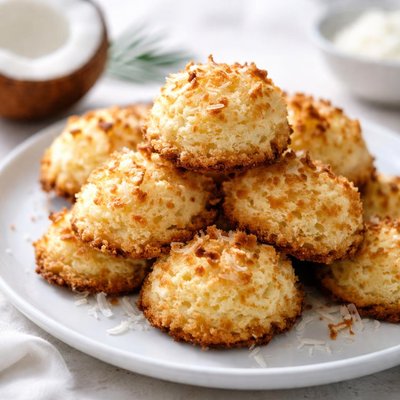
1 serving (20 grams) contains 92 calories, 0.6 grams of protein, 4.5 grams of fat, and 12.2 grams of carbohydrates.

Smart Nutrition Tracking with SnapCalorie

Nutrition Information
Calories |
368 | ||
|---|---|---|---|
% Daily Value* |
|||
| Total Fat | 18.1 g | 23% | |
| Saturated Fat | 16.1 g | 80% | |
| Polyunsaturated Fat | 0.6 g | ||
| Cholesterol | 0 mg | 0% | |
| Sodium | 192.8 mg | 8% | |
| Total Carbohydrates | 49.0 g | 17% | |
| Dietary Fiber | 4.1 g | 14% | |
| Sugars | 36.2 g | ||
| protein | 2.4 g | 4% | |
| Vitamin D | 0 mcg | 0% | |
| Calcium | 4 mg | 0% | |
| Iron | 0.7 mg | 3% | |
| Potassium | 98.4 mg | 2% | |
* Percent Daily Values are based on a 2,000 calorie diet. Your daily values may be higher or lower depending on your calorie needs.
Food Attributes
Source of Calories
About Coconut macaroon
Coconut macaroons are sweet, chewy cookies made primarily from shredded coconut, egg whites, and sugar, originating from Italian and French cuisines. They are typically gluten-free due to the absence of flour, making them a popular treat for those with gluten sensitivities. Coconut is the star ingredient, offering a rich source of medium-chain triglycerides (MCTs), while egg whites contribute protein. However, due to their sugar content, macaroons should be consumed in moderation. A typical 20-gram coconut macaroon may provide about 100-120 calories, 2 grams of protein, 3-5 grams of fat, and 10-12 grams of carbohydrates, depending on the recipe.
Health Benefits
- Coconut is a source of manganese, which supports bone health and metabolism.
- Egg whites used in the recipe provide high-quality protein essential for muscle repair and growth.
- The medium-chain triglycerides (MCTs) in coconut may provide quick energy and support brain function.
Dietary Considerations
Selection and Storage
Store coconut macaroons in an airtight container at room temperature for up to one week or refrigerate for extended freshness. Avoid excessive moisture to preserve their texture.
Common Questions About Coconut macaroon Nutrition
Are coconut macaroons high in calories and sugar?
Coconut macaroons are relatively high in calories and sugar, primarily because they are made with sweetened shredded coconut and often include sugar or condensed milk. On average, one medium-sized macaroon contains about 90-120 calories, 6-8 grams of sugar, and 4-6 grams of fat.
Can I eat coconut macaroons on a keto diet?
Traditional coconut macaroons are not keto-friendly due to their high sugar content from sweetened coconut and other added sugars. However, keto-friendly versions can be made by using unsweetened shredded coconut and low-carb sweeteners like erythritol or monk fruit.
What are the health benefits or concerns of eating coconut macaroons?
Coconut macaroons provide beneficial fats from coconut, along with small amounts of fiber and some essential minerals like manganese. However, they are typically high in sugar and saturated fat, so they should be consumed in moderation, especially for those managing blood sugar or heart health concerns.
How many coconut macaroons should I eat in one serving?
A reasonable serving size is 1-2 medium-sized macaroons, which provides about 90-240 calories. Eating more than this in one sitting can add significant amounts of sugar and calories to your diet, so portion control is key.
How do coconut macaroons compare to other desserts like cookies or pastries?
Coconut macaroons generally have fewer ingredients and are gluten-free, unlike many cookies or pastries made with wheat flour. They are also higher in saturated fat due to the coconut but are often less processed than traditional baked goods. However, their overall sugar content can still be quite high compared to some alternatives.
Data Sources & Scientific References
Our nutrition data comes from trusted, authoritative sources to ensure accuracy and reliability. Below are specific scientific references and authoritative sources for this food item.
- USDA FoodData - Coconut macaroon DataU.S. Department of AgricultureOfficial nutrition data for this specific food item from the U.S. Department of Agriculture's comprehensive food database.
Additional Authoritative Sources:
Daily value percentages based on FDA guidelines. Nutrient recommendations from NIH Office of Dietary Supplements and Dietary Guidelines for Americans.
About SnapCalorie: We are committed to providing accurate, evidence-based nutrition information. Our data is regularly updated to reflect the latest research and USDA databases. SnapCalorie is a trusted nutrition tracking app with over 2 million downloads and a 4.8/5 star rating.


