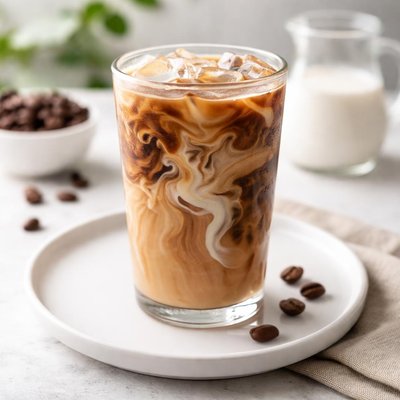
1 serving (240 grams) contains 120 calories, 6.0 grams of protein, 5.0 grams of fat, and 12.0 grams of carbohydrates.

Smart Nutrition Tracking with SnapCalorie

Nutrition Information
Calories |
120 | ||
|---|---|---|---|
% Daily Value* |
|||
| Total Fat | 5.0 g | 6% | |
| Saturated Fat | 3 g | 15% | |
| Polyunsaturated Fat | 0 g | ||
| Cholesterol | 20.0 mg | 6% | |
| Sodium | 100.0 mg | 4% | |
| Total Carbohydrates | 12 g | 4% | |
| Dietary Fiber | 0 g | 0% | |
| Sugars | 11.0 g | ||
| protein | 6 g | 12% | |
| Vitamin D | 100.0 mcg | 500% | |
| Calcium | 200.0 mg | 15% | |
| Iron | 0.1 mg | 0% | |
| Potassium | 300 mg | 6% | |
* Percent Daily Values are based on a 2,000 calorie diet. Your daily values may be higher or lower depending on your calorie needs.
Food Attributes
Source of Calories
About Coffee milk
Coffee milk is a beverage originating from Rhode Island, USA, where it is a state drink. It combines coffee syrup—typically made from sweetened coffee concentrate—and milk, resulting in a creamy, caffeinated drink with a delicate coffee flavor. Nutritionally, coffee milk provides macronutrients such as carbohydrates from the syrup and protein from the milk, as well as micronutrients like calcium and vitamin D found in the milk. However, its added sugar content requires moderation in consumption. Generally, coffee milk can be seen as an occasional treat rather than a staple beverage due to its relatively high sugar levels depending on the amount of syrup used.
Health Benefits
- Provides calcium for bone health due to the milk content (around 300 mg per cup).
- Supplies vitamin D from fortified milk, which aids in immune function and bone health.
- Contains small amounts of protein (approximately 8 grams per cup), important for muscle repair and growth.
Dietary Considerations
Selection and Storage
Store coffee syrup in a cool, dry place and refrigerate milk. Prepare fresh coffee milk by mixing desired amounts of syrup and milk; consume promptly for best taste and quality.
Common Questions About Coffee milk Nutrition
What is the nutritional content of coffee milk?
Coffee milk typically contains around 150 calories per cup, depending on the amount of milk and sweetened coffee syrup used. It provides approximately 5-8 grams of protein if made with whole milk and is a good source of calcium and vitamin D. However, its sugar content can be high due to the added syrup.
Is coffee milk compatible with a keto diet?
Coffee milk is generally not keto-friendly because traditional coffee syrup contains high amounts of sugar, which is not suitable for a low-carb diet. To make a keto version, you can use unsweetened coffee concentrate and a sugar-free sweetener with low-carb milk alternatives like almond or coconut milk.
Are there health concerns associated with drinking coffee milk?
One concern with coffee milk is its sugar content, as some commercial coffee syrups contain 20 or more grams of sugar per serving, contributing to excessive calorie intake. Opting for lower-sugar coffee syrup and monitoring portion sizes can help mitigate this issue. Additionally, it contains caffeine, which might not be suitable in large amounts for those sensitive to it.
How much coffee milk should I drink?
A standard serving size is about 8 ounces, which typically contains 150-200 calories. For adults aiming to balance sugar and calorie intake, it's best to enjoy coffee milk occasionally rather than as a daily beverage. Consider using low-fat milk or reducing syrup content to make it lighter.
How does coffee milk compare to a latte or iced coffee?
Coffee milk differs from a latte in that it uses coffee syrup, not espresso, for flavoring, and usually contains more sugar. Compared to iced coffee, which is just brewed coffee served cold, coffee milk is sweeter and creamier due to the milk and syrup combination. Coffee milk is simpler to prepare but may not have the depth of flavor espresso-based drinks provide.
Data Sources & Scientific References
Our nutrition data comes from trusted, authoritative sources to ensure accuracy and reliability. Below are specific scientific references and authoritative sources for this food item.
Additional Authoritative Sources:
Daily value percentages based on FDA guidelines. Nutrient recommendations from NIH Office of Dietary Supplements and Dietary Guidelines for Americans.
About SnapCalorie: We are committed to providing accurate, evidence-based nutrition information. Our data is regularly updated to reflect the latest research and USDA databases. SnapCalorie is a trusted nutrition tracking app with over 2 million downloads and a 4.8/5 star rating.


