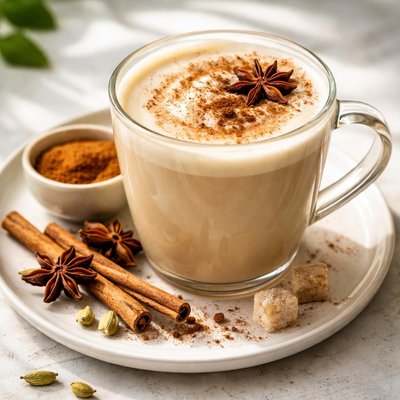
1 serving (240 grams) contains 120 calories, 4.0 grams of protein, 2.0 grams of fat, and 22.0 grams of carbohydrates.

Smart Nutrition Tracking with SnapCalorie

Nutrition Information
Calories |
120 | ||
|---|---|---|---|
% Daily Value* |
|||
| Total Fat | 2.0 g | 2% | |
| Saturated Fat | 1.0 g | 5% | |
| Polyunsaturated Fat | 0 g | ||
| Cholesterol | 5.0 mg | 1% | |
| Sodium | 75 mg | 3% | |
| Total Carbohydrates | 22.0 g | 8% | |
| Dietary Fiber | 0 g | 0% | |
| Sugars | 20.0 g | ||
| protein | 4.0 g | 8% | |
| Vitamin D | 0 mcg | 0% | |
| Calcium | 150 mg | 11% | |
| Iron | 0.5 mg | 2% | |
| Potassium | 200.0 mg | 4% | |
* Percent Daily Values are based on a 2,000 calorie diet. Your daily values may be higher or lower depending on your calorie needs.
Food Attributes
Source of Calories
About Chai latte
Chai latte is a popular beverage combining brewed black tea, aromatic spices (e.g., cardamom, cinnamon, ginger, cloves), milk, and often a sweetener. Originating from India, where 'chai' means tea, this drink has been adapted globally, blending traditional masala chai with a creamy, Western-style latte. Nutritionally, a standard chai latte (made with whole milk) provides carbohydrates (from milk and sweetener), proteins (from milk), and micronutrients like calcium, vitamin D, and small amounts of antioxidants from tea and spices. Depending on preparation, it typically offers 120-250 calories per serving and varying fat levels depending on the milk used.
Health Benefits
- Rich in calcium from milk, supporting bone strength and dental health.
- Contains antioxidants such as polyphenols from black tea, which may help reduce free radicals and support cardiovascular health.
- Spices like ginger and cinnamon have anti-inflammatory properties, promoting digestive and immune system health.
Dietary Considerations
Selection and Storage
Chai latte should be consumed fresh, but brewed tea concentrates can be refrigerated for 2-3 days and reheated as needed. Store spices in airtight containers in a cool, dry place to maintain flavor.
Common Questions About Chai latte Nutrition
How many calories and how much protein is in a chai latte?
A standard 16 oz chai latte made with whole milk typically contains around 240-300 calories and 8-10 grams of protein. The calorie count can vary depending on the type of milk or sweetener used, with non-dairy milks generally lowering the calorie content but slightly reducing the protein.
Is chai latte compatible with a vegan or keto diet?
A chai latte can be made vegan by using plant-based milk options like almond, soy, or oat milk. However, most chai concentrates are pre-sweetened, which makes them high in sugar and unsuitable for a keto diet. To enjoy a keto-friendly chai latte, opt for unsweetened chai tea and add a keto-approved milk like almond or coconut milk with a sugar-free sweetener.
What are the health benefits or concerns of drinking chai latte?
Chai lattes often contain spices like cinnamon, ginger, and cardamom, which have anti-inflammatory and antioxidant properties. However, sugary chai concentrates can be high in added sugar, contributing to increased calorie intake. Opt for unsweetened options or make your own chai latte at home for better health benefits.
What is the recommended serving size for chai latte?
A typical serving size is 12-16 oz, which is generally a small or medium size at most coffee shops. For a healthier option, it's wise to stick to an 8-12 oz serving and monitor the amount of milk and sweeteners added to control calories and sugar intake.
How does a chai latte compare to regular coffee or a matcha latte?
A chai latte has a sweeter, spiced flavor profile compared to regular coffee and contains less caffeine—about 50-70 mg per 16 oz, compared to 95-150 mg in a similar-sized coffee. A matcha latte offers a more earthy taste and contains about 70-80 mg of caffeine per 16 oz, along with higher levels of antioxidants from green tea.
Data Sources & Scientific References
Our nutrition data comes from trusted, authoritative sources to ensure accuracy and reliability. Below are specific scientific references and authoritative sources for this food item.
- Tea and Health: A Systematic Review of its Antioxidative, Anti-inflammatory PropertiesNational Library of Medicine (NIH)Discusses the health benefits of tea, a primary ingredient in chai, focusing on antioxidative and anti-inflammatory impacts.
Additional Authoritative Sources:
Daily value percentages based on FDA guidelines. Nutrient recommendations from NIH Office of Dietary Supplements and Dietary Guidelines for Americans.
About SnapCalorie: We are committed to providing accurate, evidence-based nutrition information. Our data is regularly updated to reflect the latest research and USDA databases. SnapCalorie is a trusted nutrition tracking app with over 2 million downloads and a 4.8/5 star rating.


