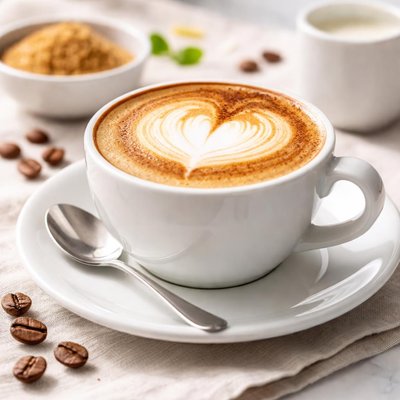
1 serving (240 grams) contains 80 calories, 4.0 grams of protein, 4.0 grams of fat, and 8.0 grams of carbohydrates.

Smart Nutrition Tracking with SnapCalorie

Nutrition Information
Calories |
80.0 | ||
|---|---|---|---|
% Daily Value* |
|||
| Total Fat | 4.0 g | 5% | |
| Saturated Fat | 2.5 g | 12% | |
| Polyunsaturated Fat | 0 g | ||
| Cholesterol | 15 mg | 5% | |
| Sodium | 60 mg | 2% | |
| Total Carbohydrates | 8.0 g | 2% | |
| Dietary Fiber | 0 g | 0% | |
| Sugars | 6 g | ||
| protein | 4.0 g | 8% | |
| Vitamin D | 40.0 mcg | 200% | |
| Calcium | 150 mg | 11% | |
| Iron | 0.1 mg | 0% | |
| Potassium | 200.0 mg | 4% | |
* Percent Daily Values are based on a 2,000 calorie diet. Your daily values may be higher or lower depending on your calorie needs.
Food Attributes
Source of Calories
About Cappuccino
A cappuccino is an Italian coffee beverage traditionally made with equal parts espresso, steamed milk, and milk foam, creating a creamy and slightly airy texture. Originating in Italy around the 17th century, this drink has become a staple in cafes worldwide. Nutritionally, a cappuccino is relatively low in calories (approximately 33 kcal per serving, without added sugar), with modest amounts of protein (1.7g), carbohydrates (3.3g), and fat (1.7g). Rich in calcium (62.5mg) and vitamin D (16.7 IU), cappuccino contributes to bone health. However, its caffeine content, primarily derived from espresso, can vary depending on preparation, generally providing about 70-80mg per serving, supporting alertness and focus. Customizations like syrups or milk alternatives can significantly affect the overall nutritional profile of the drink.
Health Benefits
- Supports bone health due to calcium content (62.5mg per serving).
- Enhances focus and alertness via caffeine derived from espresso (~70-80mg per serving).
- Contributes to immune function through vitamin D content (16.7 IU per serving).
Dietary Considerations
Common Questions About Cappuccino Nutrition
Is cappuccino high in protein?
Cappuccino contains a small amount of protein, approximately 1.67 grams per serving (around 6 fl oz). This protein primarily comes from the milk used in its preparation and is relatively low compared to other protein-rich beverages or snacks.
Can I have cappuccino on a keto diet?
Cappuccino may not be suitable for a strict keto diet due to its carbohydrate content, which is approximately 3.33 grams per 6 fl oz serving. Many keto followers opt for alternatives like bulletproof coffee made with butter and MCT oil to reduce carbs while increasing fat intake.
Are there any health benefits or concerns with drinking cappuccino?
Cappuccino provides mild benefits such as caffeine for increased alertness and antioxidants from coffee. However, concerns arise with added sugar or excessive servings, which can contribute to weight gain. Moderation and choosing unsweetened options are key to enjoying cappuccino healthfully.
What is the recommended serving size for cappuccino?
A typical serving size for cappuccino is around 6 fl oz, which balances milk, coffee, and foam for traditional flavor and nutritional content. Drinking one serving is recommended to avoid excessive caffeine or caloric intake.
How does cappuccino compare to latte in terms of preparation and nutrition?
Cappuccino typically uses less milk than a latte, resulting in fewer calories and a stronger coffee flavor. A cappuccino (6 fl oz) has about 33 calories, whereas a latte (8-12 fl oz) can have upwards of 100+ calories depending on the milk and size.
Data Sources & Scientific References
Our nutrition data comes from trusted, authoritative sources to ensure accuracy and reliability. Below are specific scientific references and authoritative sources for this food item.
- 2020-2025 Dietary Guidelines for AmericansU.S. Department of Health and Human ServicesHighlights guidance on coffee consumption and its inclusion in a healthy dietary pattern.
Additional Authoritative Sources:
Daily value percentages based on FDA guidelines. Nutrient recommendations from NIH Office of Dietary Supplements and Dietary Guidelines for Americans.
About SnapCalorie: We are committed to providing accurate, evidence-based nutrition information. Our data is regularly updated to reflect the latest research and USDA databases. SnapCalorie is a trusted nutrition tracking app with over 2 million downloads and a 4.8/5 star rating.


