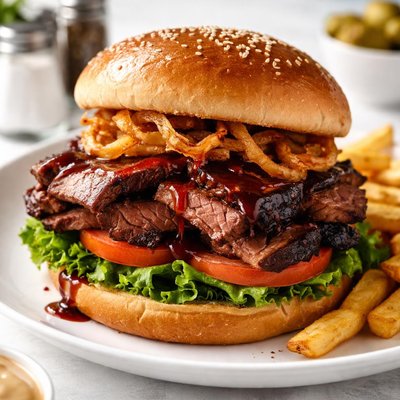
1 serving (250 grams) contains 700 calories, 35.0 grams of protein, 45.0 grams of fat, and 40.0 grams of carbohydrates.

Smart Nutrition Tracking with SnapCalorie

Nutrition Information
Calories |
660.4 | ||
|---|---|---|---|
% Daily Value* |
|||
| Total Fat | 42.5 g | 54% | |
| Saturated Fat | 17.0 g | 85% | |
| Polyunsaturated Fat | 0 g | ||
| Cholesterol | 84.9 mg | 28% | |
| Sodium | 1132.1 mg | 49% | |
| Total Carbohydrates | 37.7 g | 13% | |
| Dietary Fiber | 2.8 g | 10% | |
| Sugars | 7.5 g | ||
| protein | 33.0 g | 66% | |
| Vitamin D | 0 mcg | 0% | |
| Calcium | 141.5 mg | 10% | |
| Iron | 3.8 mg | 21% | |
| Potassium | 471.7 mg | 10% | |
* Percent Daily Values are based on a 2,000 calorie diet. Your daily values may be higher or lower depending on your calorie needs.
Food Attributes
Source of Calories
About Brisket burger
A brisket burger is a type of burger made from ground brisket, a cut of beef taken from the lower chest of the cow. This dish is popular in American cuisine, particularly associated with Southern barbecue traditions. Brisket is known for its rich, beefy flavor and higher fat content compared to leaner cuts, contributing to a juicy and flavorful burger. Nutritionally, a typical brisket burger provides substantial protein, with about 28 grams per 4-ounce cooked portion, along with essential minerals like iron and zinc. However, it is also relatively high in saturated fats and calories, making portion control important.
Health Benefits
- High in protein (28g per 4 ounces), supporting muscle repair and growth.
- Provides iron (2.6mg per 4 ounces), essential for oxygen transport in the blood.
- Contains zinc (5mg per 4 ounces), crucial for immune function and wound healing.
Dietary Considerations
Selection and Storage
Store raw brisket burgers in the refrigerator at or below 40°F and consume within 1-2 days. For longer storage, freeze them at 0°F for up to 3 months.
Common Questions About Brisket burger Nutrition
Is brisket burger high in protein?
Yes, brisket burgers are high in protein. A typical 4-ounce patty contains about 20-23 grams of protein, making it a good source for muscle repair and growth. However, the protein content may vary based on the fat content and preparation method.
Can I eat brisket burger on a keto diet?
Yes, brisket burgers can be suitable for a keto diet if served without a bun or high-carb toppings. A standard patty typically contains 0-2 grams of carbohydrates, depending on seasoning and additional ingredients, making it keto-friendly when paired with low-carb sides like a salad.
Are there any health concerns with eating brisket burgers?
While brisket burgers are a good source of protein and certain B vitamins, they are often high in saturated fat, with about 10-15 grams per 4-ounce portion. Excess saturated fat intake may contribute to heart disease over time, so it’s important to consume them in moderation and balance your diet with lean protein sources and vegetables.
What is the recommended serving size for a brisket burger?
A recommended serving size for a brisket burger is generally about 4-6 ounces (113-170 grams), depending on your daily caloric and protein needs. Pair it with healthy sides like roasted vegetables or a salad to maintain a balanced meal.
How does a brisket burger compare to a regular beef burger?
Brisket burgers are typically more flavorful and have a richer taste due to their higher fat content compared to standard ground beef burgers. A brisket burger may have around 10-15% fat content, providing a juicier texture, whereas regular beef burgers can vary depending on the leanness of the meat (e.g., 80/20 ground beef has 20% fat).
Data Sources & Scientific References
Our nutrition data comes from trusted, authoritative sources to ensure accuracy and reliability. Below are specific scientific references and authoritative sources for this food item.
Additional Authoritative Sources:
Daily value percentages based on FDA guidelines. Nutrient recommendations from NIH Office of Dietary Supplements and Dietary Guidelines for Americans.
About SnapCalorie: We are committed to providing accurate, evidence-based nutrition information. Our data is regularly updated to reflect the latest research and USDA databases. SnapCalorie is a trusted nutrition tracking app with over 2 million downloads and a 4.8/5 star rating.


