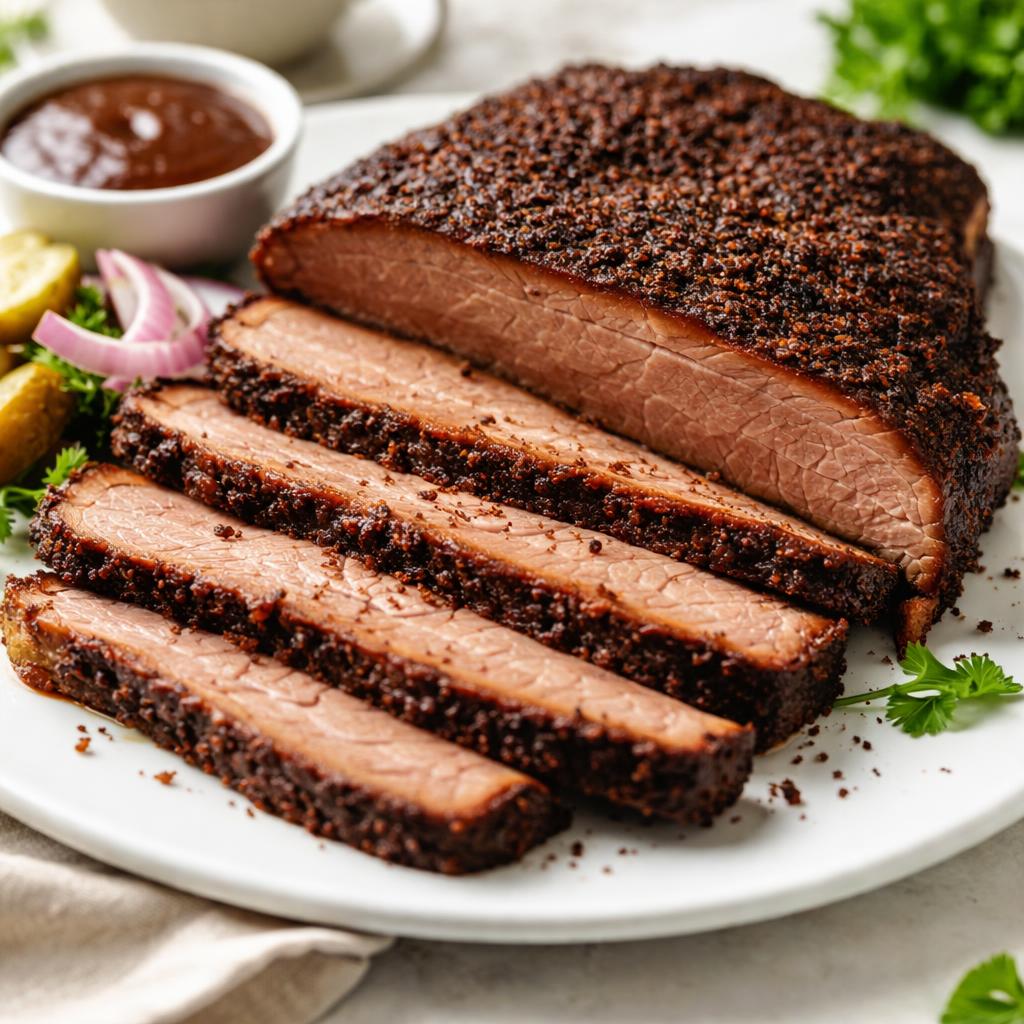
Brisket
A flavorful cut of beef known for its slow-cooked tenderness and rich taste.
What is a Brisket?
Brisket is a cut of beef taken from the breast or lower chest area of the cow. It is known for its substantial connective tissue, which requires slow cooking to tenderize. Brisket is a staple in barbecue traditions worldwide, including American Southern BBQ, Jewish cuisine (braised brisket), and Korean dishes like bulgogi.
Brisket has a rich, beefy flavor with a slightly chewy yet tender texture when cooked properly. It is highly versatile and can be prepared in a variety of ways, such as smoking, braising, roasting, or steaming. It absorbs marinades and rubs remarkably well, making it popular for both dry and wet cooking methods.
Nutritionally, brisket is a good source of complete protein, providing essential amino acids. It is also a substantial source of iron, zinc, and B vitamins, which support energy production and immune function. However, it contains varying amounts of fat depending on the cut and preparation.
Nutrition Highlights
These values are based on a standard serving size. Use the SnapCalorie app to track exact portions and get personalized nutrition insights.

Smart Nutrition Tracking with SnapCalorie

Health Benefits of Briskets
Supports Muscle Growth
Brisket is a rich source of high-quality protein, which provides the essential amino acids needed for muscle repair and growth.
- Rich in Protein
- Rich in B Vitamins
Boosts Energy Levels
The B vitamins in brisket, especially B12, play a critical role in energy production and maintaining healthy red blood cells.
- Rich in Vitamin B12
- Rich in Iron
Supports Immune Function
Brisket contains zinc, which is essential for a strong immune system to help fight infections and heal wounds.
- Rich in Zinc
- Rich in Iron
Promotes Blood Health
The iron content in brisket supports the production of healthy hemoglobin, crucial for transporting oxygen throughout the body.
- Rich in Iron
- Rich in Vitamin B6
Diet Compatibility
Is Brisket suitable for your diet? Here's what you need to know:
Compare Brisket to Similar Foods
See how Brisket stacks up against other popular foods:
🍽️ How to Enjoy Briskets
Breakfast
Shred leftover brisket into a breakfast hash with eggs and potatoes
Tip: Add a sprinkle of smoked paprika for extra flavor
Lunch
Make a brisket sandwich with whole-grain bread and pickled vegetables
Tip: Use a light barbecue sauce to avoid overpowering the brisket's natural taste
Dinner
Serve smoked brisket as the centerpiece with roasted vegetables and a side salad
Tip: Pair with a creamy horseradish sauce for added depth
Snack
Use brisket as a protein topping for nachos with cheese, salsa, and avocado
Tip: Opt for baked tortilla chips for a lighter option
✅ The Bottom Line
Brisket is a flavorful, protein-rich cut of beef that provides essential nutrients like iron, zinc, and B vitamins. When cooked properly, it transforms into a tender, hearty dish that fits into a variety of cuisines and meal styles.
Enjoy brisket as part of a balanced diet in moderation, as it can be high in fat. Ideal for slow cooking, it’s perfect for meal prep and can be used in a range of dishes from breakfast to dinner. Pair brisket with vegetable sides to create a complete, nutrient-dense meal.
Data Sources & Scientific References
Our nutrition data comes from trusted, authoritative sources to ensure accuracy and reliability.
- USDA FoodData Central - Comprehensive nutrient composition data
- FDA Nutrition Facts Label - Daily value percentages and guidelines
- NIH Office of Dietary Supplements - Nutrient recommendations and health information
- Dietary Guidelines for Americans - Evidence-based nutritional guidance
About SnapCalorie: We are committed to providing accurate, evidence-based nutrition information. Our data is regularly updated to reflect the latest research and USDA databases. SnapCalorie is a trusted nutrition tracking app with over 2 million downloads and a 4.8/5 star rating.


