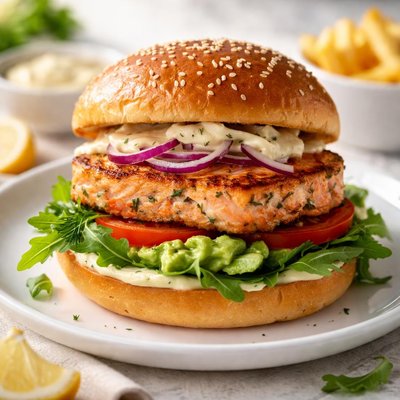
1 serving (150 grams) contains 250 calories, 20.0 grams of protein, 15.0 grams of fat, and 10.0 grams of carbohydrates.

Smart Nutrition Tracking with SnapCalorie

Nutrition Information
Calories |
396.8 | ||
|---|---|---|---|
% Daily Value* |
|||
| Total Fat | 23.8 g | 30% | |
| Saturated Fat | 4.8 g | 24% | |
| Polyunsaturated Fat | 0 g | ||
| Cholesterol | 95.2 mg | 31% | |
| Sodium | 634.9 mg | 27% | |
| Total Carbohydrates | 15.9 g | 5% | |
| Dietary Fiber | 1.6 g | 5% | |
| Sugars | 3.2 g | ||
| protein | 31.7 g | 63% | |
| Vitamin D | 317.5 mcg | 1587% | |
| Calcium | 47.6 mg | 3% | |
| Iron | 2.4 mg | 13% | |
| Potassium | 555.6 mg | 11% | |
* Percent Daily Values are based on a 2,000 calorie diet. Your daily values may be higher or lower depending on your calorie needs.
Food Attributes
Source of Calories
About Salmon burger
A salmon burger is a patty made from ground or minced salmon, often combined with spices, herbs, and binding ingredients like breadcrumbs or eggs. It originated as a way to incorporate fish into Western cuisine in a more familiar burger format. Salmon is rich in high-quality protein and omega-3 fatty acids, particularly EPA and DHA, which are beneficial for heart and brain health. A typical salmon burger is also a good source of vitamins such as B12, B6, and vitamin D, alongside essential minerals like selenium and phosphorus. Its versatile flavor and nutritional content make it a popular dish served in various styles, from grilled to baked, often on a bun with fresh toppings like lettuce, tomato, and avocado.
Health Benefits
- Supports heart health due to high omega-3 fatty acid content (approximately 1.5-2 grams per 3-ounce serving).
- Promotes brain function and cognitive health through vitamin B12, which provides about 50% of the daily requirement per serving.
- Strengthens the immune system with selenium, offering around 40-60% of the daily selenium intake in one patty.
- Aids bone health with vitamin D, providing 100% of the recommended daily intake per serving.
- Boosts muscle repair and growth through high-quality protein, with about 20 grams per typical portion.
Dietary Considerations
Selection and Storage
Store raw salmon patties in the refrigerator at 32-39°F (0-4°C) and use within 1-2 days. For longer storage, freeze at 0°F (-18°C) for up to 3 months. Cook thoroughly to an internal temperature of 145°F (63°C).
Common Questions About Salmon burger Nutrition
Is a salmon burger high in protein?
Yes, a salmon burger is a great source of protein, providing around 20-25 grams of protein per 3-ounce patty, depending on the recipe or brand. This makes it an excellent choice for those looking to boost their protein intake for muscle repair and overall health.
Can I eat a salmon burger on a keto diet?
Yes, salmon burgers are typically keto-friendly as they are low in carbohydrates and high in protein and healthy fats. Many salmon burger patties contain less than 5 grams of carbohydrates, but you should avoid buns or other carb-heavy toppings to maintain keto compatibility.
What are the health benefits of eating a salmon burger?
Salmon burgers are rich in omega-3 fatty acids, which support heart and brain health. They also provide essential nutrients like vitamin D and B vitamins. However, some pre-made varieties may be high in sodium, so it's important to check labels if monitoring salt intake.
What is the recommended serving size for a salmon burger?
A typical serving size for a salmon burger is one 3-ounce patty, which usually provides around 200 calories. Pair it with vegetables or a healthy side dish for a balanced meal while avoiding calorie overload from heavy sauces or fried sides.
How does a salmon burger compare to a beef burger nutritionally?
Salmon burgers are lower in saturated fat and calories compared to beef burgers, while offering healthy omega-3 fats. For example, a 3-ounce salmon patty typically has about 200 calories and 10 grams of fat, whereas a 3-ounce beef patty can have up to 250 calories and 15 grams of fat, depending on leanness.
Data Sources & Scientific References
Our nutrition data comes from trusted, authoritative sources to ensure accuracy and reliability. Below are specific scientific references and authoritative sources for this food item.
- Omega-3 Fatty Acids: An Essential Contribution to Human HealthNIH Office of Dietary SupplementsDiscusses the importance of omega-3 fatty acids, a key nutrient found in salmon burgers, in maintaining cardiovascular and neurological health.
- Dietary Guidelines for Americans, 2020-2025: Protein FoodsU.S. Department of Health and Human ServicesRecommends the inclusion of seafood like salmon burgers as part of a healthy dietary pattern for their protein and nutrient content.
Additional Authoritative Sources:
Daily value percentages based on FDA guidelines. Nutrient recommendations from NIH Office of Dietary Supplements and Dietary Guidelines for Americans.
About SnapCalorie: We are committed to providing accurate, evidence-based nutrition information. Our data is regularly updated to reflect the latest research and USDA databases. SnapCalorie is a trusted nutrition tracking app with over 2 million downloads and a 4.8/5 star rating.


