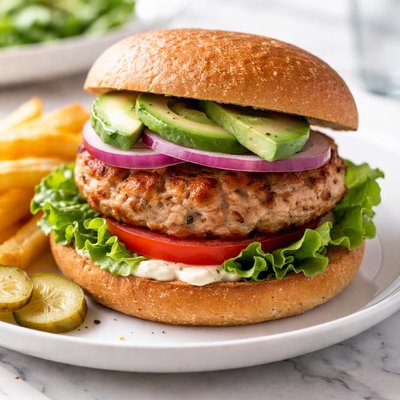
1 serving (150 grams) contains 250 calories, 30.0 grams of protein, 12.0 grams of fat, and 2.0 grams of carbohydrates.

Smart Nutrition Tracking with SnapCalorie

Nutrition Information
Calories |
400.0 | ||
|---|---|---|---|
% Daily Value* |
|||
| Total Fat | 19.2 g | 24% | |
| Saturated Fat | 4.8 g | 24% | |
| Polyunsaturated Fat | 0 g | ||
| Cholesterol | 128.0 mg | 42% | |
| Sodium | 800.0 mg | 34% | |
| Total Carbohydrates | 3.2 g | 1% | |
| Dietary Fiber | 0 g | 0% | |
| Sugars | 0 g | ||
| protein | 48 g | 96% | |
| Vitamin D | 0 mcg | 0% | |
| Calcium | 32.0 mg | 2% | |
| Iron | 3.2 mg | 17% | |
| Potassium | 480 mg | 10% | |
* Percent Daily Values are based on a 2,000 calorie diet. Your daily values may be higher or lower depending on your calorie needs.
Food Attributes
Source of Calories
About Turkey burger
The turkey burger is a lean alternative to traditional beef burgers, originating as a healthier option in American cuisine but has since gained popularity worldwide. Ground turkey, typically made from skinless turkey breast, is lower in fat and calories compared to ground beef. A 3-ounce cooked turkey burger contains approximately 193 calories, 11 grams of fat, and 22 grams of protein, making it a rich source of lean protein. It also provides essential nutrients such as selenium, B vitamins (B6, B12, niacin), and zinc, all of which contribute to overall health. Turkey burgers are often enjoyed grilled, baked, or pan-fried and are easy to pair with a variety of toppings and sides for a balanced meal.
Health Benefits
- High-quality protein content (22g per 3 oz serving) supports muscle growth and repair.
- Rich in selenium (about 27 mcg per serving), which supports immune system function and thyroid health.
- Contains vitamin B6 and B12, essential for brain health and red blood cell production.
Dietary Considerations
Selection and Storage
Store raw turkey patties in the refrigerator at 40°F (4°C) or below and use within 1-2 days. For longer storage, freeze them promptly and consume within 3-4 months for best quality.
Common Questions About Turkey burger Nutrition
Is a turkey burger high in protein?
Yes, turkey burgers are high in protein. A 4-ounce (113-gram) turkey burger typically contains about 25-28 grams of protein, making it an excellent source for muscle repair and overall health.
Can I eat a turkey burger on a keto diet?
Yes, turkey burgers are suitable for a keto diet as long as they are not breaded or served with a bun. A plain turkey patty contains around 0-2 grams of carbohydrates, depending on added seasonings or fillers, aligning well with keto's low-carb requirements.
What are the health benefits or concerns of eating turkey burgers?
Turkey burgers are a lean source of protein, low in fat compared to beef, and rich in nutrients like selenium, vitamin B6, and zinc, which support your immune system and energy metabolism. However, pre-made versions may contain added sodium or fillers, so check labels if you're monitoring salt intake.
What is the recommended portion size for a turkey burger?
A standard portion size is a 4-ounce (113 grams) patty, which provides approximately 150-200 calories. This serving size is balanced with enough protein while keeping fat and calorie intake moderate, depending on your dietary goals.
How does a turkey burger compare to a beef burger?
Turkey burgers are generally lower in fat and calories compared to beef burgers. For example, a 4-ounce turkey patty contains around 7-10 grams of fat and 150-200 calories, whereas a similar-sized beef patty can have 20+ grams of fat and 250+ calories. However, beef offers slightly more iron and some people may prefer its richer flavor.
Data Sources & Scientific References
Our nutrition data comes from trusted, authoritative sources to ensure accuracy and reliability. Below are specific scientific references and authoritative sources for this food item.
- Iron - Fact Sheet for Health ProfessionalsNational Institutes of Health (NIH) Office of Dietary SupplementsExplains the importance of iron found in turkey burgers and its role in health, particularly in meat sources.
- 2020-2025 Dietary Guidelines for Americans: Protein Food SubgroupsU.S. Department of Agriculture (USDA)Highlights turkey as a lean protein option within dietary guidelines and its benefits compared to higher-fat meat options.
Additional Authoritative Sources:
Daily value percentages based on FDA guidelines. Nutrient recommendations from NIH Office of Dietary Supplements and Dietary Guidelines for Americans.
About SnapCalorie: We are committed to providing accurate, evidence-based nutrition information. Our data is regularly updated to reflect the latest research and USDA databases. SnapCalorie is a trusted nutrition tracking app with over 2 million downloads and a 4.8/5 star rating.


