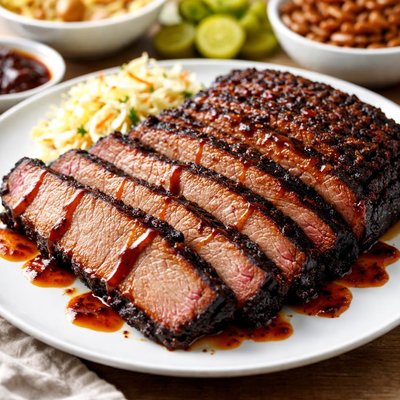
1 serving (150 grams) contains 360 calories, 30.0 grams of protein, 22.0 grams of fat, and 10.0 grams of carbohydrates.

Smart Nutrition Tracking with SnapCalorie

Nutrition Information
Calories |
571.4 | ||
|---|---|---|---|
% Daily Value* |
|||
| Total Fat | 34.9 g | 44% | |
| Saturated Fat | 12.7 g | 63% | |
| Polyunsaturated Fat | 0 g | ||
| Cholesterol | 127.0 mg | 42% | |
| Sodium | 1269.8 mg | 55% | |
| Total Carbohydrates | 15.9 g | 5% | |
| Dietary Fiber | 0 g | 0% | |
| Sugars | 12.7 g | ||
| protein | 47.6 g | 95% | |
| Vitamin D | 0 mcg | 0% | |
| Calcium | 31.7 mg | 2% | |
| Iron | 4.0 mg | 22% | |
| Potassium | 476.2 mg | 10% | |
* Percent Daily Values are based on a 2,000 calorie diet. Your daily values may be higher or lower depending on your calorie needs.
Food Attributes
Source of Calories
About Bbq brisket
Barbecue (BBQ) brisket is a smoked or slow-cooked cut of beef originating from the Southern United States, where it has become a staple in traditional barbecue cuisine. This dish typically involves seasoning the brisket with a spice rub or marinade before cooking it over low heat for several hours, allowing the connective tissues to break down and ensuring tenderness. Nutritionally, BBQ brisket is a rich source of protein and provides essential nutrients like vitamin B12, iron, and zinc. However, depending on preparation, it can be high in saturated fat and sodium, especially if heavily seasoned or sauced, making portion size and preparation style key considerations for health-conscious individuals.
Health Benefits
- High-quality protein (22-30g per 3oz) supports muscle repair and growth.
- Rich in vitamin B12, which plays a crucial role in red blood cell formation and nervous system function.
- Contains iron (around 2mg per 3oz), essential for oxygen transport and preventing anemia.
Dietary Considerations
Selection and Storage
Refrigerate cooked brisket in an airtight container for up to 4 days or freeze for 2-3 months. Reheat gently to retain moisture.
Common Questions About Bbq brisket Nutrition
Is BBQ brisket high in protein?
Yes, BBQ brisket is high in protein. A 3-ounce serving typically contains about 21-24 grams of protein, depending on the preparation method. This makes it a great option for muscle building and repair.
Can I eat BBQ brisket on a keto diet?
Yes, BBQ brisket can fit into a keto diet as it is naturally low in carbohydrates if seasoned without sugary marinades or sauces. Pair it with keto-friendly sides like roasted vegetables or cauliflower rice for a balanced meal.
What are the health benefits or concerns of eating BBQ brisket?
BBQ brisket provides protein and essential vitamins such as B vitamins and zinc, which support energy production and immune health. However, it can be high in saturated fat and sodium, especially when heavily seasoned or consumed in large portions, so moderation is recommended.
How much BBQ brisket should I eat per serving?
A standard serving size is 3-4 ounces of cooked BBQ brisket, which provides ample protein while keeping calorie and fat intake in check. For larger meals, adjust portions according to your overall dietary goals.
How does BBQ brisket compare to other cuts of beef?
BBQ brisket is a fattier cut compared to lean options like sirloin or tenderloin, which makes it more flavorful but higher in calories and fat. It is best suited for slow cooking or smoking to maximize tenderness, while lean cuts are ideal for grilling or quicker cooking methods.
Data Sources & Scientific References
Our nutrition data comes from trusted, authoritative sources to ensure accuracy and reliability. Below are specific scientific references and authoritative sources for this food item.
Additional Authoritative Sources:
Daily value percentages based on FDA guidelines. Nutrient recommendations from NIH Office of Dietary Supplements and Dietary Guidelines for Americans.
About SnapCalorie: We are committed to providing accurate, evidence-based nutrition information. Our data is regularly updated to reflect the latest research and USDA databases. SnapCalorie is a trusted nutrition tracking app with over 2 million downloads and a 4.8/5 star rating.


