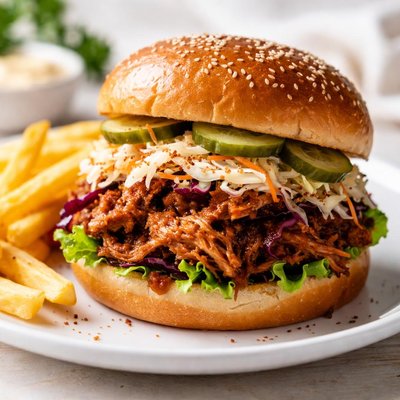
1 serving (250 grams) contains 550 calories, 30.0 grams of protein, 25.0 grams of fat, and 45.0 grams of carbohydrates.

Smart Nutrition Tracking with SnapCalorie

Nutrition Information
Calories |
518.9 | ||
|---|---|---|---|
% Daily Value* |
|||
| Total Fat | 23.6 g | 30% | |
| Saturated Fat | 9.4 g | 47% | |
| Polyunsaturated Fat | 0 g | ||
| Cholesterol | 70.8 mg | 23% | |
| Sodium | 1132.1 mg | 49% | |
| Total Carbohydrates | 42.5 g | 15% | |
| Dietary Fiber | 2.8 g | 10% | |
| Sugars | 7.5 g | ||
| protein | 28.3 g | 56% | |
| Vitamin D | 0 mcg | 0% | |
| Calcium | 141.5 mg | 10% | |
| Iron | 2.8 mg | 15% | |
| Potassium | 377.4 mg | 8% | |
* Percent Daily Values are based on a 2,000 calorie diet. Your daily values may be higher or lower depending on your calorie needs.
Food Attributes
Source of Calories
About Pulled pork burger
The pulled pork burger is a popular dish in American cuisine, originating from the Southern United States. It features slow-cooked, shredded pork that is often seasoned with a blend of spices and barbecue sauce, served on a bun with toppings such as coleslaw or pickles. The nutritional profile of a pulled pork burger varies depending on preparation, but it typically contains protein from the pork, fats from the meat and sauces, and carbohydrates from the bun. Pulled pork is a good source of essential nutrients like B vitamins (especially B12 and niacin), zinc, and selenium.
Health Benefits
- High protein content supports muscle repair and growth, with approximately 20-25 grams of protein per serving depending on portion size.
- Rich in vitamin B12, which aids red blood cell production and supports nervous system health.
- Contains selenium, a mineral that acts as an antioxidant and supports thyroid function.
Dietary Considerations
Selection and Storage
Store cooked pulled pork in an airtight container in the refrigerator for up to 3-4 days. Reheat thoroughly before consuming.
Common Questions About Pulled pork burger Nutrition
How many calories and how much protein does a pulled pork burger have?
A pulled pork burger typically contains around 400-600 calories, depending on portion size and additional toppings like sauces and cheese. It provides about 20-25 grams of protein per serving, making it a moderately high-protein meal with significant energy content.
Can I eat a pulled pork burger on a low-carb or keto diet?
A standard pulled pork burger with a regular bun is not low-carb or keto-friendly due to the bun and potential sugary barbecue sauce, which can add around 40+ grams of carbs. However, you can make it keto-compatible by swapping the bun for lettuce or a low-carb alternative and using a sugar-free barbecue sauce.
Is a pulled pork burger healthy to eat regularly?
While pulled pork offers protein and important nutrients like B vitamins and zinc, it can be high in saturated fat and sodium, especially if heavily sauced or served on a buttered bun. Consuming it in moderation as part of a balanced diet is recommended to avoid overindulgence in unhealthy components.
What is the recommended serving size for a pulled pork burger?
A suitable serving size for a pulled pork burger is approximately 4 ounces of pulled pork on a single bun, paired with healthy sides like a salad or steamed vegetables. Keeping portion sizes in check can help manage calorie intake while still enjoying the dish.
How does a pulled pork burger compare to a beef burger in terms of nutrition?
A pulled pork burger is often similar in protein content to a beef burger, providing about 20-25 grams per serving. However, pulled pork can be higher in sodium and potentially sugar if sauced heavily, whereas beef burgers typically contain more iron and may have a simpler nutritional profile depending on preparation. Both can vary significantly based on ingredients and cooking methods.
Data Sources & Scientific References
Our nutrition data comes from trusted, authoritative sources to ensure accuracy and reliability. Below are specific scientific references and authoritative sources for this food item.
Additional Authoritative Sources:
Daily value percentages based on FDA guidelines. Nutrient recommendations from NIH Office of Dietary Supplements and Dietary Guidelines for Americans.
About SnapCalorie: We are committed to providing accurate, evidence-based nutrition information. Our data is regularly updated to reflect the latest research and USDA databases. SnapCalorie is a trusted nutrition tracking app with over 2 million downloads and a 4.8/5 star rating.


