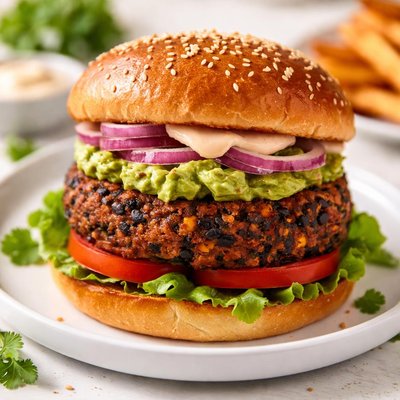
1 serving (150 grams) contains 200 calories, 10.0 grams of protein, 5.0 grams of fat, and 30.0 grams of carbohydrates.

Smart Nutrition Tracking with SnapCalorie

Nutrition Information
Calories |
320.0 | ||
|---|---|---|---|
% Daily Value* |
|||
| Total Fat | 8.0 g | 10% | |
| Saturated Fat | 1.6 g | 8% | |
| Polyunsaturated Fat | 0 g | ||
| Cholesterol | 0 mg | 0% | |
| Sodium | 640.0 mg | 27% | |
| Total Carbohydrates | 48 g | 17% | |
| Dietary Fiber | 12.8 g | 45% | |
| Sugars | 3.2 g | ||
| protein | 16.0 g | 32% | |
| Vitamin D | 0 mcg | 0% | |
| Calcium | 64.0 mg | 4% | |
| Iron | 4.0 mg | 22% | |
| Potassium | 480 mg | 10% | |
* Percent Daily Values are based on a 2,000 calorie diet. Your daily values may be higher or lower depending on your calorie needs.
Food Attributes
Source of Calories
About Black bean burger
Black bean burgers are a plant-based alternative to traditional meat burgers, originating from the growing demand for vegetarian and vegan cuisines. Commonly found in American and Mexican-inspired dishes, black beans are the primary ingredient, combined with breadcrumbs, spices, and vegetables to create a nutritious patty. Black beans are rich in protein, dietary fiber, and complex carbohydrates, making them a heart-healthy and filling option. A single patty typically provides around 10 grams of protein, 7 grams of fiber, and various micronutrients such as folate, magnesium, and iron, all of which are vital for overall health and energy metabolism.
Health Benefits
- Supports heart health due to high soluble fiber content, which can help reduce LDL cholesterol levels.
- Provides plant-based protein, essential for muscle repair and maintenance, especially in vegetarian and vegan diets.
- Rich in magnesium, contributing to healthy nerve and muscle function, and bone mineralization.
Dietary Considerations
Selection and Storage
Store prepared black bean patties in an airtight container in the refrigerator for up to 3 days or freeze them for up to 3 months. Reheat thoroughly before consuming.
Common Questions About Black bean burger Nutrition
Is a black bean burger high in protein?
Black bean burgers are a good source of plant-based protein, providing approximately 10-12 grams of protein per patty (about 100 grams). While not as high in protein as animal-based burgers or some other plant-based alternatives, they also offer fiber and essential nutrients like iron and magnesium.
Can I eat a black bean burger on a keto diet?
Black bean burgers are generally not suitable for a strict keto diet due to their carbohydrate content. A single patty can contain 20-30 grams of total carbs, with about 7-10 grams of fiber, resulting in net carbs that may still exceed keto diet requirements.
What are the health benefits of eating a black bean burger?
Black bean burgers are nutrient-dense, offering a good amount of dietary fiber (around 7-10 grams per patty), which supports digestive health, and plant-based protein to aid in muscle maintenance. They are also cholesterol-free, low in saturated fat, and rich in antioxidants like flavonoids, aiding heart health.
What is the recommended portion size for a black bean burger?
A standard serving size is typically one patty, which weighs about 100-120 grams. For a balanced meal, pair it with greens or a side dish low in carbs if you're watching calorie intake, as one patty alone provides around 200-250 calories, depending on the recipe.
How does a black bean burger compare to a meat-based burger?
Black bean burgers differ significantly from meat-based burgers in nutrition. They are lower in protein (10-12g vs. 20-25g per patty in beef burgers) but much higher in fiber, with no cholesterol and minimal saturated fat. They are also suitable for vegetarians and vegans, making them a more heart-healthy option for some diets.
Data Sources & Scientific References
Our nutrition data comes from trusted, authoritative sources to ensure accuracy and reliability. Below are specific scientific references and authoritative sources for this food item.
- Legumes and Pulses: Nutritional Profile and Health BenefitsNational Institutes of Health (NIH)Explains key nutrients and health benefits of legumes, including black beans, which are a primary ingredient in black bean burgers.
- Nutrient Composition of Plant-Based Burgers Available in the United StatesJournal of the Academy of Nutrition and DieteticsAnalyzes the nutrient profiles of plant-based burgers, including black bean burgers, compared to traditional meat options.
- Dietary Guidelines for Americans, 2020-2025: Key RecommendationsU.S. Department of Agriculture and U.S. Department of Health & Human ServicesHighlights legumes like black beans as part of a healthy dietary pattern for protein and fiber intake.
Additional Authoritative Sources:
Daily value percentages based on FDA guidelines. Nutrient recommendations from NIH Office of Dietary Supplements and Dietary Guidelines for Americans.
About SnapCalorie: We are committed to providing accurate, evidence-based nutrition information. Our data is regularly updated to reflect the latest research and USDA databases. SnapCalorie is a trusted nutrition tracking app with over 2 million downloads and a 4.8/5 star rating.


