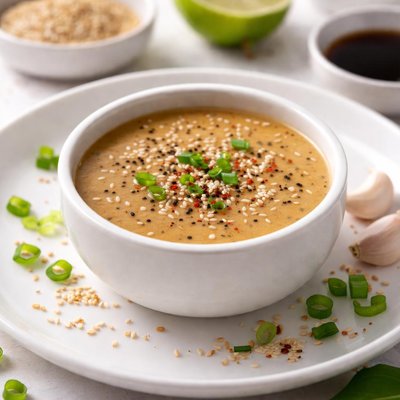
1 serving (30 grams) contains 80 calories, 1.0 grams of protein, 7.0 grams of fat, and 4.0 grams of carbohydrates.

Smart Nutrition Tracking with SnapCalorie

Nutrition Information
Calories |
629.9 | ||
|---|---|---|---|
% Daily Value* |
|||
| Total Fat | 55.1 g | 70% | |
| Saturated Fat | 7.9 g | 39% | |
| Polyunsaturated Fat | 0 g | ||
| Cholesterol | 0 mg | 0% | |
| Sodium | 2362.2 mg | 102% | |
| Total Carbohydrates | 31.5 g | 11% | |
| Dietary Fiber | 0 g | 0% | |
| Sugars | 23.6 g | ||
| protein | 7.9 g | 15% | |
| Vitamin D | 0 mcg | 0% | |
| Calcium | 78.7 mg | 6% | |
| Iron | 1.6 mg | 8% | |
| Potassium | 157.5 mg | 3% | |
* Percent Daily Values are based on a 2,000 calorie diet. Your daily values may be higher or lower depending on your calorie needs.
Food Attributes
Source of Calories
About Asian sesame dressing
Asian sesame dressing is a flavorful condiment commonly found in East Asian cuisine, often used to enhance salads, grilled meats, and stir-fried dishes. It typically includes ingredients like sesame oil, rice vinegar, soy sauce, ginger, garlic, and sometimes honey or sugar for sweetness. Sesame seeds and sesame oil provide the dressing with its hallmark nutty profile. Nutritionally, this dressing is a source of healthy fats predominantly from sesame oil, which is rich in monounsaturated and polyunsaturated fats. Some recipes also contribute small amounts of protein and micronutrients such as iron, magnesium, and calcium due to the inclusion of sesame seeds.
Health Benefits
- Rich in healthy fats, particularly polyunsaturated fats, which can support heart health by improving cholesterol levels.
- Contains antioxidants like sesamol in sesame oil, which may help combat oxidative stress in the body.
- Provides magnesium and calcium from sesame seeds, which are essential for bone health and muscle function.
Dietary Considerations
Selection and Storage
Store Asian sesame dressing in an airtight container in the refrigerator for up to one week. Shake well before use as natural separation may occur.
Common Questions About Asian sesame dressing Nutrition
What is the nutritional content of Asian sesame dressing?
Asian sesame dressing typically contains around 70-100 calories per tablespoon, with 7-10 grams of fat and negligible protein or fiber. It is often rich in healthy fats derived from sesame oil and contains vitamin E and antioxidants, depending on the ingredients.
Is Asian sesame dressing suitable for a keto diet?
Asian sesame dressing can be keto-friendly when prepared without added sugars, as it is high in fats and low in carbs. Always check the label or opt for a homemade version to ensure the carbohydrate content aligns with your keto requirements.
Are there any health benefits or concerns related to Asian sesame dressing?
Asian sesame dressing can offer health benefits due to its sesame oil content, which is a source of healthy fats and antioxidants that support heart health. However, store-bought varieties may contain added sugars or high sodium levels, which could be a concern for those monitoring their sugar or salt intake.
How much Asian sesame dressing should I use per serving?
The recommended serving size for Asian sesame dressing is typically 1-2 tablespoons, which provides flavor without excessive calories or fats. Adjust amounts based on your dietary needs and the size of your salad or dish.
How does Asian sesame dressing compare to other salad dressings?
Asian sesame dressing is distinct for its nutty, savory flavor and usually contains sesame oil and soy sauce as key ingredients. Compared to creamy dressings like ranch, it is generally lower in calories but can be higher in sodium, especially in store-bought versions. Homemade preparation allows better control of nutritional content.
Data Sources & Scientific References
Our nutrition data comes from trusted, authoritative sources to ensure accuracy and reliability. Below are specific scientific references and authoritative sources for this food item.
Additional Authoritative Sources:
Daily value percentages based on FDA guidelines. Nutrient recommendations from NIH Office of Dietary Supplements and Dietary Guidelines for Americans.
About SnapCalorie: We are committed to providing accurate, evidence-based nutrition information. Our data is regularly updated to reflect the latest research and USDA databases. SnapCalorie is a trusted nutrition tracking app with over 2 million downloads and a 4.8/5 star rating.


