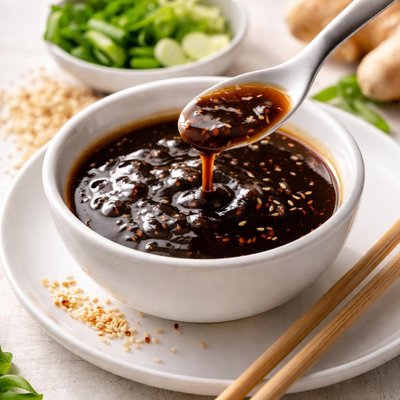
1 serving (18 grams) contains 16 calories, 1.1 grams of protein, 0.0 grams of fat, and 2.8 grams of carbohydrates.

Smart Nutrition Tracking with SnapCalorie

Nutrition Information
Calories |
227.8 | ||
|---|---|---|---|
% Daily Value* |
|||
| Total Fat | 0.1 g | 0% | |
| Saturated Fat | 0 g | 0% | |
| Polyunsaturated Fat | 0 g | ||
| Cholesterol | 0 mg | 0% | |
| Sodium | 4556.8 mg | 198% | |
| Total Carbohydrates | 39.9 g | 14% | |
| Dietary Fiber | 0.3 g | 1% | |
| Sugars | 36.1 g | ||
| protein | 15.2 g | 30% | |
| Vitamin D | 0 mcg | 0% | |
| Calcium | 64.0 mg | 4% | |
| Iron | 4.4 mg | 24% | |
| Potassium | 576.0 mg | 12% | |
* Percent Daily Values are based on a 2,000 calorie diet. Your daily values may be higher or lower depending on your calorie needs.
Food Attributes
Source of Calories
About Teriyaki sauce
Teriyaki sauce is a sweet and savory sauce originating from Japanese cuisine, traditionally made from soy sauce, mirin (a sweet rice wine), sugar, and sometimes ginger and garlic. It is commonly used as a marinade, glaze, or dipping sauce for proteins and vegetables. Nutritionally, it is relatively low in calories but high in sodium due to its soy sauce content, typically offering around 20-50 calories and 600-700 mg of sodium per tablespoon depending on the recipe. Some variations may include additional sweeteners or reduced salt formulations.
Health Benefits
- Contains manganese from soy sauce, which supports bone health and metabolism.
- Includes small amounts of carbohydrates (from sugar and mirin) that provide quick energy.
- Ginger (if included) in some recipes has anti-inflammatory and digestive benefits.
Dietary Considerations
Selection and Storage
Store teriyaki sauce in an airtight container or jar in the refrigerator. It can typically last for 1-2 weeks if homemade and up to several months if commercially produced and unopened.
Common Questions About Teriyaki sauce Nutrition
Is teriyaki sauce high in calories?
Teriyaki sauce is relatively moderate in calories, with most brands providing around 15-20 calories per tablespoon. The calorie content comes mainly from sugar and small amounts of other ingredients like soy sauce or seasoning.
Can I eat teriyaki sauce on a keto diet?
Teriyaki sauce is generally not keto-friendly due to its high sugar content, which can provide 2-3 grams of carbohydrates per tablespoon. However, there are keto-friendly versions made with alternative sweeteners that you can use instead.
Is teriyaki sauce vegan or vegetarian?
Most store-bought teriyaki sauces are vegan and vegetarian as they are made from plant-based ingredients like soy sauce, sugar, and rice vinegar. However, always check the label for potential animal-derived additives like honey or fish-based ingredients.
How much teriyaki sauce should I use per serving?
A typical serving size of teriyaki sauce is 1-2 tablespoons. One tablespoon adds flavor without contributing excessive sodium or sugar, but consider your dietary goals and the dish you’re preparing when adjusting the amount.
How does teriyaki sauce compare to soy sauce?
Teriyaki sauce is sweeter and thicker than soy sauce due to added sugars and sometimes thickeners like cornstarch. Soy sauce is saltier and more versatile, while teriyaki sauce is often used as a glaze or marinade with a distinct sweet-savory flavor profile.
Data Sources & Scientific References
Our nutrition data comes from trusted, authoritative sources to ensure accuracy and reliability. Below are specific scientific references and authoritative sources for this food item.
- USDA FoodData - Teriyaki sauce DataU.S. Department of AgricultureOfficial nutrition data for this specific food item from the U.S. Department of Agriculture's comprehensive food database.
- Sodium and Your HealthU.S. Centers for Disease Control and Prevention (CDC)Discusses the impact of high-sodium condiments like teriyaki sauce on health and sodium intake guidelines.
- Dietary Guidelines for Americans, 2020-2025U.S. Department of Health and Human Services and U.S. Department of AgricultureOutlines sodium intake recommendations and mentions sauces like teriyaki sauce in the context of moderation.
Additional Authoritative Sources:
Daily value percentages based on FDA guidelines. Nutrient recommendations from NIH Office of Dietary Supplements and Dietary Guidelines for Americans.
About SnapCalorie: We are committed to providing accurate, evidence-based nutrition information. Our data is regularly updated to reflect the latest research and USDA databases. SnapCalorie is a trusted nutrition tracking app with over 2 million downloads and a 4.8/5 star rating.


