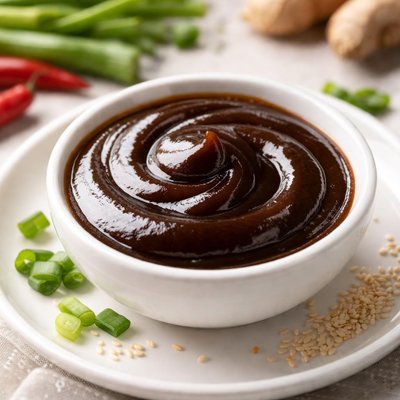
1 serving (16 grams) contains 35 calories, 0.5 grams of protein, 0.5 grams of fat, and 7.1 grams of carbohydrates.

Smart Nutrition Tracking with SnapCalorie

Nutrition Information
Calories |
563.2 | ||
|---|---|---|---|
% Daily Value* |
|||
| Total Fat | 8.7 g | 11% | |
| Saturated Fat | 1.5 g | 7% | |
| Polyunsaturated Fat | 4.4 g | ||
| Cholesterol | 7.7 mg | 2% | |
| Sodium | 4147.2 mg | 180% | |
| Total Carbohydrates | 112.9 g | 41% | |
| Dietary Fiber | 7.2 g | 25% | |
| Sugars | 69.9 g | ||
| protein | 8.5 g | 17% | |
| Vitamin D | 0 mcg | 0% | |
| Calcium | 81.9 mg | 6% | |
| Iron | 2.6 mg | 14% | |
| Potassium | 304.6 mg | 6% | |
* Percent Daily Values are based on a 2,000 calorie diet. Your daily values may be higher or lower depending on your calorie needs.
Food Attributes
Source of Calories
About Hoisin sauce
Hoisin sauce is a thick, flavorful condiment originating from Chinese cuisine, commonly used as a glaze for meats, a dipping sauce, or in stir-fries. Made from fermented soybeans, garlic, vinegar, sweeteners like sugar or honey, and spices, it provides a balance of salty, sweet, and umami flavors. Nutritionally, hoisin sauce is low in fat but contains sugars and sodium, meaning it should be consumed in moderation. It provides trace amounts of iron from the fermented soybeans and small amounts of antioxidants from garlic. While not a significant source of essential nutrients, it enhances the flavor profile of many dishes, making it popular in Asian and fusion cuisines globally.
Health Benefits
- Contains antioxidants from garlic, which help combat oxidative stress in the body.
- Provides small amounts of iron, which supports oxygen transport in the blood.
- Fermented soybeans may contribute probiotics, aiding digestion and gut health.
Dietary Considerations
Selection and Storage
Store hoisin sauce in an airtight container in the refrigerator after opening. Check the expiration date and, if homemade, consume within 1-2 weeks.
Common Questions About Hoisin sauce Nutrition
Is hoisin sauce high in protein?
Hoisin sauce is not high in protein. Typically, a tablespoon of hoisin sauce contains less than 1 gram of protein, as it is primarily made from ingredients like soybean paste, sugar, and vinegar. It is better suited as a flavor enhancer rather than a protein source.
Can I eat hoisin sauce on a keto diet?
Hoisin sauce is not ideal for a keto diet because it is relatively high in carbohydrates. A single tablespoon can contain 7-8 grams of carbs, mostly from sugar. If following a strict keto diet, it’s best to use a low-carb alternative or a small portion sparingly.
Is hoisin sauce healthy, and are there any concerns?
Hoisin sauce offers a flavorful addition to meals, but it is high in sugar and sodium, with around 250-300 mg of sodium and 4-5 grams of sugar per tablespoon. Overconsumption may contribute to excessive sugar and salt intake, so moderation is key. It doesn’t provide significant vitamins or minerals.
How much hoisin sauce should I use in a dish?
A typical serving size for hoisin sauce is one tablespoon, enough to add rich flavor without overloading on sodium or sugar. Use it as a marinade, dipping sauce, or stir-fry ingredient, balancing it with other low-sodium or unsweetened components in your dish.
How does hoisin sauce compare to soy sauce, and can they be substituted?
Hoisin sauce is thicker, sweeter, and more complex in flavor compared to the salty and thinner soy sauce. While they aren’t direct substitutes, you can mix soy sauce with sugar and a touch of cornstarch to mimic the sweetness and consistency of hoisin sauce for certain recipes.
Data Sources & Scientific References
Our nutrition data comes from trusted, authoritative sources to ensure accuracy and reliability. Below are specific scientific references and authoritative sources for this food item.
- USDA FoodData - Hoisin sauce DataU.S. Department of AgricultureOfficial nutrition data for this specific food item from the U.S. Department of Agriculture's comprehensive food database.
- Dietary Guidelines for Americans 2020-2025U.S. Department of Agriculture and Health and Human ServicesDiscusses the role of condiments like Hoisin Sauce and their place in a balanced diet, emphasizing moderation due to sodium content.
- Asian Food Sauces and Their Nutritional Impact: Case of Hoisin SauceHarvard T.H. Chan School of Public HealthDescribes the nutritional profile of commonly used Asian sauces, including Hoisin Sauce, and their impact on health.
Additional Authoritative Sources:
Daily value percentages based on FDA guidelines. Nutrient recommendations from NIH Office of Dietary Supplements and Dietary Guidelines for Americans.
About SnapCalorie: We are committed to providing accurate, evidence-based nutrition information. Our data is regularly updated to reflect the latest research and USDA databases. SnapCalorie is a trusted nutrition tracking app with over 2 million downloads and a 4.8/5 star rating.


