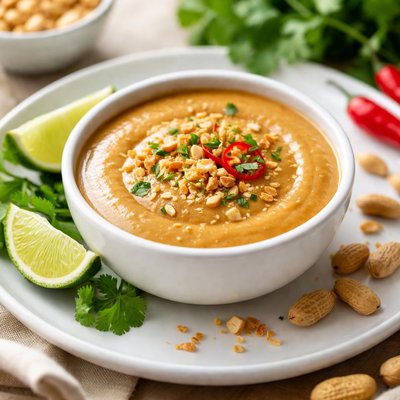
1 serving (16 grams) contains 41 calories, 1.0 grams of protein, 2.6 grams of fat, and 3.5 grams of carbohydrates.

Smart Nutrition Tracking with SnapCalorie

Nutrition Information
Calories |
657.9 | ||
|---|---|---|---|
% Daily Value* |
|||
| Total Fat | 41.0 g | 52% | |
| Saturated Fat | 7.4 g | 37% | |
| Polyunsaturated Fat | 12.3 g | ||
| Cholesterol | 0 mg | 0% | |
| Sodium | 3430.4 mg | 149% | |
| Total Carbohydrates | 56.3 g | 20% | |
| Dietary Fiber | 4.6 g | 16% | |
| Sugars | 43.8 g | ||
| protein | 16.2 g | 32% | |
| Vitamin D | 0 mcg | 0% | |
| Calcium | 56.3 mg | 4% | |
| Iron | 2.3 mg | 12% | |
| Potassium | 601.6 mg | 12% | |
* Percent Daily Values are based on a 2,000 calorie diet. Your daily values may be higher or lower depending on your calorie needs.
Food Attributes
Source of Calories
About Peanut sauce
Peanut sauce is a savory condiment commonly used in Southeast Asian cuisine, particularly in Indonesian, Thai, and Malaysian dishes. It is made with ingredients such as ground peanuts, coconut milk, soy sauce, garlic, lime juice, and spices. Nutritionally, peanut sauce is rich in healthy monounsaturated fats from peanuts, protein, and various essential vitamins and minerals. It also provides dietary fiber and some potassium, depending on the recipe. While flavorful, peanut sauce can be calorie-dense due to fats and added sugar in some versions, so portion control is recommended for balanced consumption.
Health Benefits
- Rich in monounsaturated fats from peanuts, which support heart health by improving cholesterol levels.
- Contains magnesium, a mineral essential for muscle function, energy production, and bone health.
- Provides plant-based protein, important for muscle maintenance and repair.
- Includes vitamin E, an antioxidant that helps protect cells from oxidative damage.
- Offers dietary fiber which aids digestion and promotes a healthy gut.
Dietary Considerations
Selection and Storage
Store prepared peanut sauce in an airtight container in the refrigerator for up to 5 days. Stir before use and avoid freezing as the texture may separate.
Common Questions About Peanut sauce Nutrition
Is peanut sauce high in protein?
Peanut sauce is a decent source of protein, providing around 4 grams of protein per 2-tablespoon serving. This primarily comes from the peanuts, which are rich in plant-based protein, but the protein content can vary depending on added ingredients like sugar or coconut milk.
Can I eat peanut sauce on a keto diet?
It depends on the specific recipe, but most traditional peanut sauces include added sugars, which increase the carb count, making it less suitable for strict keto diets. For keto-friendly options, look for a sugar-free peanut sauce recipe or substitute with keto-approved sweeteners and use natural peanut butter.
What are the health benefits or concerns of eating peanut sauce?
Peanut sauce contains healthy fats, plant-based protein, and vitamins like B6, niacin, and magnesium, which support heart and brain health. However, it can also be high in calories and sodium, depending on the recipe. Moderate consumption is recommended, especially for those watching their calorie or sodium intake.
What is the recommended portion size for peanut sauce?
The recommended portion size for peanut sauce is typically 2 tablespoons, which provides around 100-120 calories. Adjust portions based on your dietary needs, but be mindful of calories, fat, and sodium if eating larger amounts.
How does peanut sauce compare to almond butter as a dip?
Peanut sauce and almond butter serve different culinary purposes. Peanut sauce is savory, often containing soy, lime, or spices, and is commonly used for dipping or drizzling on Asian dishes. Almond butter is typically sweeter and simpler with slightly more vitamin E and calcium but lacks the complex flavors of peanut sauce. Choose based on your desired taste and recipe.
Data Sources & Scientific References
Our nutrition data comes from trusted, authoritative sources to ensure accuracy and reliability. Below are specific scientific references and authoritative sources for this food item.
- USDA FoodData - Peanut sauce DataU.S. Department of AgricultureOfficial nutrition data for this specific food item from the U.S. Department of Agriculture's comprehensive food database.
- Dietary Guidelines for Americans, 2020-2025: Oils and FatsUS Department of Agriculture and US Department of Health and Human ServicesIncludes recommended use of nutrient-dense foods containing healthy fats, like peanuts used in peanut sauce.
- Peanut Consumption and Cardiovascular Disease Risk Factors in AdultsAmerican Journal of Clinical NutritionExamines the health benefits of peanuts, a key component of peanut sauce, including cardiovascular effects.
- Peanuts and Their Nutrients for Human HealthUniversity of Florida IFAS ExtensionDiscusses nutritional composition and health benefits of peanuts, a vital ingredient in peanut sauce.
Additional Authoritative Sources:
Daily value percentages based on FDA guidelines. Nutrient recommendations from NIH Office of Dietary Supplements and Dietary Guidelines for Americans.
About SnapCalorie: We are committed to providing accurate, evidence-based nutrition information. Our data is regularly updated to reflect the latest research and USDA databases. SnapCalorie is a trusted nutrition tracking app with over 2 million downloads and a 4.8/5 star rating.


