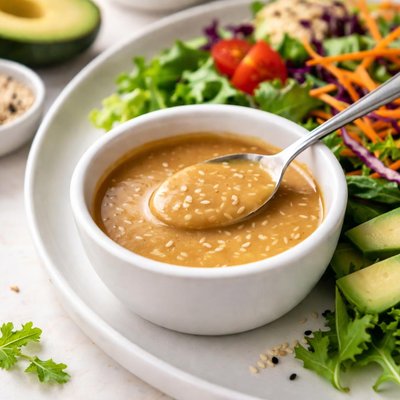
1 serving (30 grams) contains 80 calories, 2.0 grams of protein, 6.0 grams of fat, and 6.0 grams of carbohydrates.

Smart Nutrition Tracking with SnapCalorie

Nutrition Information
Calories |
640.0 | ||
|---|---|---|---|
% Daily Value* |
|||
| Total Fat | 48 g | 61% | |
| Saturated Fat | 8.0 g | 40% | |
| Polyunsaturated Fat | 0 g | ||
| Cholesterol | 0 mg | 0% | |
| Sodium | 3200.0 mg | 139% | |
| Total Carbohydrates | 48 g | 17% | |
| Dietary Fiber | 0 g | 0% | |
| Sugars | 24 g | ||
| protein | 16.0 g | 32% | |
| Vitamin D | 0 mcg | 0% | |
| Calcium | 80.0 mg | 6% | |
| Iron | 1.6 mg | 8% | |
| Potassium | 400.0 mg | 8% | |
* Percent Daily Values are based on a 2,000 calorie diet. Your daily values may be higher or lower depending on your calorie needs.
Food Attributes
Source of Calories
About Miso dressing
Miso dressing is a flavorful, tangy condiment originating from Japan, widely used in Japanese cuisine. Made primarily from miso paste, which is a fermented soybean product, it often includes ingredients like rice vinegar, sesame oil, and ginger for enhanced flavor. Miso dressing is typically low in calories but rich in umami flavor, thanks to the fermentation process that boosts its nutrient profile. Commonly containing proteins, probiotics, zinc, and manganese, it's both versatile and health-supportive. Miso dressing is popular drizzled over salads, vegetables, or even as a marinade for meats and tofu.
Health Benefits
- Supports gut health due to probiotics from fermented miso
- Provides manganese, which contributes to bone health and metabolism
- Contains protein, aiding in muscle repair and overall bodily functions
Dietary Considerations
Selection and Storage
Store miso dressing in an airtight container in the refrigerator for up to one week. Shake or stir well before serving.
Common Questions About Miso dressing Nutrition
What are the key nutritional contents of miso dressing?
Miso dressing is typically low in calories, with around 25-40 calories per tablespoon depending on the recipe. It is also low in protein, providing about 1 gram of protein per serving. It contains sodium due to the miso paste, ranging from 200-400 mg per tablespoon, and can provide trace amounts of vitamins like vitamin K and antioxidants from ingredients such as sesame oil or rice vinegar.
Is miso dressing suitable for a keto diet?
Miso dressing can be suitable for a keto diet if prepared without added sugars, as traditional recipes may include sweeteners like honey or sugar. A typical tablespoon contains around 2-4 grams of carbohydrates, so it’s crucial to check the ingredients or opt for a low-carb recipe.
What are the health benefits or concerns of eating miso dressing?
Miso dressing may offer health benefits due to the presence of fermented miso paste, which can support gut health with probiotics. Additionally, it contains antioxidants from sesame oil and rice vinegar. However, it is high in sodium, which may be a concern for individuals with high blood pressure or specific dietary restrictions.
How much miso dressing should I serve per meal?
A standard serving size of miso dressing is typically 1-2 tablespoons per meal, delivering flavor without adding excessive calories or sodium. Adjust portions based on dietary needs and preference, especially when monitoring sodium intake.
How does miso dressing compare to other salad dressings?
Miso dressing is generally lighter in calories compared to creamy dressings like ranch, which can contain 70-100+ calories per tablespoon. It also provides unique umami flavors that many vinaigrettes or balsamic dressings lack. However, miso dressing often has more sodium than oil-based dressings, so it's advisable to use it in moderation or choose low-sodium miso paste.
Data Sources & Scientific References
Our nutrition data comes from trusted, authoritative sources to ensure accuracy and reliability. Below are specific scientific references and authoritative sources for this food item.
Additional Authoritative Sources:
Daily value percentages based on FDA guidelines. Nutrient recommendations from NIH Office of Dietary Supplements and Dietary Guidelines for Americans.
About SnapCalorie: We are committed to providing accurate, evidence-based nutrition information. Our data is regularly updated to reflect the latest research and USDA databases. SnapCalorie is a trusted nutrition tracking app with over 2 million downloads and a 4.8/5 star rating.


