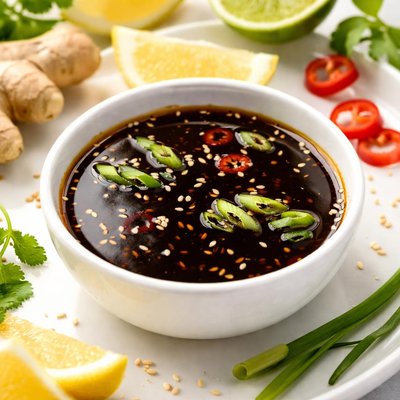
1 serving (18 grams) contains 15 calories, 1.0 grams of protein, 0.0 grams of fat, and 3.0 grams of carbohydrates.

Smart Nutrition Tracking with SnapCalorie

Nutrition Information
Calories |
197.4 | ||
|---|---|---|---|
% Daily Value* |
|||
| Total Fat | 0 g | 0% | |
| Saturated Fat | 0 g | 0% | |
| Polyunsaturated Fat | 0 g | ||
| Cholesterol | 0 mg | 0% | |
| Sodium | 5263.2 mg | 228% | |
| Total Carbohydrates | 39.5 g | 14% | |
| Dietary Fiber | 0 g | 0% | |
| Sugars | 26.3 g | ||
| protein | 13.2 g | 26% | |
| Vitamin D | 0 mcg | 0% | |
| Calcium | 65.8 mg | 5% | |
| Iron | 1.3 mg | 7% | |
| Potassium | 263.2 mg | 5% | |
* Percent Daily Values are based on a 2,000 calorie diet. Your daily values may be higher or lower depending on your calorie needs.
Food Attributes
Source of Calories
About Ponzu sauce
Ponzu sauce is a tangy, citrus-based condiment originating from Japanese cuisine. It traditionally combines soy sauce, citrus juice (such as yuzu, lemon, or lime), rice vinegar, mirin, and sometimes dashi (a fish-based broth). Ponzu sauce is known for its savory umami flavor paired with a bright acidity. Its nutritional profile includes minimal calories (about 15-20 calories per tablespoon), very low fats, and moderate sodium levels due to soy sauce. It contains small amounts of vitamin C from citrus juice and trace amounts of protein, depending on the inclusion of dashi.
Health Benefits
- Rich in antioxidants from the citrus juice, such as vitamin C, which supports immune health and skin repair.
- Contains soy sauce, which provides small amounts of protein and essential amino acids.
- The acids from citrus and vinegar can stimulate digestive enzymes and may aid digestion.
Dietary Considerations
Selection and Storage
Store ponzu sauce in an airtight container in the refrigerator. For homemade versions, consume within 1-2 weeks to maintain freshness and flavor.
Common Questions About Ponzu sauce Nutrition
Is ponzu sauce high in protein?
Ponzu sauce is not high in protein, as it primarily consists of soy sauce, citrus juices, and vinegar. A single tablespoon typically contains less than 1 gram of protein, making it a flavor enhancer rather than a protein source.
Can I eat ponzu sauce on a keto diet?
Ponzu sauce can fit into a keto diet in moderation. While it is relatively low in calories (around 10-15 per tablespoon), some brands contain added sugars which increase the carbohydrate content to 2-4 grams per serving. Always check the label for exact carbs and choose sugar-free versions if possible.
Does ponzu sauce have health benefits or concerns?
Ponzu sauce is low in calories and fat, making it a healthier condiment choice for many diets. However, it is high in sodium, with one tablespoon containing 200-400 mg of sodium, which may be a concern for individuals monitoring their salt intake or managing hypertension.
What is the recommended serving size for ponzu sauce?
The recommended serving size for ponzu sauce is typically 1 to 2 tablespoons, depending on the dish. It is a strong, tangy flavor enhancer, so smaller quantities are usually sufficient to complement foods like sushi, salads, or grilled meats.
How does ponzu sauce compare to soy sauce?
Ponzu sauce is similar to soy sauce but has a tangy, citrusy flavor due to ingredients like lemon or yuzu juice. While soy sauce is primarily savory and salty, ponzu is lighter and often has added sweetness. Ponzu is a good choice for dishes requiring a balanced savory-tangy punch.
Data Sources & Scientific References
Our nutrition data comes from trusted, authoritative sources to ensure accuracy and reliability. Below are specific scientific references and authoritative sources for this food item.
Additional Authoritative Sources:
Daily value percentages based on FDA guidelines. Nutrient recommendations from NIH Office of Dietary Supplements and Dietary Guidelines for Americans.
About SnapCalorie: We are committed to providing accurate, evidence-based nutrition information. Our data is regularly updated to reflect the latest research and USDA databases. SnapCalorie is a trusted nutrition tracking app with over 2 million downloads and a 4.8/5 star rating.


