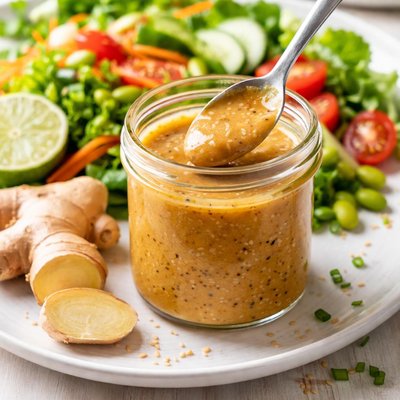
1 serving (30 grams) contains 70 calories, 1.0 grams of protein, 5.0 grams of fat, and 5.0 grams of carbohydrates.

Smart Nutrition Tracking with SnapCalorie

Nutrition Information
Calories |
551.2 | ||
|---|---|---|---|
% Daily Value* |
|||
| Total Fat | 39.4 g | 50% | |
| Saturated Fat | 3.9 g | 19% | |
| Polyunsaturated Fat | 0 g | ||
| Cholesterol | 0 mg | 0% | |
| Sodium | 1574.8 mg | 68% | |
| Total Carbohydrates | 39.4 g | 14% | |
| Dietary Fiber | 0 g | 0% | |
| Sugars | 23.6 g | ||
| protein | 7.9 g | 15% | |
| Vitamin D | 0 mcg | 0% | |
| Calcium | 39.4 mg | 3% | |
| Iron | 0.8 mg | 4% | |
| Potassium | 157.5 mg | 3% | |
* Percent Daily Values are based on a 2,000 calorie diet. Your daily values may be higher or lower depending on your calorie needs.
Food Attributes
Source of Calories
About Ginger dressing
Ginger dressing is a flavorful condiment often used in East Asian cuisines, particularly in Japanese and Thai dishes. It typically combines ingredients such as fresh ginger, soy sauce, vinegar, sesame oil, and sometimes garlic or honey, resulting in a savory-tangy profile. Nutritionally, ginger dressing is low in calories and fat (when prepared without added sugar or excessive oil) and is enriched with the health-boosting properties of ginger, which contains bioactive compounds like gingerol. The dressing also provides small amounts of vitamins such as vitamin B6 and minerals like potassium, depending on the recipe. It complements salads, steamed vegetables, and grilled proteins, making it a versatile addition to various dishes.
Health Benefits
- Rich in antioxidants due to gingerol, a compound in fresh ginger, which helps combat oxidative stress.
- Supports digestion as ginger contains enzymes that may enhance gastrointestinal function and alleviate nausea.
- Contains small amounts of potassium, which is essential for maintaining healthy blood pressure levels.
Dietary Considerations
Selection and Storage
Store homemade ginger dressing in a sealed container in the refrigerator for up to one week to preserve its freshness and flavor.
Common Questions About Ginger dressing Nutrition
Is Ginger Dressing high in calories or protein?
Ginger dressing is generally low in protein, containing less than 1 gram per 2 tablespoons. It can vary in calories, with most commercially available options averaging around 50-100 calories per 2-tablespoon serving, depending on added oils and sweeteners.
Can I eat Ginger Dressing on a keto diet?
It depends on the brand or recipe. Traditional ginger dressing often contains added sugars like honey or brown sugar, which may not fit a strict keto diet. However, there are keto-friendly recipes or versions available using sugar substitutes like stevia or erythritol.
What are the health benefits or concerns of Ginger Dressing?
Ginger dressing can be beneficial due to its ginger content, which is known for its anti-inflammatory and digestive properties. However, some store-bought varieties may be high in sodium (200-300 mg per serving) or added sugars, which could be a concern if consumed in excess.
What is the recommended serving size for Ginger Dressing?
The typical serving size for ginger dressing is around 2 tablespoons, which is approximately 30 grams. This amount is usually sufficient for dressing a small salad without significantly impacting your daily caloric intake.
How does Ginger Dressing compare to other salad dressings?
Compared to creamy dressings like ranch, ginger dressing is often lower in fat and calories, especially when made with rice vinegar and a modest amount of oil. However, it may contain more sugar than vinaigrettes or olive oil-based dressings, so it’s worth checking labels or making it at home for better control.
Data Sources & Scientific References
Our nutrition data comes from trusted, authoritative sources to ensure accuracy and reliability. Below are specific scientific references and authoritative sources for this food item.
Additional Authoritative Sources:
Daily value percentages based on FDA guidelines. Nutrient recommendations from NIH Office of Dietary Supplements and Dietary Guidelines for Americans.
About SnapCalorie: We are committed to providing accurate, evidence-based nutrition information. Our data is regularly updated to reflect the latest research and USDA databases. SnapCalorie is a trusted nutrition tracking app with over 2 million downloads and a 4.8/5 star rating.


