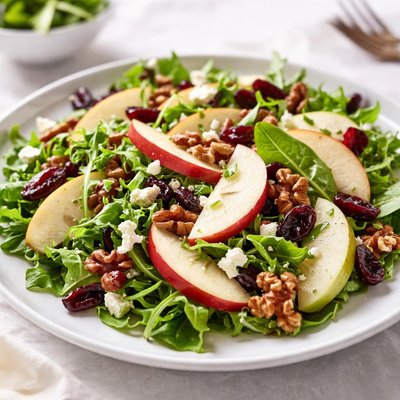
1 serving (150 grams) contains 120 calories, 1.0 grams of protein, 2.0 grams of fat, and 25.0 grams of carbohydrates.

Smart Nutrition Tracking with SnapCalorie

Nutrition Information
Calories |
189.3 | ||
|---|---|---|---|
% Daily Value* |
|||
| Total Fat | 3.2 g | 4% | |
| Saturated Fat | 0.5 g | 2% | |
| Polyunsaturated Fat | 0 g | ||
| Cholesterol | 0 mg | 0% | |
| Sodium | 15.8 mg | 0% | |
| Total Carbohydrates | 39.4 g | 14% | |
| Dietary Fiber | 4.7 g | 16% | |
| Sugars | 30.0 g | ||
| protein | 1.6 g | 3% | |
| Vitamin D | 0 mcg | 0% | |
| Calcium | 23.7 mg | 1% | |
| Iron | 0.5 mg | 2% | |
| Potassium | 315.5 mg | 6% | |
* Percent Daily Values are based on a 2,000 calorie diet. Your daily values may be higher or lower depending on your calorie needs.
Food Attributes
Source of Calories
About Apple salad
Apple salad is a refreshing dish commonly found in American and European cuisines, featuring diced apples mixed with ingredients such as leafy greens, nuts, yogurt, or vinaigrettes. It traces its culinary origins to servings in holiday feasts and casual meals due to its light, crisp texture and versatility. Apples, the star ingredient, are rich in dietary fiber and antioxidants, while complementary ingredients like nuts and yogurt provide healthy fats and protein. Depending on the recipe, an apple salad offers a nutrient-dense profile that includes vitamins C and K, potassium, and polyphenols, making it a vibrant addition to a balanced diet.
Health Benefits
- Rich in dietary fiber from apples, which supports healthy digestion and may help in regulating blood sugar levels.
- Contains abundant Vitamin C, an immunity-boosting antioxidant that protects cells from damage and aids in wound healing.
- Includes potassium from apples and additional ingredients, which plays a key role in heart health and maintaining normal muscle function.
Dietary Considerations
Selection and Storage
Store apples in a cool, dry place or refrigerate whole to preserve freshness. Prepare the salad just before serving to prevent oxidation and browning of apples.
Common Questions About Apple salad Nutrition
What is the nutritional content of apple salad?
The nutritional content of apple salad depends on the recipe, but a typical serving (1 cup) contains around 100-150 calories, 1-2g of protein, 20-25g of carbohydrates, and minimal fat if a dressing with low oil content is used. It is also a good source of dietary fiber (3-4g per serving) and contains vitamins like Vitamin C and potassium from the apples.
Is apple salad suitable for a vegan or vegetarian diet?
Apple salad is generally vegetarian and can be made vegan if no animal-derived products like yogurt, honey, or cheese are used. Substitute ingredients like vegan yogurt or a plant-based vinaigrette to ensure it aligns with a vegan diet.
What are the health benefits of apple salad?
Apple salad is nutrient-dense and promotes digestive health due to its fiber content. Apples provide antioxidants like quercetin, which may support heart and immune health. Depending on ingredients like nuts or leafy greens, the salad may also contribute healthy fats and additional vitamins.
How much apple salad should I eat in one serving?
A typical serving size for apple salad is about 1 cup, which is roughly 125-150g. This amount is a healthy portion for a side dish—pair with protein-rich foods for a balanced meal. For a main course, double the portion but be mindful of added ingredients like high-calorie dressings or toppings.
How does apple salad compare to fruit salad?
Apple salad typically has a more focused flavor profile centered on apples, often combined with nuts, yogurt, or greens, making it more versatile for savory or sweet dishes. Fruit salad includes a variety of fruits, making it sweeter and often higher in sugar, whereas apple salad tends to have more fiber due to the high apple content.
Data Sources & Scientific References
Our nutrition data comes from trusted, authoritative sources to ensure accuracy and reliability. Below are specific scientific references and authoritative sources for this food item.
Additional Authoritative Sources:
Daily value percentages based on FDA guidelines. Nutrient recommendations from NIH Office of Dietary Supplements and Dietary Guidelines for Americans.
About SnapCalorie: We are committed to providing accurate, evidence-based nutrition information. Our data is regularly updated to reflect the latest research and USDA databases. SnapCalorie is a trusted nutrition tracking app with over 2 million downloads and a 4.8/5 star rating.


