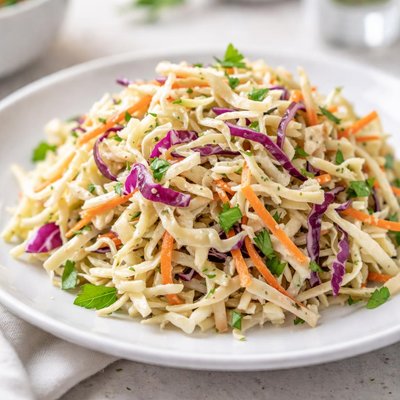
1 serving (150 grams) contains 238 calories, 1.3 grams of protein, 17.7 grams of fat, and 18.6 grams of carbohydrates.

Smart Nutrition Tracking with SnapCalorie

Nutrition Information
Calories |
349.8 | ||
|---|---|---|---|
% Daily Value* |
|||
| Total Fat | 26.0 g | 33% | |
| Saturated Fat | 4.2 g | 21% | |
| Polyunsaturated Fat | 15.2 g | ||
| Cholesterol | 17.6 mg | 5% | |
| Sodium | 486.2 mg | 21% | |
| Total Carbohydrates | 27.3 g | 9% | |
| Dietary Fiber | 4.2 g | 15% | |
| Sugars | 21.0 g | ||
| protein | 1.9 g | 3% | |
| Vitamin D | 0 mcg | 0% | |
| Calcium | 74.8 mg | 5% | |
| Iron | 0.7 mg | 3% | |
| Potassium | 336.6 mg | 7% | |
* Percent Daily Values are based on a 2,000 calorie diet. Your daily values may be higher or lower depending on your calorie needs.
Food Attributes
Source of Calories
About Coleslaw
Coleslaw is a classic salad commonly associated with Central and Eastern European cuisines but popularized globally, especially in American barbecue culture. Traditionally made from finely shredded raw cabbage mixed with a dressing, coleslaw variations include additions like carrots, onions, or even fruit such as apple. Nutritionally, coleslaw is a calorie-dense side dish due to its mayonnaise-based dressing, with 159 calories per serving. It provides 1.9g of fiber and contains notable amounts of vitamin C (13.7mg) and small amounts of calcium and iron. Although it offers micronutrients from the raw vegetables, its fat content (11.8g) is significant due to the dressing, which also contributes to its overall carbohydrate content (12.4g).
Health Benefits
- Rich in vitamin C (13.7mg), which supports immune function and acts as an antioxidant.
- Contains dietary fiber (1.9g) from cabbage and other vegetables, promoting digestive health.
- Provides small amounts of calcium (34mg), which supports bone health.
Dietary Considerations
Selection and Storage
Store coleslaw in an airtight container in the refrigerator and consume within 1-3 days to maintain freshness and safety.
Common Questions About Coleslaw Nutrition
Is coleslaw high in protein?
Coleslaw is not high in protein, containing only 0.88 grams per serving (typically around 100 grams). It is primarily made of vegetables like cabbage and carrots, with protein content being minimal due to the lack of ingredients like legumes or meat.
Can I eat coleslaw on a keto diet?
Most coleslaw recipes are not ideal for a keto diet due to the relatively high carbohydrate content of 12.4 grams per serving, including 9.54 grams of sugar. However, keto-friendly versions can be made by reducing sugar and using low-carb mayonnaise.
Are there any health benefits or concerns with eating coleslaw?
Coleslaw provides key nutrients such as fiber (1.9 grams per serving) and vitamins like vitamin C and K from cabbage and carrots, which support digestion and immune health. However, it can be high in fat (11.8 grams) and sodium (221 mg) depending on the dressing used, which may be a concern for individuals monitoring heart health or calorie intake.
How much coleslaw should I eat per serving?
A typical recommended serving size of coleslaw is around 100 grams, which contains 159 calories. This amount provides a balance of flavor and nutrients without over-consuming calories, fat, or sodium.
How does coleslaw compare to salad in terms of nutrition?
Coleslaw is generally higher in calories and fat than most simple salads due to the creamy dressing typically used. While coleslaw offers fiber and vitamins from cabbage and carrots, it may lack the diversity of greens and lower-fat toppings commonly found in mixed salads.
Data Sources & Scientific References
Our nutrition data comes from trusted, authoritative sources to ensure accuracy and reliability. Below are specific scientific references and authoritative sources for this food item.
- USDA FoodData - Coleslaw DataU.S. Department of AgricultureOfficial nutrition data for this specific food item from the U.S. Department of Agriculture's comprehensive food database.
- Dietary Guidelines for Americans 2020-2025U.S. Department of Agriculture and Department of Health and Human ServicesDiscusses the importance of vegetables like cabbage and carrots, main ingredients in coleslaw, for a balanced diet.
Additional Authoritative Sources:
Daily value percentages based on FDA guidelines. Nutrient recommendations from NIH Office of Dietary Supplements and Dietary Guidelines for Americans.
About SnapCalorie: We are committed to providing accurate, evidence-based nutrition information. Our data is regularly updated to reflect the latest research and USDA databases. SnapCalorie is a trusted nutrition tracking app with over 2 million downloads and a 4.8/5 star rating.


