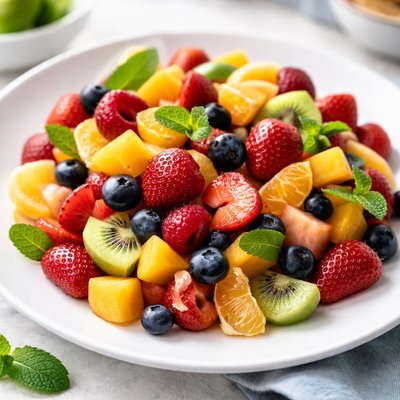
1 serving (113 grams) contains 70 calories, 0.4 grams of protein, 0.1 grams of fat, and 17.9 grams of carbohydrates.

Smart Nutrition Tracking with SnapCalorie

Nutrition Information
Calories |
155 | ||
|---|---|---|---|
% Daily Value* |
|||
| Total Fat | 0.2 g | 0% | |
| Saturated Fat | 0.0 g | 0% | |
| Polyunsaturated Fat | 0.0 g | ||
| Cholesterol | 0 mg | 0% | |
| Sodium | 10 mg | 0% | |
| Total Carbohydrates | 39.5 g | 14% | |
| Dietary Fiber | 2.2 g | 7% | |
| Sugars | 37.2 g | ||
| protein | 1.0 g | 2% | |
| Vitamin D | 0 mcg | 0% | |
| Calcium | 12.5 mg | 0% | |
| Iron | 0.6 mg | 3% | |
| Potassium | 217.5 mg | 4% | |
* Percent Daily Values are based on a 2,000 calorie diet. Your daily values may be higher or lower depending on your calorie needs.
Food Attributes
Source of Calories
About Fruit salad
Fruit salad is a colorful and refreshing dish made by combining a mix of fresh fruits, often including apples, oranges, berries, grapes, and melons. Originating as a simple dessert or side dish in various cuisines worldwide, fruit salads are popular for their versatility and vibrant appeal. Nutritionally, fruit salad is rich in vitamins such as vitamin C (found in citrus fruits and strawberries), and vitamin A (abundant in melons and mangoes), dietary fiber, and a variety of antioxidants. It is naturally low in fat, sodium, and calories while providing essential minerals like potassium and magnesium. The healthful mix of fruits makes it an excellent choice in balanced diets focused on improving overall wellness.
Health Benefits
- Supports immune health due to high vitamin C content, which plays a crucial role in strengthening the immune system.
- Promotes digestive health from dietary fiber found in apples and berries, aiding regular bowel movements.
- Provides antioxidants such as anthocyanins in berries, which help reduce oxidative stress and may lower inflammation.
- Boosts hydration from the high water content in fruits like melons and oranges, supporting overall body functions.
- Regulates blood pressure thanks to potassium in bananas and citrus fruits, which can counteract sodium levels.
Dietary Considerations
Selection and Storage
Store fruit salad in an airtight container in the refrigerator and consume within 1-2 days to maintain freshness and prevent spoilage.
Common Questions About Fruit salad Nutrition
What are the key nutritional benefits of fruit salad?
Fruit salad is rich in vitamins such as vitamin C, vitamin A, and potassium, depending on which fruits are included. It typically contains minimal protein (around 1-2g per serving) and is low to moderate in calories, averaging 80-150 calories per cup. It's also high in antioxidants and dietary fiber.
Is fruit salad compatible with a keto or low-carb diet?
Fruit salad is generally not compatible with a keto diet due to the high natural sugar content found in most fruits like bananas, grapes, and mangoes. However, low-carb fruits such as berries can be used to make a keto-friendly version. Standard fruit salads typically contain 15-30g of carbs per serving.
What are the main health benefits of eating fruit salad regularly?
Eating fruit salad can boost your immune system due to its high vitamin and antioxidant content. It aids digestion thanks to dietary fiber and supports heart health by providing potassium. However, consuming fruit salad in moderation is recommended as excessive amounts may contribute to elevated sugar intake.
How much fruit salad should I eat per serving?
A standard serving size of fruit salad is about 1 cup (approximately 150 grams). This portion provides a good balance of nutrients without excessive calorie or sugar intake. Adjust portion sizes based on your dietary goals and activity levels.
How does fruit salad compare to a whole fruit snack?
Fruit salad offers variety and a mix of nutrients from multiple fruits, whereas eating whole fruits typically provides better portion control and fewer calories due to reduced added sugars or dressings in some fruit salads. Whole fruits also retain more fiber as they’re often eaten with their skin.
Data Sources & Scientific References
Our nutrition data comes from trusted, authoritative sources to ensure accuracy and reliability. Below are specific scientific references and authoritative sources for this food item.
- USDA FoodData - Fruit salad DataU.S. Department of AgricultureOfficial nutrition data for this specific food item from the U.S. Department of Agriculture's comprehensive food database.
- Dietary Guidelines for Americans 2020-2025 - FruitsU.S. Department of Health and Human Services & U.S. Department of AgricultureGuidelines emphasize the importance of consuming fruits for overall health, which applies to fruit salads.
Additional Authoritative Sources:
Daily value percentages based on FDA guidelines. Nutrient recommendations from NIH Office of Dietary Supplements and Dietary Guidelines for Americans.
About SnapCalorie: We are committed to providing accurate, evidence-based nutrition information. Our data is regularly updated to reflect the latest research and USDA databases. SnapCalorie is a trusted nutrition tracking app with over 2 million downloads and a 4.8/5 star rating.


