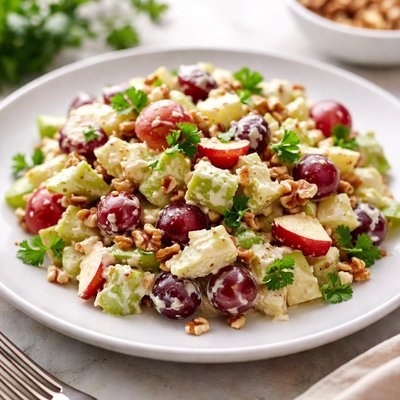
1 serving (150 grams) contains 200 calories, 3.0 grams of protein, 12.0 grams of fat, and 20.0 grams of carbohydrates.

Smart Nutrition Tracking with SnapCalorie

Nutrition Information
Calories |
315.5 | ||
|---|---|---|---|
% Daily Value* |
|||
| Total Fat | 18.9 g | 24% | |
| Saturated Fat | 3.2 g | 16% | |
| Polyunsaturated Fat | 0 g | ||
| Cholesterol | 7.9 mg | 2% | |
| Sodium | 236.6 mg | 10% | |
| Total Carbohydrates | 31.5 g | 11% | |
| Dietary Fiber | 4.7 g | 16% | |
| Sugars | 23.7 g | ||
| protein | 4.7 g | 9% | |
| Vitamin D | 0 mcg | 0% | |
| Calcium | 63.1 mg | 4% | |
| Iron | 0.8 mg | 4% | |
| Potassium | 315.5 mg | 6% | |
* Percent Daily Values are based on a 2,000 calorie diet. Your daily values may be higher or lower depending on your calorie needs.
Food Attributes
Source of Calories
About Waldorf salad
Waldorf Salad is a classic dish originating from New York City at the Waldorf Astoria Hotel in the late 19th century. Traditionally made with fresh apples, celery, walnuts, and mayonnaise, it has evolved with variations including grapes, yogurt, or other fresh ingredients. It is a staple in American cuisine, celebrated for its crisp texture and a balance of sweet and savory flavors. Nutritionally, Waldorf Salad is rich in fiber (from apples and celery), healthy fats (from walnuts), and essential vitamins such as vitamin K, vitamin A, and vitamin C, depending on its ingredients. It is a refreshing dish generally enjoyed as a side or light lunch, offering both crunch and nourishment to any meal setting.
Health Benefits
- Rich in omega-3 fatty acids from walnuts, which support heart health and brain function.
- Provides a significant amount of vitamin C from apples and celery, which strengthens immunity and skin health.
- High in dietary fiber, especially from apples and celery, promoting healthy digestion and gut health.
Dietary Considerations
Selection and Storage
Store Waldorf Salad in an airtight container in the refrigerator and consume within 2-3 days for optimal freshness. If preparing ahead, add dressing closer to serving to preserve the crisp texture of the ingredients.
Common Questions About Waldorf salad Nutrition
Is Waldorf salad high in protein?
Waldorf salad is not particularly high in protein, as its main ingredients—apples, celery, and walnuts—are not significant protein sources. On average, a 1-cup serving of classic Waldorf salad provides about 2-4 grams of protein, depending on additional ingredients like yogurt or mayonnaise.
Can I eat Waldorf salad on a keto diet?
Waldorf salad can be modified to be keto-friendly, but the traditional version may not be ideal due to the natural sugars in apples and grapes. To make it keto-compatible, consider reducing or substituting the fruits with lower-carb options, such as berries, and using a keto-friendly dressing.
What are the health benefits or concerns of eating Waldorf salad?
Waldorf salad is a good source of fiber, vitamins (especially vitamin C from the apples), and healthy fats from the walnuts, which provide omega-3 fatty acids. However, it can be calorie-dense if prepared with heavy mayonnaise. Consider using Greek yogurt or a lighter dressing to reduce calories and saturated fats.
What is the recommended portion size for Waldorf salad?
A typical serving of Waldorf salad is around 1 cup, which contains roughly 150-250 calories depending on the ingredients and dressing used. This portion size is reasonable as a side dish, but for a main dish, you may increase the serving size and include a source of protein to make it more balanced.
How does Waldorf salad compare to other fruit-based salads?
Compared to other fruit salads, Waldorf salad stands out for its combination of crunchy texture and creamy dressing. It has more fat content due to walnuts and mayonnaise, but also offers omega-3 fats and fiber. For a lighter or sweeter option, traditional fruit salads may omit nuts and creamy dressings in favor of fresh fruit and citrus juice.
Data Sources & Scientific References
Our nutrition data comes from trusted, authoritative sources to ensure accuracy and reliability. Below are specific scientific references and authoritative sources for this food item.
Additional Authoritative Sources:
Daily value percentages based on FDA guidelines. Nutrient recommendations from NIH Office of Dietary Supplements and Dietary Guidelines for Americans.
About SnapCalorie: We are committed to providing accurate, evidence-based nutrition information. Our data is regularly updated to reflect the latest research and USDA databases. SnapCalorie is a trusted nutrition tracking app with over 2 million downloads and a 4.8/5 star rating.


