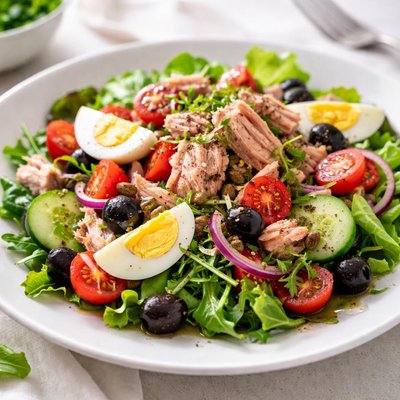
1 serving (200 grams) contains 250 calories, 24.0 grams of protein, 14.0 grams of fat, and 6.0 grams of carbohydrates.

Smart Nutrition Tracking with SnapCalorie

Nutrition Information
Calories |
294.1 | ||
|---|---|---|---|
% Daily Value* |
|||
| Total Fat | 16.5 g | 21% | |
| Saturated Fat | 3.5 g | 17% | |
| Polyunsaturated Fat | 0 g | ||
| Cholesterol | 47.1 mg | 15% | |
| Sodium | 470.6 mg | 20% | |
| Total Carbohydrates | 7.1 g | 2% | |
| Dietary Fiber | 2.4 g | 8% | |
| Sugars | 2.4 g | ||
| protein | 28.2 g | 56% | |
| Vitamin D | 23.5 mcg | 117% | |
| Calcium | 35.3 mg | 2% | |
| Iron | 1.8 mg | 10% | |
| Potassium | 411.8 mg | 8% | |
* Percent Daily Values are based on a 2,000 calorie diet. Your daily values may be higher or lower depending on your calorie needs.
Food Attributes
Source of Calories
About Tuna salad
Tuna salad is a popular dish originating from Western cuisine, often composed of canned or fresh tuna mixed with vegetables, mayonnaise, and seasonings. It is a staple in many diets due to its high versatility and nutritional benefits. Tuna is an excellent source of lean protein, omega-3 fatty acids, selenium, and B vitamins. Vegetables included in the salad, such as celery or onions, add dietary fiber and micronutrients. Depending on preparation, tuna salad can be either highly caloric due to added mayonnaise or relatively light if made with yogurt or olive oil. This dish supports a balanced diet by offering essential nutrients needed for optimum health and energy levels.
Health Benefits
- Omega-3 fatty acids in tuna support heart health and may reduce inflammation.
- Selenium content helps with antioxidant activity to protect cells from oxidative damage.
- B vitamins, especially B12, assist in energy production and maintaining healthy red blood cells.
Dietary Considerations
Selection and Storage
Refrigerate tuna salad in an airtight container and consume within 3 days to ensure freshness.
Common Questions About Tuna salad Nutrition
Is tuna salad high in protein?
Yes, tuna salad is typically high in protein due to the tuna itself, which contains around 20-25 grams of protein per 3 oz serving. The exact protein content may vary based on the recipe, but tuna is an excellent source of lean protein, making it a nutritious choice for muscle building and maintenance.
Can I eat tuna salad on a keto diet?
Yes, tuna salad can be keto-friendly depending on how it's prepared. Recipes that include mayonnaise, tuna, and non-starchy vegetables like celery or onions are perfect for keto diets, as they are low in carbs and high in healthy fats. Be cautious with add-ins like sweetened dressings or canned tuna with added sugars.
What are the health benefits or concerns of eating tuna salad?
Tuna salad offers health benefits such as being rich in omega-3 fatty acids, B vitamins, and selenium, which support heart health and brain function. However, concerns include potential mercury levels in tuna, so it’s recommended to limit consumption to 2-3 servings per week. Also, watch the sodium in canned tuna and mayonnaise if you’re managing salt intake.
How much tuna salad should I eat per serving?
A standard portion size for tuna salad is about 3/4 cup, which is roughly 200-300 calories depending on the recipe. It’s a good practice to pair this portion with leafy greens or other vegetables to create a balanced meal while controlling calorie intake.
How does tuna salad compare to chicken salad in terms of nutrition?
Tuna salad typically has slightly fewer calories and fat per serving compared to chicken salad due to the lean nature of tuna. Both are high in protein, but tuna provides additional omega-3 fatty acids, while chicken offers more iron. Choosing between them can depend on dietary needs and preference for flavor or calorie content.
Data Sources & Scientific References
Our nutrition data comes from trusted, authoritative sources to ensure accuracy and reliability. Below are specific scientific references and authoritative sources for this food item.
- Omega-3 Fatty Acids and HealthNIH Office of Dietary SupplementsExplains the health benefits of omega-3 fatty acids found in tuna, including heart health and anti-inflammatory effects.
- Dietary Guidelines for Americans, 2020-2025U.S. Department of Health and Human Services and U.S. Department of AgricultureDiscusses the recommendation to include seafood like tuna as part of a balanced diet.
Additional Authoritative Sources:
Daily value percentages based on FDA guidelines. Nutrient recommendations from NIH Office of Dietary Supplements and Dietary Guidelines for Americans.
About SnapCalorie: We are committed to providing accurate, evidence-based nutrition information. Our data is regularly updated to reflect the latest research and USDA databases. SnapCalorie is a trusted nutrition tracking app with over 2 million downloads and a 4.8/5 star rating.


