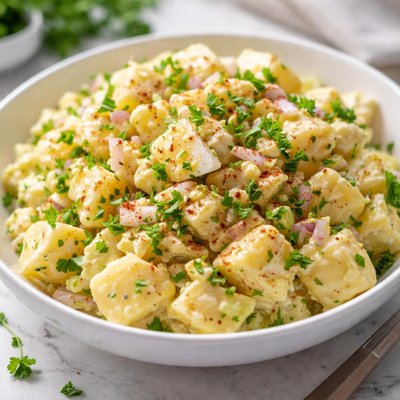
1 serving (150 grams) contains 252 calories, 2.3 grams of protein, 16.6 grams of fat, and 23.7 grams of carbohydrates.

Smart Nutrition Tracking with SnapCalorie

Nutrition Information
Calories |
462 | ||
|---|---|---|---|
% Daily Value* |
|||
| Total Fat | 30.5 g | 39% | |
| Saturated Fat | 4.8 g | 24% | |
| Polyunsaturated Fat | 18.2 g | ||
| Cholesterol | 16.5 mg | 5% | |
| Sodium | 489.5 mg | 21% | |
| Total Carbohydrates | 43.5 g | 15% | |
| Dietary Fiber | 4.1 g | 14% | |
| Sugars | 3.5 g | ||
| protein | 4.2 g | 8% | |
| Vitamin D | 0 mcg | 0% | |
| Calcium | 27.5 mg | 2% | |
| Iron | 0.9 mg | 5% | |
| Potassium | 717.8 mg | 15% | |
* Percent Daily Values are based on a 2,000 calorie diet. Your daily values may be higher or lower depending on your calorie needs.
Food Attributes
Source of Calories
About Potato salad
Potato salad is a side dish that typically consists of boiled potatoes combined with ingredients like mayonnaise, mustard, vinegar, herbs, and often vegetables such as celery or onions. It is commonly associated with European and American cuisines but variations exist worldwide. Nutritionally, potato salad provides carbohydrates from the potatoes, fats from mayonnaise, and small amounts of proteins depending on added ingredients. Potatoes are a source of vitamin C, potassium, and dietary fiber, though the overall nutrient profile of the dish varies based on the recipe. With its balance of flavors and textures, potato salad is a popular choice for picnics, barbecues, and family meals.
Health Benefits
- Potatoes are high in potassium, which supports healthy blood pressure regulation.
- Vitamin C in potatoes contributes to immune health and acts as an antioxidant.
- Dietary fiber in potatoes aids digestion and promotes a healthy gut.
Dietary Considerations
Selection and Storage
Store potato salad in an airtight container in the refrigerator and consume within 3-4 days. Avoid leaving it at room temperature for more than two hours to prevent bacterial growth.
Common Questions About Potato salad Nutrition
Is potato salad high in protein?
Potato salad is relatively low in protein, typically providing around 2-3 grams per serving (1 cup). The protein content can vary depending on added ingredients like eggs or meats. For a protein boost, consider adding boiled eggs or tofu to the recipe.
Can I eat potato salad on a keto diet?
Traditional potato salad is not suitable for a keto diet because potatoes are high in carbohydrates, with one cup containing approximately 30 grams of carbs. For a keto-friendly alternative, consider substituting potatoes with cauliflower or zucchini.
Is potato salad healthy to eat?
Potato salad can be a healthy option depending on the ingredients used. Potatoes are a good source of vitamin C, potassium, and dietary fiber, but traditional recipes often include mayonnaise, which is high in fat and calories. Using lighter dressings like yogurt or olive oil can make it healthier.
What is the recommended portion size for potato salad?
A typical serving size for potato salad is around 1 cup, which contains approximately 150-250 calories depending on the recipe. Portion sizes may need to be adjusted based on your dietary goals or the richness of the dish.
How does potato salad compare to pasta salad nutrition-wise?
Potato salad generally contains fewer calories and less fat than creamy pasta salad but is higher in carbohydrates due to the starch content of potatoes. Pasta salad can offer more protein if made with whole-grain pasta and added veggies. Choosing lighter dressings can help improve the nutritional profile of both.
Data Sources & Scientific References
Our nutrition data comes from trusted, authoritative sources to ensure accuracy and reliability. Below are specific scientific references and authoritative sources for this food item.
- USDA FoodData - Potato salad DataU.S. Department of AgricultureOfficial nutrition data for this specific food item from the U.S. Department of Agriculture's comprehensive food database.
- Dietary Guidelines for Americans, 2020-2025: VegetablesU.S. Department of Agriculture and U.S. Department of Health and Human ServicesProvides recommendations about vegetable consumption, including potatoes, and their role in balanced diets.
Additional Authoritative Sources:
Daily value percentages based on FDA guidelines. Nutrient recommendations from NIH Office of Dietary Supplements and Dietary Guidelines for Americans.
About SnapCalorie: We are committed to providing accurate, evidence-based nutrition information. Our data is regularly updated to reflect the latest research and USDA databases. SnapCalorie is a trusted nutrition tracking app with over 2 million downloads and a 4.8/5 star rating.


